Author: admin

  • Home Design Pep Talk and Progress

    Home Design Pep Talk and Progress

    living room

    Good morning; how was your weekend?

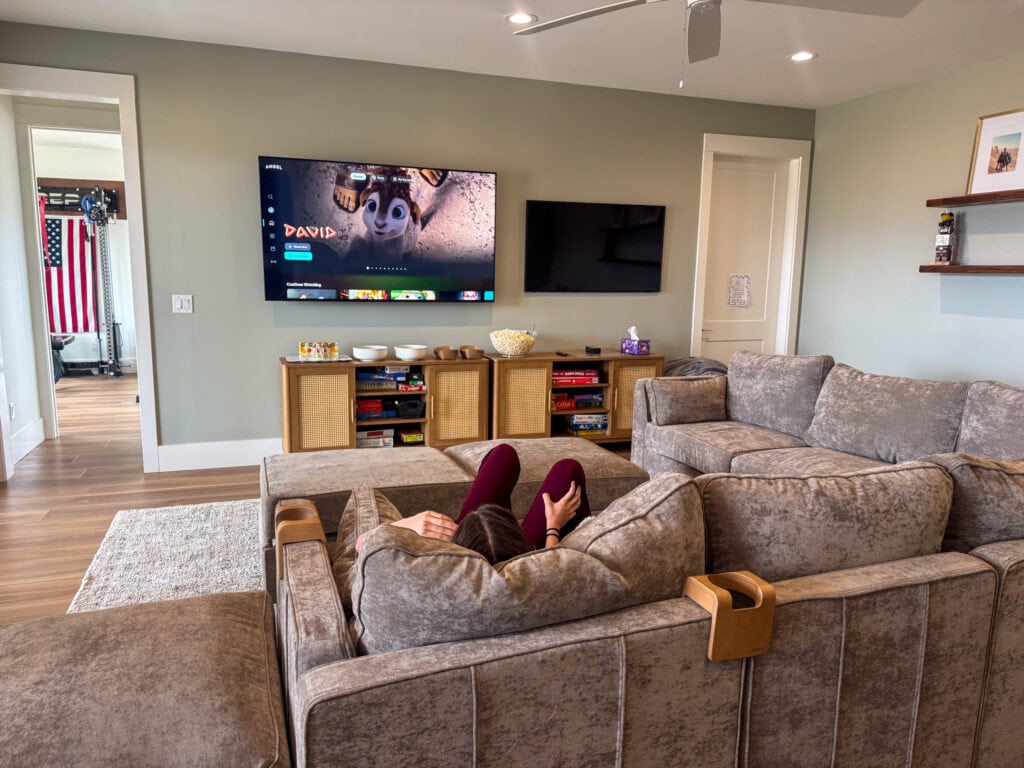
    David was traveling and the girls and I packed it full!

    We hosted neighborhood friends for a David movie watch party, we went to a birthday party, we attended a family folk dance (which the girls LOVED), we ate ice cream and watched Troop Beverly Hills, I caught up over breakfast with a college bestie that was in town, soaked up the warm sunshine we’ve been so desperate for, and I hit up Hobby Lobby more than once.

    David movie night

    Home Design Pep Talk and Progress

    My current hobby is decorating our house. There’s a statement I never thought I’d say. I’m usually all “I don’t have an eye for home design” and “it’s so hard.” However, through experience I’m learning two thing:

    • One: If you find things that you truly love, and they make you happy every time you look at them, it really does not matter if it “looks right” or not. It’s your space and it should be a reflection of you and bring you joy and if you can get to a place of really embracing that (it’s taken me yearssss) then home decorating is FUN.
    • Two: There isn’t a “right” way to decorate. I’ve learned this through sharing a picture on IG and asking for votes and opinions and it’s almost ALWAYS split 50/50. Truly. Which goes to show beauty is truly in the eye of the beholder, so make your home beautiful to you.

    I love when I walk in a person’s home and it just feels like them. You know?

    Mine is getting there and it makes me so happy. I’ve found the items I love the most lately at local antique stores and Hobby Lobby. Quite the blend, no? I link what I can here.

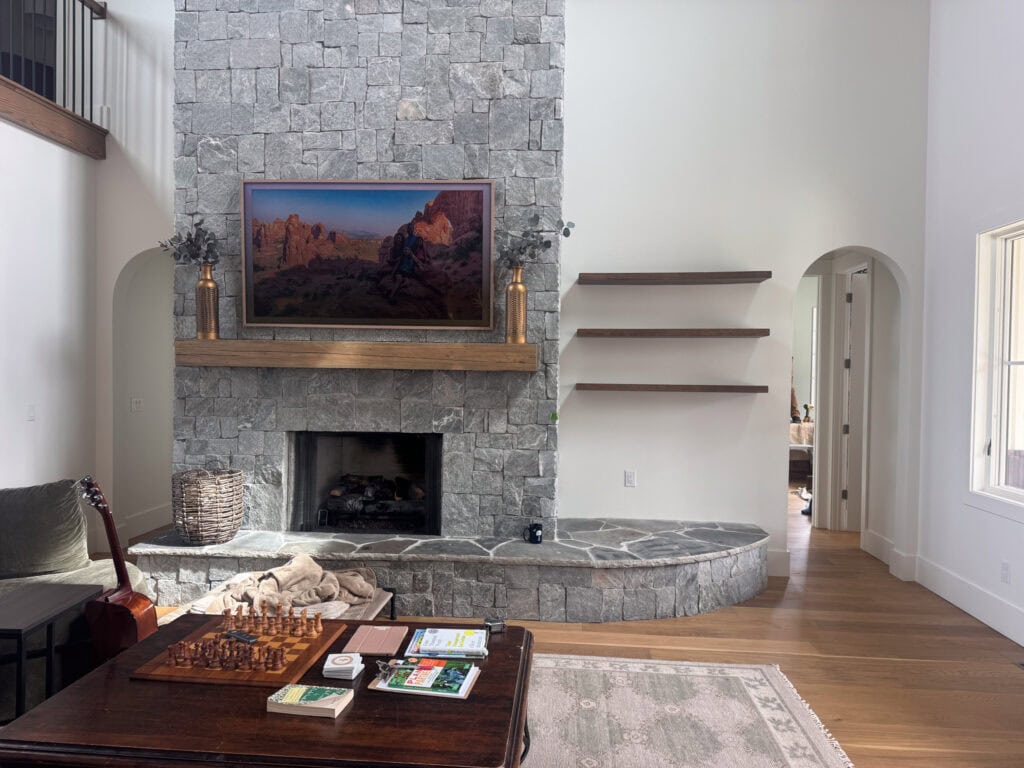
    We just had floating shelves installed last week in our living room and our office and I absolutely love how they help fill the space.

    Do I know how I want to decorate them yet? Nope.

    But am I thrilled to have a place to put a ceramic bunny for Easter, American flags for the 4th of July, pumpkins in the fall, and twinkly lights at Christmas? Absolutely.

    Ok, since I’m fairly certain I’ll never get to a static “after” of any space in my house (it’s more of a constant evolution for me), here’s a look at what it is now. And for once I’m not asking for input and advice; just a joyous look at how it’s coming along! kind of share, as if you just stopped by for some tea.

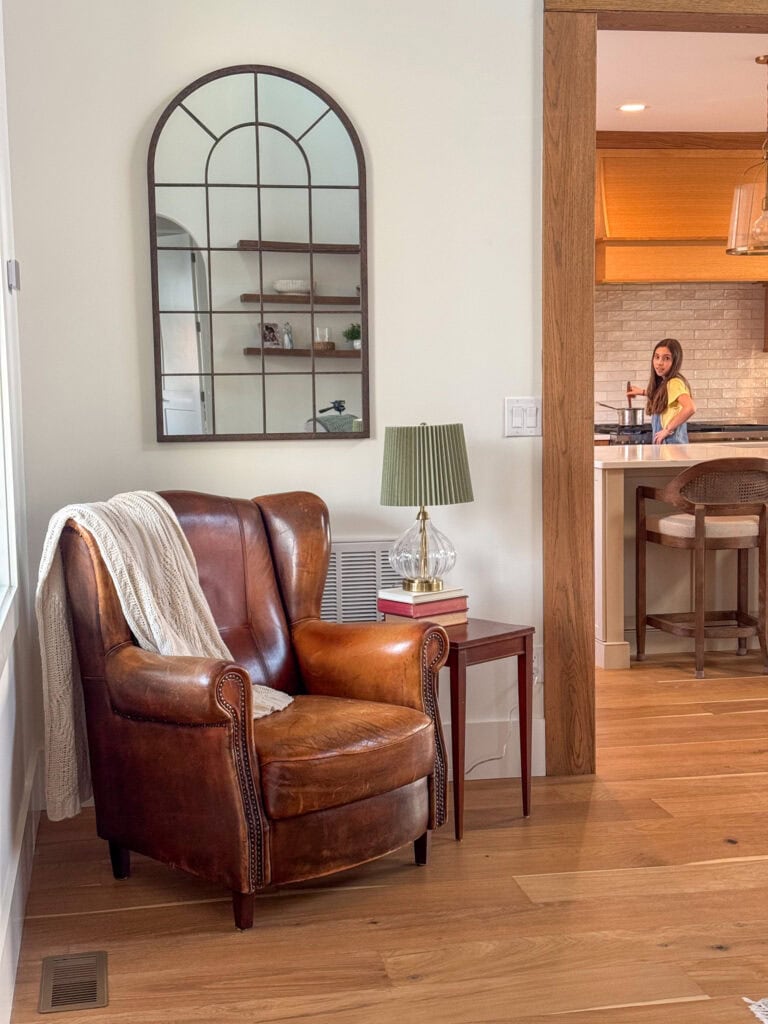
    Let’s start with my current obsession: my cozy corner!

    Featuring an English leather chair from the 1800’s- LOVE IT. Honestly I love this whole corner, though I’ve ordered a bigger mirror to try as well to see what I like better. David is going to love when I tell him that. More holes in the wall, please! See, that’s another prior hesitancy/home design fear I’ve gotten over-holes in the wall. Holes can be patched. 🙂

    Cozy Corner Home Design

    .

    I’ve also ordered a little round jute rug to try under it.

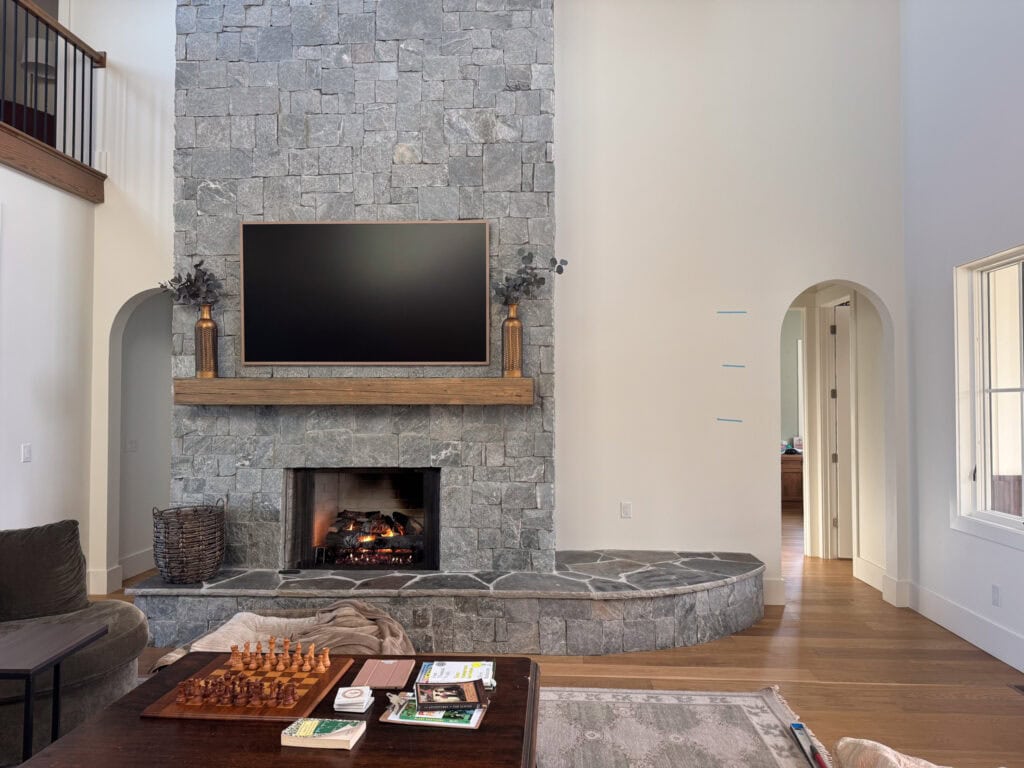
    Next up: the new living room shelves!

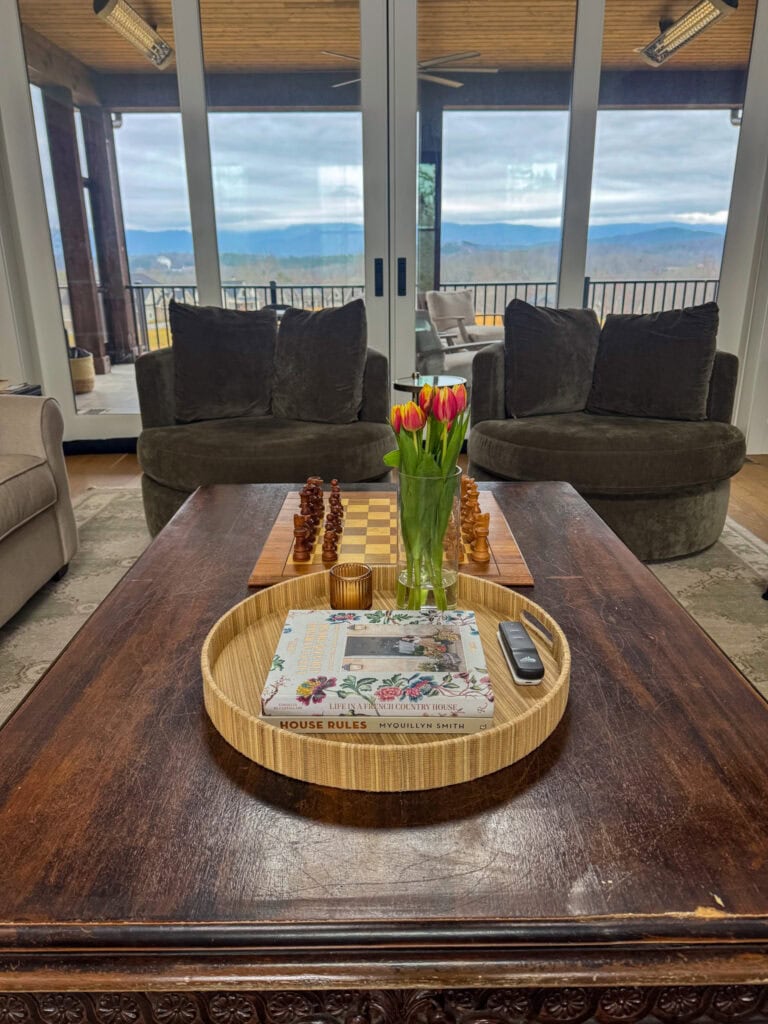
    living room Home Design
    living room new shelves Home Design

    .

    And now begins the styling aspect with advice of groups of three and varying heights bouncing around in my head.

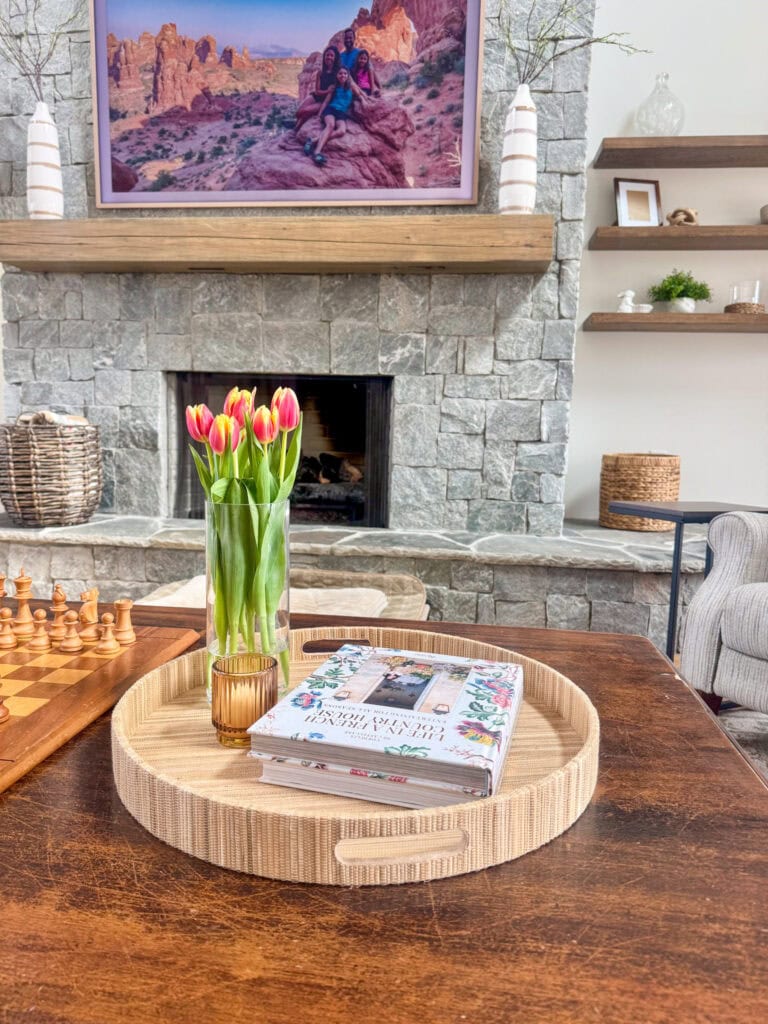
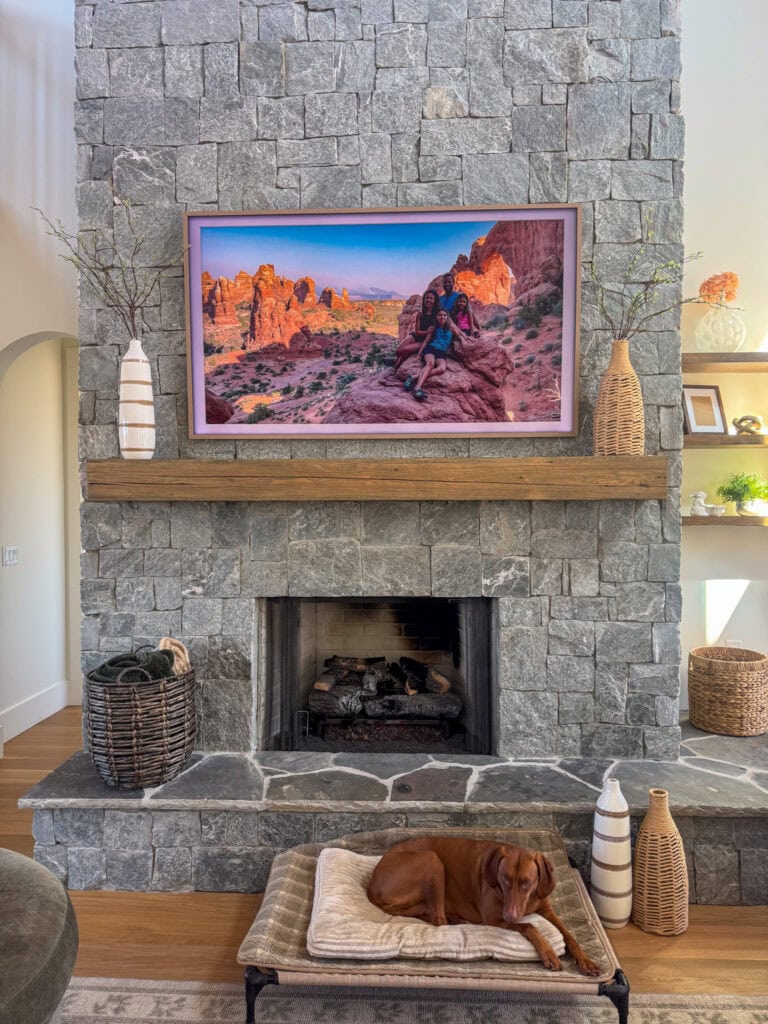
    I stared at the stripped vases on my mantle for two days before deciding I didn’t like them in my space. A quick return to Hobby Lobby and I found the natural woven vases instead. I’m very pleased with the swap!

    I hope to fill the basket under the new shelves with some kind of plant once I determine a look I like and can keep alive fairly easily.

    woven baskets by the fireplace

    .

    I look forward to filling out the shelves and actually putting pictures of us in the frames, but I’m so happy at how it’s all coming along. And even more so my willingness to just try some things rather than sitting in a state of indecision, paralyzed to make a choice like I did for so many years.

    Oh, and I’ll leave you with this: it turns out you can’t always trust ChatGPT to help you decorate a room. When I asked it to style my living room for spring, this is what it came back with:

    ChatGPT output for spring living room

    .

    oh wow gif

    .

    Any home decor wins or frustrations in your world lately?

    You might want to check out our home gym setup.

  • Home Design Pep Talk and Progress

    Home Design Pep Talk and Progress

    living room

    Good morning; how was your weekend?

    David was traveling and the girls and I packed it full!

    We hosted neighborhood friends for a David movie watch party, we went to a birthday party, we attended a family folk dance (which the girls LOVED), we ate ice cream and watched Troop Beverly Hills, I caught up over breakfast with a college bestie that was in town, soaked up the warm sunshine we’ve been so desperate for, and I hit up Hobby Lobby more than once.

    David movie night

    Home Design Pep Talk and Progress

    My current hobby is decorating our house. There’s a statement I never thought I’d say. I’m usually all “I don’t have an eye for home design” and “it’s so hard.” However, through experience I’m learning two thing:

    • One: If you find things that you truly love, and they make you happy every time you look at them, it really does not matter if it “looks right” or not. It’s your space and it should be a reflection of you and bring you joy and if you can get to a place of really embracing that (it’s taken me yearssss) then home decorating is FUN.
    • Two: There isn’t a “right” way to decorate. I’ve learned this through sharing a picture on IG and asking for votes and opinions and it’s almost ALWAYS split 50/50. Truly. Which goes to show beauty is truly in the eye of the beholder, so make your home beautiful to you.

    I love when I walk in a person’s home and it just feels like them. You know?

    Mine is getting there and it makes me so happy. I’ve found the items I love the most lately at local antique stores and Hobby Lobby. Quite the blend, no? I link what I can here.

    We just had floating shelves installed last week in our living room and our office and I absolutely love how they help fill the space.

    Do I know how I want to decorate them yet? Nope.

    But am I thrilled to have a place to put a ceramic bunny for Easter, American flags for the 4th of July, pumpkins in the fall, and twinkly lights at Christmas? Absolutely.

    Ok, since I’m fairly certain I’ll never get to a static “after” of any space in my house (it’s more of a constant evolution for me), here’s a look at what it is now. And for once I’m not asking for input and advice; just a joyous look at how it’s coming along! kind of share, as if you just stopped by for some tea.

    Let’s start with my current obsession: my cozy corner!

    Featuring an English leather chair from the 1800’s- LOVE IT. Honestly I love this whole corner, though I’ve ordered a bigger mirror to try as well to see what I like better. David is going to love when I tell him that. More holes in the wall, please! See, that’s another prior hesitancy/home design fear I’ve gotten over-holes in the wall. Holes can be patched. 🙂

    Cozy Corner Home Design

    .

    I’ve also ordered a little round jute rug to try under it.

    Next up: the new living room shelves!

    living room Home Design
    living room new shelves Home Design

    .

    And now begins the styling aspect with advice of groups of three and varying heights bouncing around in my head.

    I stared at the stripped vases on my mantle for two days before deciding I didn’t like them in my space. A quick return to Hobby Lobby and I found the natural woven vases instead. I’m very pleased with the swap!

    I hope to fill the basket under the new shelves with some kind of plant once I determine a look I like and can keep alive fairly easily.

    woven baskets by the fireplace

    .

    I look forward to filling out the shelves and actually putting pictures of us in the frames, but I’m so happy at how it’s all coming along. And even more so my willingness to just try some things rather than sitting in a state of indecision, paralyzed to make a choice like I did for so many years.

    Oh, and I’ll leave you with this: it turns out you can’t always trust ChatGPT to help you decorate a room. When I asked it to style my living room for spring, this is what it came back with:

    ChatGPT output for spring living room

    .

    oh wow gif

    .

    Any home decor wins or frustrations in your world lately?

    You might want to check out our home gym setup.

  • Nesting Tables

    Nesting Tables

    Tables that can expand, contract and travel from room to room.

    Nesting tables are versatile pieces of furniture.  They are attractive, have multiple uses, add to surface area in your rooms and can be tucked away when not in use.  They are most often used in living rooms, but can also be useful in bedrooms, kitchens and even bathrooms (for the products you use on spa days).  They are handy for drinks or hors d’oeuvres, books or magazines, items that are temporary.

    Every room could use a little more surface space.  Nesting tables are made today in almost any material.  While acrylic, glass, or metal nesting tables are currently popular., wood nesting tables are more traditional.  Indoor/outdoor nesting tables are very useful in your outdoor entertaining space.

    Triangular modern mid-century nesting tables.  They are solid mango wood.  The large table measures 20” W x 21” H.  The smaller table is 16” W x 17” H. $236.99.


    For apartments tight on space, coffee tables that are nesting are a great solution when you entertain.  These add to your tabletop/serving space only temporarily, and then return to one tabletop. The large one measures 23.6” W x 19.7” and the smaller one is 19.7” W x 15.7” H. $89.99.


    These are traditional nesting tables made contemporary by being iron with a tempered glass top.  I like their simplicity. they would work with any room décor. Some assembly is required.

    The larger table is 14” W x 16” D x 24” H.  The smaller table is 13” square x 22.5” H.  On sale for $399.


    I found this site that sells high-end vintage and pre-owned furniture, often from furniture brands that have gone out of business.  They offer great deals.  These tables are made by Heritage Furniture and are Italian Neoclassical Tuscan style.  The largest table measures 22” H x 22” W x 26” D.  They are on sale for $169.99.  Delivery, unless you can pick up, will be an additional $240.


    West Elm has a large selection of nesting tables, including this clear acrylic set. They are clear acrylic. They are sturdy but lightweight and easy to move around.  The large table is 15” W x 13” D x 16” H. Some assembly is required.  $399


    This is a set of three tables, good for a living room for extra table-top space when needed. The tops are marble, and the support is matte black metal.  They are sturdy and durable tables. The large table is 31.5” D x 19.8” H, the middle table is 23.6” D x 18.1” H, and the small table is 17.7” D x 16” H.  $159.99.


    These round nesting tables can be used outdoors or indoors.  The large table is 17” D and the smaller one is 15” D.  They are powder-coated aluminum which withstands UV rays and resists drink rings and pollen stains. There is some assembly.  $95.14.


    These Dune Black Outdoor Nesting Tables have black painted glass and are made from outdoor-grade aluminum that is welded, ground, and buffed by hand. The large table is 19” W x 19” D x 19” H, and the smaller table is 17.3” W x 17.3” D x 17.3” H. $369.


    The post Nesting Tables appeared first on Sharp Eye.

  • Nesting Tables

    Nesting Tables

    Tables that can expand, contract and travel from room to room.

    Nesting tables are versatile pieces of furniture.  They are attractive, have multiple uses, add to surface area in your rooms and can be tucked away when not in use.  They are most often used in living rooms, but can also be useful in bedrooms, kitchens and even bathrooms (for the products you use on spa days).  They are handy for drinks or hors d’oeuvres, books or magazines, items that are temporary.

    Every room could use a little more surface space.  Nesting tables are made today in almost any material.  While acrylic, glass, or metal nesting tables are currently popular., wood nesting tables are more traditional.  Indoor/outdoor nesting tables are very useful in your outdoor entertaining space.

    Triangular modern mid-century nesting tables.  They are solid mango wood.  The large table measures 20” W x 21” H.  The smaller table is 16” W x 17” H. $236.99.


    For apartments tight on space, coffee tables that are nesting are a great solution when you entertain.  These add to your tabletop/serving space only temporarily, and then return to one tabletop. The large one measures 23.6” W x 19.7” and the smaller one is 19.7” W x 15.7” H. $89.99.


    These are traditional nesting tables made contemporary by being iron with a tempered glass top.  I like their simplicity. they would work with any room décor. Some assembly is required.

    The larger table is 14” W x 16” D x 24” H.  The smaller table is 13” square x 22.5” H.  On sale for $399.


    I found this site that sells high-end vintage and pre-owned furniture, often from furniture brands that have gone out of business.  They offer great deals.  These tables are made by Heritage Furniture and are Italian Neoclassical Tuscan style.  The largest table measures 22” H x 22” W x 26” D.  They are on sale for $169.99.  Delivery, unless you can pick up, will be an additional $240.


    West Elm has a large selection of nesting tables, including this clear acrylic set. They are clear acrylic. They are sturdy but lightweight and easy to move around.  The large table is 15” W x 13” D x 16” H. Some assembly is required.  $399


    This is a set of three tables, good for a living room for extra table-top space when needed. The tops are marble, and the support is matte black metal.  They are sturdy and durable tables. The large table is 31.5” D x 19.8” H, the middle table is 23.6” D x 18.1” H, and the small table is 17.7” D x 16” H.  $159.99.


    These round nesting tables can be used outdoors or indoors.  The large table is 17” D and the smaller one is 15” D.  They are powder-coated aluminum which withstands UV rays and resists drink rings and pollen stains. There is some assembly.  $95.14.


    These Dune Black Outdoor Nesting Tables have black painted glass and are made from outdoor-grade aluminum that is welded, ground, and buffed by hand. The large table is 19” W x 19” D x 19” H, and the smaller table is 17.3” W x 17.3” D x 17.3” H. $369.


    The post Nesting Tables appeared first on Sharp Eye.

  • The One Nutrient Anxious Brains Keep Running Low On

    8%
    lower choline found in the brains of people with anxiety disorders vs. those without
    91%
    of Americans fall below the recommended daily intake for choline
    31%
    of U.S. adults will experience an anxiety disorder at some point in their lives

    If you’ve ever wished your anxious brain came with a user manual, science may have just handed you a small but meaningful page. A new meta-analysis out of UC Davis Health found that people with anxiety disorders, including social anxiety, generalized anxiety disorder, and panic disorder — have significantly lower levels of a nutrient called choline in their brains compared to people without those conditions.

    The finding isn’t alarming so much as it’s actionable: it points to something that everyday food choices can genuinely address.

    Dr. Richard Maddock, a professor of psychiatry and behavioral sciences at UC Davis and the study’s senior author, spent years using MRI scanners to measure the concentration of key molecules in living brains. He kept noticing a pattern. Anxious patients tended to run low on choline.

    That observation eventually led to a formal meta-analysis of 25 studies involving 712 participants. The 8% choline gap held up. For context, the brain is remarkably precise about its chemistry, which makes that margin unusually significant.

    Dr. Maddock described the choline gap as one of the largest abnormalities he’s observed in the brains of people with anxiety disorders, noting that the brain typically maintains very tight control over its chemistry — making even an 8% shift unusually significant.

    — paraphrased from UC Davis Health

    Choline might be the most important nutrient most people have never heard of. It was only officially recognized as essential in 1998, and researchers have described it as “underconsumed and underappreciated” ever since. Unlike vitamin D or magnesium, it rarely makes headlines. Yet your brain, liver, cell membranes, and nervous system all depend on it every single day.

    What Choline Actually Does In Your Brain

    Choline is a water-soluble compound that sits somewhere between a vitamin and a mineral in how the body handles it. Your liver makes a small amount, but nowhere near enough. The rest must come from food. Think of it as a structural nutrient: it’s a core ingredient in the membranes surrounding every cell in your body. The brain, with its enormously complex network of branching neurons constantly communicating with each other, has a higher demand for healthy cell membranes than almost any other tissue.

    Choline is also the raw material your body uses to produce acetylcholine. It’s a neurotransmitter that plays a central role in memory, learning, muscle control, and mood regulation. When choline runs low, acetylcholine production can suffer, and that has real consequences for how you feel, focus, and regulate your emotions from day to day. If you’re already exploring ways to support your brain through everyday food choices, choline deserves a spot on your radar.

    The Possible Feedback Loop In Anxiety

    Anxiety triggers chronic, elevated stress response
    Heightened neural activity may deplete choline faster
    Lower choline limits acetylcholine production
    Reduced capacity to regulate emotional responses
    Anxiety becomes harder to manage over time

    Does Low Choline Cause Anxiety — Or Does Anxiety Drain It?

    This is the genuinely fascinating and still-open question in the research. It could be that people prone to anxiety are born with a slightly less efficient choline metabolism. Or it could be that the chronic hyperactivated stress response that defines anxiety disorders burns through choline faster, depleting the brain’s reserves over time. Researchers suspect the answer is probably some combination of both — a feedback loop that’s easier to interrupt once you know it exists.

    What makes the connection especially interesting is its implication for therapy. Anxiety is most effectively treated with cognitive behavioral therapy, which is fundamentally a learning process: you’re training yourself to recognize thought patterns and respond differently. Acetylcholine is directly involved in the brain’s learning and memory systems. If low choline is impairing that machinery, it could help explain why some people move through therapy faster than others — and why addressing nutrition alongside treatment may matter more than we’ve appreciated.

    The Therapy Connection

    CBT works by teaching the brain new emotional responses — it’s active learning. Choline supports the acetylcholine system that makes that learning possible. Researchers suggest that adequate choline intake may help the brain be more receptive to the rewiring that therapy requires, which could make treatment more effective for some people.

    If anxiety tends to hit hardest after dark, that pattern may be worth paying attention to separately.

    Why Almost None Of Us Are Getting Enough

    Here’s the part that deserves more attention than it typically gets: data from the National Health and Nutrition Examination Survey found that only about 6% of women and 11% of men in the U.S. meet the adequate daily intake for choline. Oregon State University’s Linus Pauling Institute, reviewing national micronutrient data, found that roughly 91% of Americans fall short of the recommended level. That’s not a fringe deficiency — it’s practically universal.

    The recommended adequate intake is 425 mg per day for women and 550 mg per day for men. Pregnant women need slightly more, at 450 mg — and fewer than 9% of pregnant women actually hit that target. The irony is striking: choline is especially critical during pregnancy for fetal brain development, yet the people who need it most are getting it least.

    One major reason for the widespread gap: choline is found predominantly in animal-based foods. As plant-forward and vegan diets have grown in popularity, choline has quietly become harder to get without conscious planning. Plant sources exist, but they tend to contain lower concentrations, meaning vegetarians and vegans need to be especially intentional about including them.

    The Foods To Prioritize

    The good news is that eating for choline does not require a dramatic overhaul. A handful of foods, many of which you probably already enjoy, can make a meaningful difference.

    🥚 Eggs
    One egg delivers ~125mg; almost all of it is in the yolk. Don’t skip it!
    🐟 Salmon
    The standout choice: rich in both choline and omega-3s, which help choline reach the brain
    🥩 Beef Liver
    The single most concentrated source. Not for everyone, but nutritionally exceptional
    🫘 Kidney & Navy Beans
    The best plant-based sources; great in soups, grain bowls, and salads
    🥦 Cruciferous Vegetables
    Broccoli, Brussels sprouts, bok choy, and kale all contribute meaningfully
    🍗 Chicken & Turkey
    Lean poultry is one of the most accessible and versatile choline sources going
    🐟 Canned Tuna
    An underrated, budget-friendly option. Easy to add to salads, wraps, or pasta
    🍄 Shiitake Mushrooms
    One of the better plant-based sources; a smart addition to stir-fries and broths

    Why Salmon Is The Smart Standout

    There’s an important detail that elevates salmon above everything else on this list: choline appears to enter the brain most efficiently when omega-3 fatty acids — particularly DHA — are also present in the diet. The two nutrients appear to work together, with omega-3s helping choline cross the blood-brain barrier more effectively. Foods that contain both (salmon, mackerel, sardines) give you a genuine two-for-one nutritional advantage. If your diet is lower in fatty fish, nutrition researchers suggest pairing choline-rich foods with an omega-3 supplement to help maximize absorption.

    Salmon also happens to be one of the top foods shown to help lower blood pressure — another reason it earns its reputation as a nutritional powerhouse.

    A Note on Supplements

    Despite the compelling data, both nutritionists and the UC Davis researchers consistently advise against simply reaching for a choline supplement. Choline from whole food comes packaged with other nutrients that aid absorption and use, and very high supplemental doses can have side effects. The guidance from the research community is consistent: food first. Start by adding eggs to your morning routine and working more salmon, beans, and cruciferous vegetables into your week. If you’re genuinely concerned about your levels, a registered dietitian can assess your specific diet and advise accordingly.

    What This Research Doesn’t Mean

    It would be easy to read these findings and assume that eating more eggs will fix anxiety. That’s not what the science says, and it’s worth saying clearly. Anxiety disorders are complex conditions influenced by genetics, life experience, sleep, stress, and brain chemistry in ways no single nutrient can fully address. Choline is one piece of a larger picture.

    What this research does offer is a reminder that nutrition is an underexplored variable in mental health, and that the foods we eat every day have a quieter relationship with how our brains function than most of us realize. For anyone already working with a therapist or doctor on anxiety management, building stress reduction into your daily routine alongside nutrition is a practical place to start. For everyone else, it’s solid motivation to eat your eggs — and not skip the yolk.

    Interestingly, choline isn’t the only overlooked factor that may be quietly influencing anxiety levels. Recent research has also linked the air inside your home to rising anxiety — another everyday variable most people never think to examine.

    A note on this article: This piece is intended for general wellness interest and should not be read as medical advice. If anxiety is affecting your daily life, please speak with a qualified healthcare provider. Dietary changes are best made in consultation with your doctor or a registered dietitian.

    Sources

    1. Smucny J, Maddock RJ. Choline concentration in anxiety disorders: A meta-analysis of proton magnetic resonance spectroscopy studies. Molecular Psychiatry. 2025. PubMed Central →
    2. National Institutes of Health, Office of Dietary Supplements. Choline — Health Professional Fact Sheet. ods.od.nih.gov →
    3. National Institutes of Health, Office of Dietary Supplements. Choline — Consumer Fact Sheet. ods.od.nih.gov →
    4. Oregon State University, Linus Pauling Institute. Choline. lpi.oregonstate.edu →
    5. Oregon State University, Linus Pauling Institute. Micronutrient Inadequacies in the US Population. lpi.oregonstate.edu →
    6. Zeisel SH, da Costa KA. Choline: An Essential Nutrient for Public Health. Nutrition Reviews. 2009. PubMed Central →
    7. National Institute of Mental Health. Any Anxiety Disorder — Statistics. nimh.nih.gov →

    The post The One Nutrient Anxious Brains Keep Running Low On appeared first on Better Living.

  • THE ART OF STAYING: CASEY LIPKA’S QUIETLY DEVASTATING “NEVER WANT TO SAY”

    THE ART OF STAYING: CASEY LIPKA’S QUIETLY DEVASTATING “NEVER WANT TO SAY”


    Photos / Atzin Chavez

    Hailing from Los Angeles, bassist, singer, and composer Casey Lipka’s sound stretches across styles; she approaches every project with an open mindset. She has logged serious miles on the road, touring across the U.S. and overseas with her own bands and pulling bass duty for the alt-rock band CAKE. At her core, Casey is about making honest music that connects with her audience while championing women and nonbinary artists and keeping the dialogue alive.

    Casey also launched a music initiative designed to bring marginalized voices to the forefront. The program spotlights voices that are too often sidelined, including women, BIPOC women, and disabled women. Each installment pairs a live performance with a candid conversation, giving artists space to share their real-world experiences alongside their songs. Kicking off in January 2026, the series introduces a new musician every two weeks, building a growing archive of talent, stories, and community.

    However, today we are taking a look at her newest release, “Never Want To Say,” a tune with such remarkable staying power that it feels like you’re right at that place you call home, comfort and all included. “Never Want To Say” is soft, soothing, and embracing, three things all of us could use more of in our lives. The acoustic guitar, paired with Casey’s beautiful voice, is what truly elevates the song from good to exceptional. She pours her heart and soul into the lyrics, delivering a message that touches the very core of your being.

    The song’s message leans into the beautiful chaos of relationships, where nothing is certain, and things can get messy quickly. Love is awkward and complicated, and occasionally it can lead to deep pain. Still, there is something powerful about choosing to stay in it. To lean closer instead of backing away. To dig in, sort through the mess, and defend the parts of yourself that feel real. In that choice, flaws and all, “Never Want To Say” finds its core. “Never Want To Say” is the emotional equivalent of stepping into the spotlight and hoping the person across from you does not head for the exit. There is courage in that kind of honesty, especially when you know the truth might shake the room.

    Casey’s style could be compared to artists like Breymer and Maple Glider, voices that resonate with listeners thanks to the depth of emotion and powerful themes they convey in their songs. If you’re looking for an incredible artist to add to your playlist, Casey Lipka is the one for you.

    CONNECT WITH CASEY

    INSTA


    The post THE ART OF STAYING: CASEY LIPKA’S QUIETLY DEVASTATING “NEVER WANT TO SAY” appeared first on LADYGUNN.

  • Wood!

    Wood!

    We are bringing the wood.

    To set up the fire in the jungle.

    So it makes our hands warm!

  • New Study Links the Air Inside Your Home to Rising Anxiety

    Most of us think about air quality in terms of pollution, smoke, or allergens. But there is something else in the air that rarely gets discussed: carbon dioxide. And a growing body of research suggests it may be doing more to our bodies than we realize, including affecting how anxious we feel on a daily basis.

    A study published in February 2026 in the journal Air Quality, Atmosphere and Health analyzed blood chemistry data from tens of thousands of Americans collected over two decades. Researchers found a slow but consistent shift in how our blood is behaving, one that appears to track rising CO2 levels in the atmosphere.

    The part that stopped us cold was this passage from the paper:

    “Even a small permanent increase in global human anxiety could have a dangerous impact on societies, being associated with greater fear, mental disturbance, conflicts, etc.”

    This is not a fringe blog post. This is peer-reviewed science, published in a Springer journal, about something happening in the air of your home right now.

    Here is what you need to know.

    ⚡ Key Takeaways

    😰 Anxiety link is real — CO2 sensitivity is a hardwired biological alarm. Research shows anxiety hormones rise in mammals at 700–1,000 ppm, a level your home regularly hits.

    🧠 Your thinking suffers too — Multiple studies link indoor CO2 of 1,000–2,500 ppm to significant drops in decision-making, focus, and cognitive performance.

    🩸 Your blood chemistry is shifting — A new study of 70,000+ Americans found bicarbonate levels rising steadily since 1999, tracking atmospheric CO2 increases.

    ⚠ Longer-term concerns are emerging — Early research points to kidney calcification, oxidative stress, and cellular disruption, though most evidence comes from higher concentrations.

    ✅ You can act today — Open windows, take outdoor breaks, and consider a CO2 monitor. Indoor air quality is one of the most overlooked wellness levers you have.

    Your Body Is Already Responding

    When you breathe in CO2, your body converts most of it into a compound called bicarbonate to transport it through your blood. The NHANES dataset, a large and trusted U.S. health survey, shows that average blood bicarbonate levels have been creeping upward since 1999, in step with rising atmospheric CO2. At the same time, calcium and phosphorus levels in blood have been slowly declining.

    None of these changes are dramatic enough to make you feel sick right now. But the trend is consistent, and the researchers believe it reflects a quiet, ongoing adjustment the body is making to changing air composition.

    Think of it less like a light switch and more like a slow dimmer. Gradual, almost imperceptible, but potentially meaningful over a lifetime.

    The Anxiety Connection

    Here is the part that may surprise you most. CO2 sensitivity is one of the most ancient alarm systems in the animal kingdom. When CO2 rises in an enclosed space, your nervous system reads it as a potential threat. That response is hardwired into our biology.

    What makes the new research particularly interesting is how that sensitivity works. It is not an on/off switch. CO2 sensitivity is distributed across the population the same way most biological traits are, with some people more reactive and most people somewhere in the middle. The study authors point to research showing anxiety-related hormones rising in mammals at CO2 levels in the range of 700 to 1,000 ppm. That is a range that a poorly ventilated bedroom, office, or classroom can hit on a regular basis.

    Worth knowing: The concern is not that you will have a panic attack from breathing ordinary outdoor air. It is that rising CO2 could be nudging the anxiety needle slightly for a very large number of people at once. The researchers note that even a small permanent increase in global anxiety could ripple outward into fear, disturbance, and conflict in ways that would be nearly impossible to trace back to their source.

    If you already struggle with anxiety at night or find that sleep hygiene improvements are not moving the needle the way you expected, indoor air quality may be worth a closer look.

    Your Brain May Not Be Working at Its Best

    This is where the evidence gets fairly solid. Multiple well-designed studies have found that CO2 levels commonly found indoors, around 1,000 to 2,500 ppm, measurably affect cognitive performance. Decision-making, focus, and problem-solving all take a hit.

    A landmark study from Lawrence Berkeley National Laboratory and SUNY Upstate Medical University exposed participants to CO2 at 600, 1,000, and 2,500 ppm. At 1,000 ppm, performance was significantly impaired on six of nine decision-making scales. At 2,500 ppm, seven of nine scales showed large reductions, including skills the researchers described as reaching dysfunctional levels for strategic thinking and initiative.

    A follow-up Harvard study of office workers found that cognitive scores were 61 percent higher in well-ventilated green-certified buildings compared to conventional ones. CO2 was independently associated with performance across all nine cognitive domains tested.

    For context: Outdoor air sits around 420 ppm right now. A closed office or classroom can easily hit 1,000–1,500 ppm by mid-afternoon, and a sealed bedroom overnight can climb even higher. Most people have no idea what the air in their own home is actually doing.

    This is worth thinking about if you are working on building better daily habits or trying to stay focused and productive at home. Your environment is part of that equation in ways most wellness content never addresses.

    The Deeper Concerns: Kidneys, Cells, and Proteins

    The 2026 study also points to longer-term effects that are less established but worth understanding.

    Kidney Calcification

    Kidney calcification has been observed in animals exposed to elevated CO2 over extended periods. The mechanism involves an enzyme called carbonic anhydrase, which becomes overactive when processing excess CO2 and can trigger calcium deposits in tissue. This connects to broader research on bone health and the ways chronic physiological stress can affect mineral balance over time.

    Oxidative Stress

    Oxidative stress, essentially cellular wear and tear from unstable oxygen molecules, has been linked to CO2 exposure in both animal and bacterial studies. It plays a role in everything from inflammation to cancer risk to neurodegenerative disease.

    Protein Misfolding

    Some researchers have proposed that chronically elevated CO2 could disrupt how proteins fold and function at the cellular level, potentially contributing to conditions like diabetes and neurological disorders. This is early-stage science, published in peer-reviewed journals and taken seriously by researchers, but not yet confirmed in long-term human studies.

    It is worth being clear: most of these effects have been studied at CO2 levels much higher than what we currently breathe outdoors. The researchers are extrapolating carefully. Long-term human data at the levels we are heading toward does not yet exist.

    Indoor Air Is the Real Conversation

    Here is the reassuring part. The outdoor atmosphere, while changing, is not the immediate problem. The more pressing issue is where you spend most of your time. Americans spend roughly 90 percent of their time indoors, and indoor CO2 levels are almost always higher than outdoors, sometimes dramatically so.

    What you can do right now: Open windows when multiple people share a space. Pick up a CO2 monitor. They are inexpensive and genuinely eye-opening. Many people discover their bedroom regularly hits levels that would concern an office safety manager. Take outdoor breaks during the workday, especially if your space feels stuffy by afternoon.

    These habits connect to the broader picture of wellness. Managing stress and supporting your body’s resilience all interact with the quality of the air around you in ways most wellness content never discusses.

    The Bottom Line

    This research is not a reason to panic. It is a reason to pay attention to something most of us have never thought to track.

    CO2 is not just a climate issue. It is a personal environment issue, one that affects how you feel, how you think, and possibly how anxious or calm you feel on any given day. The indoor air quality research is solid enough to act on, even while the longer-term science continues to develop.

    Your environment shapes your biology, quietly, all the time. The air is part of that.


    Sources: Larcombe and Bierwirth (2026), Air Quality, Atmosphere and Health. Causation has not been definitively established and further research is ongoing. Supporting cognitive studies: Satish et al. (2012) and Allen et al. (2016), Environmental Health Perspectives.

    The post New Study Links the Air Inside Your Home to Rising Anxiety appeared first on Better Living.


  • Glazing and Entryways: The Upgrades That Actually Transform Your Home

    There are upgrades that make your house look a little nicer, and then there are upgrades that completely change how it feels to walk up to your front door and step inside. Windows and doors fall squarely in the second category. The right glazing floods your rooms with natural light. The right entryway sets the tone before anyone even crosses the threshold.

    A home’s character really comes to life through the way its lines meet natural light. For people in Western Canada, where the weather can turn on a dime, picking a partner like Canadian Choice Windows and Doors Calgary makes all the difference. High performance materials like uPVC and fiberglass don’t just look sharp, they help keep a home feeling warm and inviting, even when the forecast isn’t on your side.

    Whether you’re renovating a century home or building something brand new, here’s what’s worth knowing about the glazing and entryway trends that are actually making a difference right now.

    Your Front Door Sets the Entire First Impression

    Think about the last time you walked up to a house and noticed the front door. Maybe it was a bold color, or the hardware caught your eye, or it just felt like the home had been thoughtfully put together. That’s not an accident. Your front door is the handshake your house gives the neighborhood.

    Design has shifted away from ornate, fussy hardware and moved toward clean lines and natural color palettes. Sage, navy, and warm wood tones are everywhere right now, and they work whether your home leans modern or traditional. If you’ve been thinking about what might be making your home look dated, the front door is one of the first places to look.

    Smart Tech at the Door

    Modern entry doors often come wired with smart locks and sensors you can check from your phone. You get added security without cluttering up the design. Features like thermally broken frames and advanced weather stripping mean these doors work hard behind the scenes to block drafts and save on energy costs too.

    The “Transparent Wall” Trend Is Here to Stay

    More and more homeowners want their living spaces to spill right into the outdoors. Big picture windows and sliding glass doors are replacing the old grid of small panes, making patios and living rooms feel like one continuous space. If you’ve ever walked into a room that just felt open and alive, chances are the glazing had a lot to do with it.

    Frames are slimmer than ever thanks to new engineering. Less frame means more glass, and more glass means more sunlight. That’s something everyone craves, especially during long gray winters.

    Why Triple Pane Is the New Standard

    Double pane glass had a good run, but triple pane is quickly taking over. Filled with argon or krypton gas, these advanced windows keep things noticeably quieter inside and hold onto heat far more effectively. Smart coatings on the glass even adapt based on which direction the window faces. South facing glass rejects extra heat, while north facing glass holds warmth in.

    Choosing the Right Window Style for Each Room

    Every window style has a job to do, and the right choice depends on your home’s era and the needs of each room. A slim casement window might be perfect for your kitchen, while a big bay window could add charm and a sunny reading nook in the bedroom.

    Tilt and Turn Windows

    Borrowed from European designs, tilt and turn windows are catching on fast. You can crack them open at the top for a little ventilation or swing them wide for a full breeze and easy cleaning. They’re especially popular in city homes where space is tight but you still want fresh air circulating. Made with high quality vinyl or composites, they avoid the warping and fading that used to be a common complaint.

    Picture Windows and Fixed Glass

    If maximum light is the goal and you don’t need the window to open, picture windows deliver. They’re perfect for framing a view or flooding a hallway with natural light. Pair them with operable windows nearby for ventilation and you get the best of both worlds.

    Quick Guide: Matching Windows to Rooms

    Kitchen: Casement windows for easy ventilation while cooking
    Living Room: Picture windows or sliding glass for maximum light and outdoor connection
    Bedroom: Bay or bow windows for charm and a cozy nook
    Bathroom: Tilt and turn for privacy with airflow
    Home Office: Large fixed glass paired with one operable window for fresh air without distraction

    Why This Is One of the Smartest Home Investments You Can Make

    Upgrading your windows and doors isn’t just about looks. High efficiency glazing comes up again and again as one of the smartest ways to boost home value. You’re also building in protection against wild temperature swings and rising energy costs, which matters whether you’re in Calgary or anywhere else with unpredictable weather.

    When you focus on real craftsmanship and the latest glazing technology, your home stays comfortable and beautiful for years. It’s one of those upgrades that pays you back every single month through lower utility bills, and then pays you back again when it’s time to sell. If you’re weighing where to put your renovation budget, this is worth exploring alongside other high impact projects like a well timed garage makeover or a guest room refresh.

    The Bottom Line on ROI

    New windows and doors consistently rank among the top home improvements for return on investment. Beyond resale value, the daily payoff is real: quieter rooms, lower energy bills, fewer drafts, and a home that simply feels better to live in.

    Finding the Right Fit for Your Home

    It’s worth sitting down with experts who know your local climate inside and out. Whether you’re leaning toward something bold and modern or prefer a more classic look, the right windows and doors make all the difference. They’re one of those upgrades where you feel the impact every single day, from the light in your living room to the way your front door feels when you close it behind you.

    The best transformations don’t shout. They just make everything feel exactly the way it should. For more ideas on making your space feel fresh and intentional, check out our tips on blending modern and traditional decor or creating a more organized and comfortable living space.


    The post Glazing and Entryways: The Upgrades That Actually Transform Your Home appeared first on Better Living.
  • The Era of High-Fidelity Beauty: Defining 2026 Standards

    If you’ve been paying attention to beauty and wellness trends lately, you’ve probably noticed something. The overfilled lips and frozen foreheads that once dominated social media are falling out of favor fast. In their place? Results so subtle that people can’t quite put their finger on what changed. You just look well rested, healthy, and like a really good version of yourself.

    That kind of outcome doesn’t happen by accident. To get to this level of subtlety, you need to work with top-rated plastic surgeons who know how to work with the deeper structural layers of the face and body. These highly skilled doctors are using both traditional surgery and cutting-edge regenerative medicine more and more to make sure that every patient’s change is as beautiful as it is permanent.

    So what does that actually look like in practice? Here’s what’s driving the conversation right now.

    Regenerative Treatments Are Replacing the “Fill Everything” Approach

    One of the biggest changes happening in aesthetic medicine is the move toward treatments that work with your body instead of just adding synthetic material to it. Surgeons are leaning hard into what’s called bio-stimulation, essentially encouraging your skin and tissues to repair and renew themselves from the inside out.

    Why This Matters

    These aren’t surface level fixes. Regenerative treatments trigger your body’s own healing response, which means results that look and feel more natural over time. It’s a fundamental shift from “adding stuff to your face” to “helping your face rebuild itself.”

    Exosomes and Polynucleotides

    These are cellular messengers and DNA fragments that are now being used during and after surgical procedures. They signal your tissues to heal and regenerate, which leads to that dewy, bouncy skin quality that no cream or serum can replicate. Think of them as a booster shot for your skin’s natural repair system.

    Structural Fat Grafting

    Instead of relying solely on synthetic fillers, surgeons are using a patient’s own purified fat cells to restore volume. The results look and feel natural because, well, it is you. This technique has become especially popular for people who have experienced facial volume loss after significant weight loss.

    Platelet Rich Fibrin (PRF)

    You’ve probably heard of PRP (platelet rich plasma). PRF is the next generation of that concept. It’s made from your own blood and helps speed up wound healing while improving skin thickness and elasticity over time. It’s a great complement to surgical procedures because it strengthens the skin’s foundation as you age.

    If you’re interested in supporting your body’s healing from the inside, improving your gut health is another important piece of that puzzle.

    The “Ozempic Face” Problem and How Surgeons Are Fixing It

    This is probably the most talked about topic in aesthetic medicine right now. GLP-1 weight loss drugs like Ozempic and Wegovy have helped millions of people lose significant weight, but rapid weight loss comes with its own set of challenges. Loose skin, a hollow deflated look in the face, and a body shape that doesn’t quite match how healthy you feel on the inside.

    Surgeons are responding with comprehensive makeover protocols tailored specifically to these patients.

    On the Body

    Procedures like circumferential body lifts, extended tummy tucks, and thigh lifts are being used to create a balanced, athletic shape rather than just removing excess skin. The focus is on contouring, not just tightening.

    On the Face

    Deep plane facelifts combined with targeted volume restoration are the go to for treating Ozempic Face. By working on the underlying muscle and fat pads instead of just pulling the skin tight, surgeons can restore a youthful contour that complements the patient’s new body.

    The goal is to look as healthy on the outside as you feel on the inside. Pairing those results with solid everyday healthy habits helps maintain the transformation long after recovery.

    How to Choose the Right Surgeon in 2026

    With all these new techniques and technologies available, vetting your surgeon has never been more important. Here’s what to look for before you book a consultation.

    Board Certification

    This is still the gold standard of safety. A surgeon certified by the appropriate national board for plastic surgery has completed years of specialized residency training and passed rigorous examinations. It’s the most reliable indicator of competence.

    Hospital Privileges

    Even if your procedure takes place in a private clinic, your surgeon should have privileges at a local hospital. This means other physicians have independently reviewed their skills and safety record. Think of it as a professional background check.

    Aesthetic Alignment

    Every surgeon has a style. Before committing, spend time looking through their before and after gallery. The best galleries show consistent, natural looking results across a range of ages, skin tones, and body types. If every patient looks the same afterward, that’s a red flag.

    Quick Vetting Checklist

    ✓ Board certified by the appropriate national plastic surgery board
    ✓ Active hospital privileges, even for outpatient work
    ✓ Before and after gallery with diverse, natural looking results
    ✓ Transparent about facility accreditation and complication protocols
    ✓ Willing to discuss regenerative options alongside traditional techniques

    Why “Less Downtime” Is the New Priority

    Not everyone wants or needs a major overhaul. More patients are opting for smaller, maintenance level procedures that fit into a busy life without weeks of recovery.

    Mini lifts and early intervention eyelid surgery (blepharoplasty) are two of the most popular options right now. They deliver a noticeable refresh with significantly less downtime than traditional surgery. Patients can maintain a consistent, youthful look over decades by addressing small changes before they become big ones.

    It’s a practical way to invest in your overall wellness over the long term.

    The Smart Approach

    Treat mild signs of aging early and often rather than waiting until a dramatic correction is your only option. Think of it like maintaining your car. Regular tune ups cost less and work better than waiting for the engine to fail.

    The Bottom Line

    The goal of modern aesthetics isn’t about becoming a different person. It’s about looking like the best, most rested, most vibrant version of who you already are. When expert surgical technique meets a real commitment to skin health and regenerative care, the results speak for themselves. Quietly, naturally, and beautifully.

    The post The Era of High-Fidelity Beauty: Defining 2026 Standards appeared first on Better Living.