Author: admin

  • Family Ski Trip to Grindelwald Switzerland

    Family Ski Trip to Grindelwald Switzerland

    Family Ski Trip to Grindelwald Switzerland

    We flew out of Greenville on a Friday morning to Dulles airport where we had a 5 hour layover before boarding our flight to Zurich. Fortunately we have the Chase Sapphire Reserve Card and have been learning more about perks, one of which is free lounge access. So the girls and I had our first airport lounge experience and it’s safe to say we are spoiled now. Comfy places to sit, free food and drinks, and a relaxed atmosphere; David and I basically had a mini date night before the trip even officially started!

    Family Ski Trip to Grindelwald Switzerland

    Day 1: Travel to Grindelwald

    Our plane was delayed due to deicing and we didn’t take off until 2 hours past our scheduled departure. The flight was smooth, though none of us really slept well (expected). When we touched down in Zurich at 9:30 AM local time, we were a bit groggy, but excited. We headed straight to the train station where we were immediately confused. While the trains are certainly a well oiled system, it’s not intuitive when you’re from a different country and there are not many people to ask for help. TIP ALERT: Get the app. We didn’t figure this out until later in our trip and it would have saved us a lot of bumbling around.

    It took one short train ride (30 minutes), a long train ride (2 hours 30 minutes), and one last short train ride (30 minutes) for us to get to Grindelwald and by the time we arrived we were all pretty much delirious.


    Travel to Grindelwald

    .

    Our hotel was literally steps from the train station (perk!). We stayed at Hotel Kreuz and Post, a historic hotel with a lot of character and charm. We stayed in the hotel’s three bedroom apartment, which was wonderful. Whenever we can swing it, I prioritize everyone’s ability to get the best sleep on a trip and this set up knocked that goal out of the park. The girls had their own room, as did David and I. There were two bathrooms, a living area, and a kitchen. It wasn’t super updated (by typical American standards), but everything felt really clean and I loved the vintage and personalized feel of the decor and art.

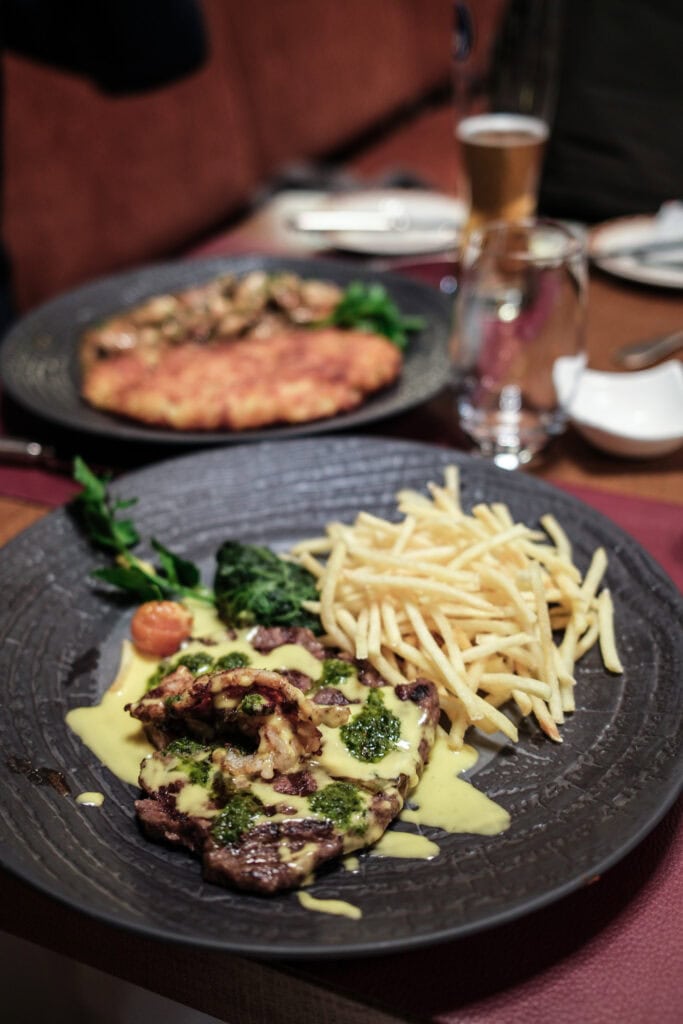
    We checked in late afternoon, went right next door to get ski rentals (which was the most efficient ski rental process ever), then went in search of dinner. We decided on Barry’s Restaurant Bar & Lounge, since they were about to squeeze us in without a reservation. TIP ALERT: You need to book meals and experiences ahead of time in Switzerland; it’s very hard to get into most places last-minute.

    We all could barely keep our eyes open, but we made it through the meal, which was very tasty in a cozy atmosphere. We headed straight back to the hotel for showers and we all crashed hard into bed.


    Hotel Kreuz and Post
    Hotel Kreuz and Post interior
    strolling switzerland
    Barry's Restaurant Bar & Lounge

    .

    Day 2: Ski Day at Kleine Scheidegg-Männlichen

    12. Hours. Later. We woke up. The hotel offers a complimentary breakfast buffet with a wide variety of offerings. On ski trips, this is always a perk worth prioritizing for us. The cappuccino machine only helped solidify our affections for this hotel perk.

    After breakfast we donned our ski gear, fetched our equipment from the ski storage room behind the hotel, and walked over to the train station to print off our lift tickets. We took the bus across from the hotel to the base of the mountain (terminal) then rode a gondola to the top of the mountain.

    Kaitlyn had woken up with a sore throat and was hanging in there the best she could by the time we finally started skiing. I’m not sure it it was that or figuring out a ski mountain and map that runs things differently than we’re used to, but it all felt pretty clunky on that first day. There were a lot of flat runs resulting in poling, uphill areas, and confusion over how to map showed certain runs.

    By midday Kaitlyn was almost in tears so I opted to take her back to the hotel. The buses were tricky to figure out but the kindness of stranger helped us board the right one and soon enough we were back at the place, her in a hot bath and me running a load of laundry in the hotel’s laundry room (perk!). David and Hailey continued skiing and had a good time, except for the part where Hailey fell of a T-bar lift and had to take off her skis and hike her way up the mountain.

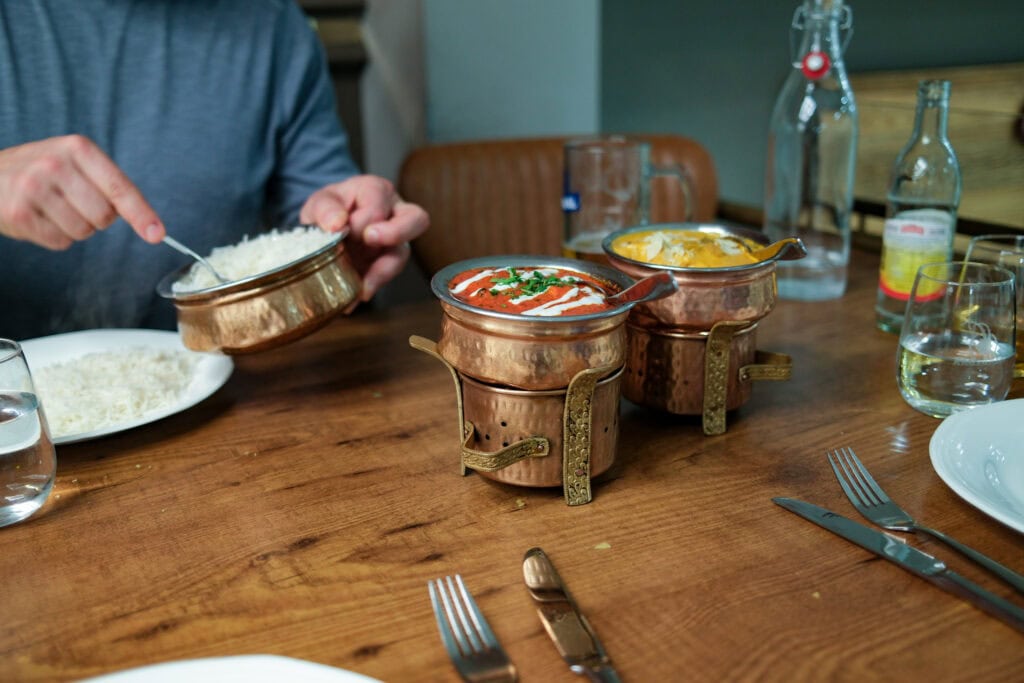
    It wasn’t our shiniest vacation day. That evening we were turned away from a couple of restaurants (reservations needed) but ended up having an absolutely delicious dinner at Golden India who were able to get us in a save the day!
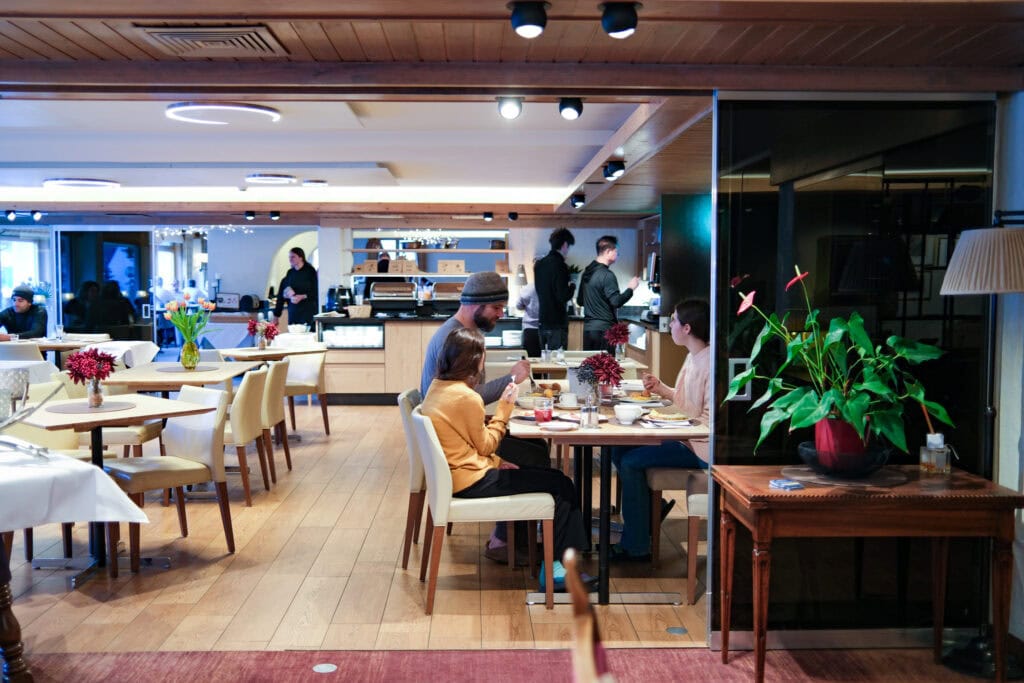
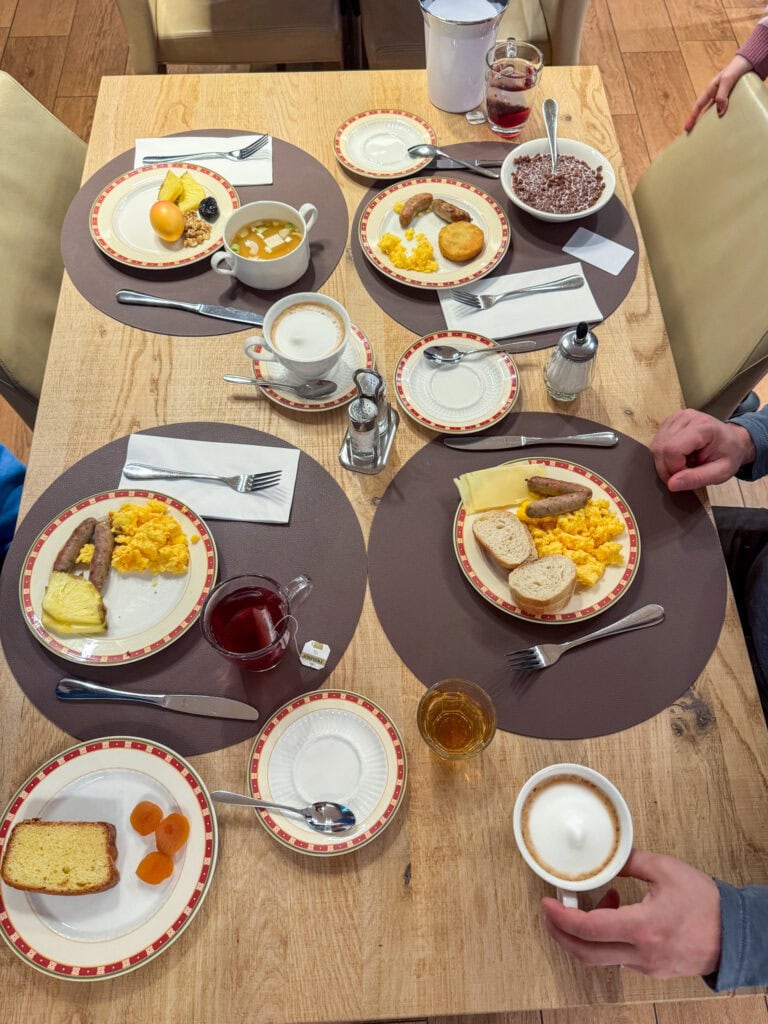
    breakfast buffet
    breakfast buffet plates
    Ski Day at Kleine Scheidegg-Männlichen | Family Ski Trip to Grindelwald Switzerland
    Kleine Scheidegg-Männlichen | Family Ski Trip to Grindelwald Switzerland
    Golden India

    .

    Day 3: Grindelwald First & Top of Europe

    The next day was forecasted to be a clear day and I knew I wanted us to have blue skies when we visited Jungfraujock, also known at the Top of Europe. We decided to start the day at Grindelwald First Top of Adventure. We walked to the gondola (free with our lift tickets) from our hotel and after a 10 minute ride arrived at an absolutely stunning view. The kids were excited and we wanted to do it all- the Cliff Walk (complimentary), the First Flyer, where you zipline over the Alps in a swing, and the First Glider, where you fly like an eagle over the Alps in a group of four, on your belly. We loved it all!

    The views were stunning, there were no lines for the activities, and we were able to sip hot tea and stare at the view without a crowd. Highly recommend!

    While sipping tea and admiring the clear skies we decided that it was also the right day to try and experience the Top of Europe, as clouds were supposed to roll in the next day. We took the gondola down and caught a bus to Terminal, where we rode the gondola up to the starting point of the tour, which begins with a train ride up the mountain to the highest railway station in Europe.

    As part of the Top of Europe experience you get a phenomenal view of the longest glacier in the Alps… and then you get to walk through it! The ice palace was a definite highlight of our trip. We lucked out that it wasn’t crowded at all and sliding along the icy path felt truly magical. We got chocolates from the highest chocolate shop in Europe and enjoyed them on our train and gondola ride back down the mountain.

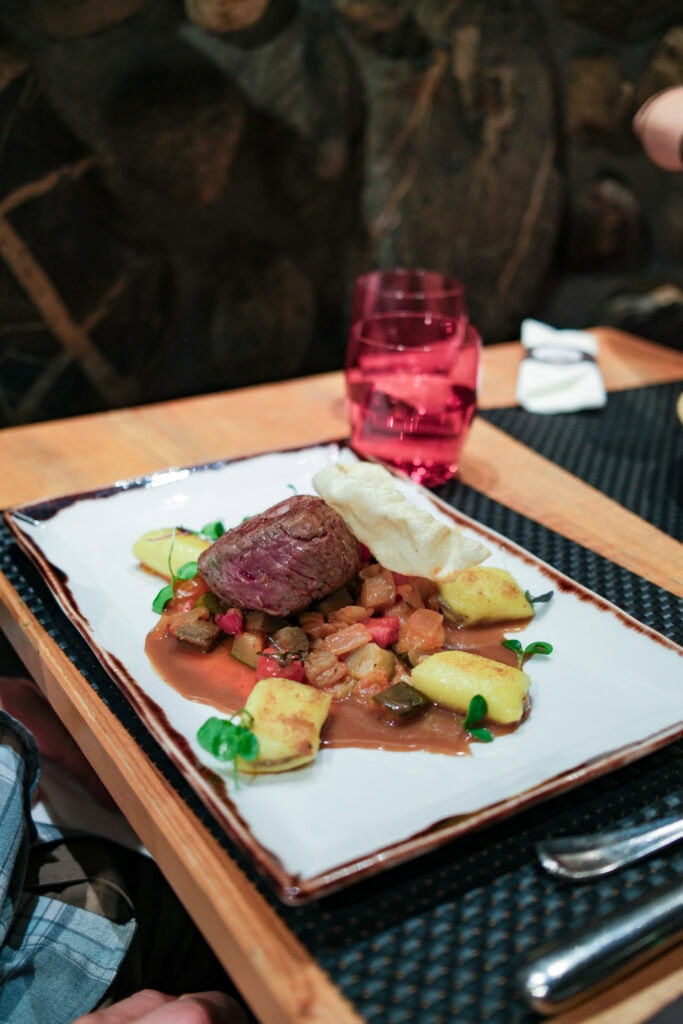
    We picked up pizza from Take Away for the kids while David and I enjoyed a dinner date at the hotel’s restaurant. The atmosphere was cozy and the food was excellent. It has a menu that shifts seasonally and both of us figuratively licked our plates clean.


    cliff walk | Family Ski Trip to Grindelwald Switzerland
    dad riding First Flyer | Family Ski Trip to Grindelwald Switzerland
    First Flyer ride | Family Ski Trip to Grindelwald Switzerland
    First Flyer experience | Family Ski Trip to Grindelwald Switzerland
    snowy zip line | Family Ski Trip to Grindelwald Switzerland
    First Glider | Family Ski Trip to Grindelwald Switzerland
    switzerland cow | Family Ski Trip to Grindelwald Switzerland
    enjoying the view | Family Ski Trip to Grindelwald Switzerland
    snowy view | Family Ski Trip to Grindelwald Switzerland
    Top of Europe ice palace
    inside Top of Europe ice palace | Family Ski Trip to Grindelwald Switzerland

    .

    Day 4: Skiing at Grindelwald First

    Kaitlyn woke up this day unsure if she was up for skiing with her sore throat. After breakfast and a promise from me that I’d happily come back with her if she tried and was miserable, we got our gear and hopped the bus back to Grindelwald First gondola to head to the top.

    The day started off quite snowy, but the runs were a much better fit for us. They were wide open with a little powder and the mountain felt very open and uncrowded. We started to hit our stride and at one pausing point Kaitlyn looked and me and declared: I’m so happy I didn’t miss out on this.

    We skied happily all morning, laughing when we took a lovely run down the mountain, declaring it our favorite one yet, only to have it dead end at a bus stop. There was nothing to do but pop off our skis, wait on the bus, and head back to the gondola at the base of Grindelwald First.

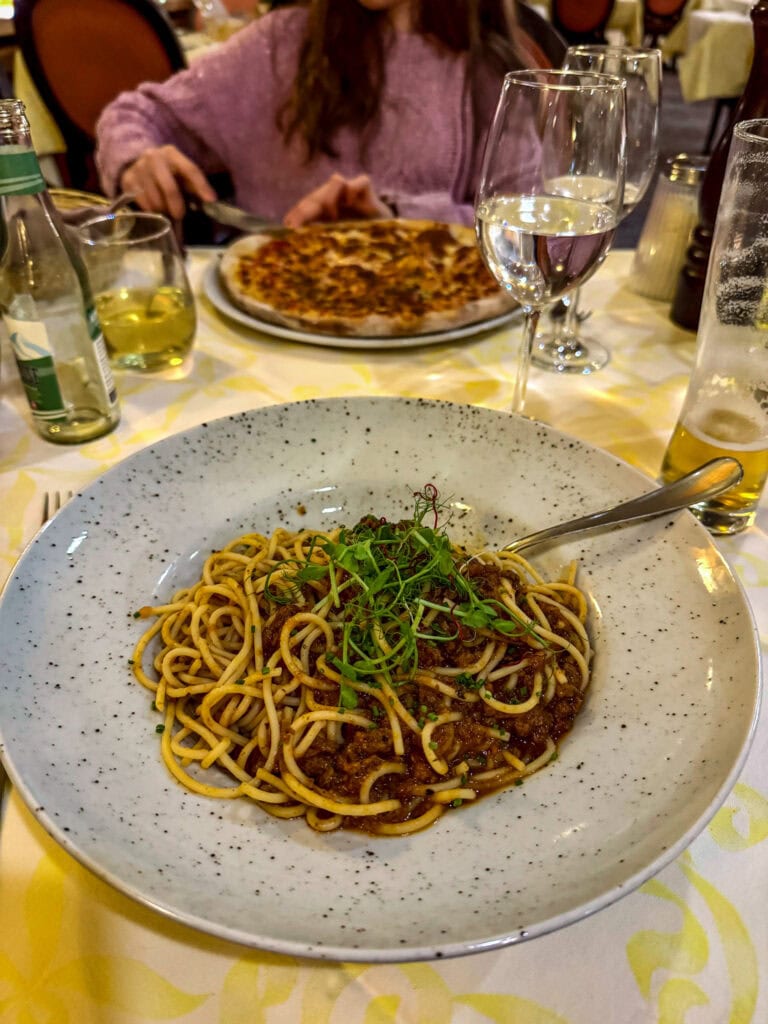
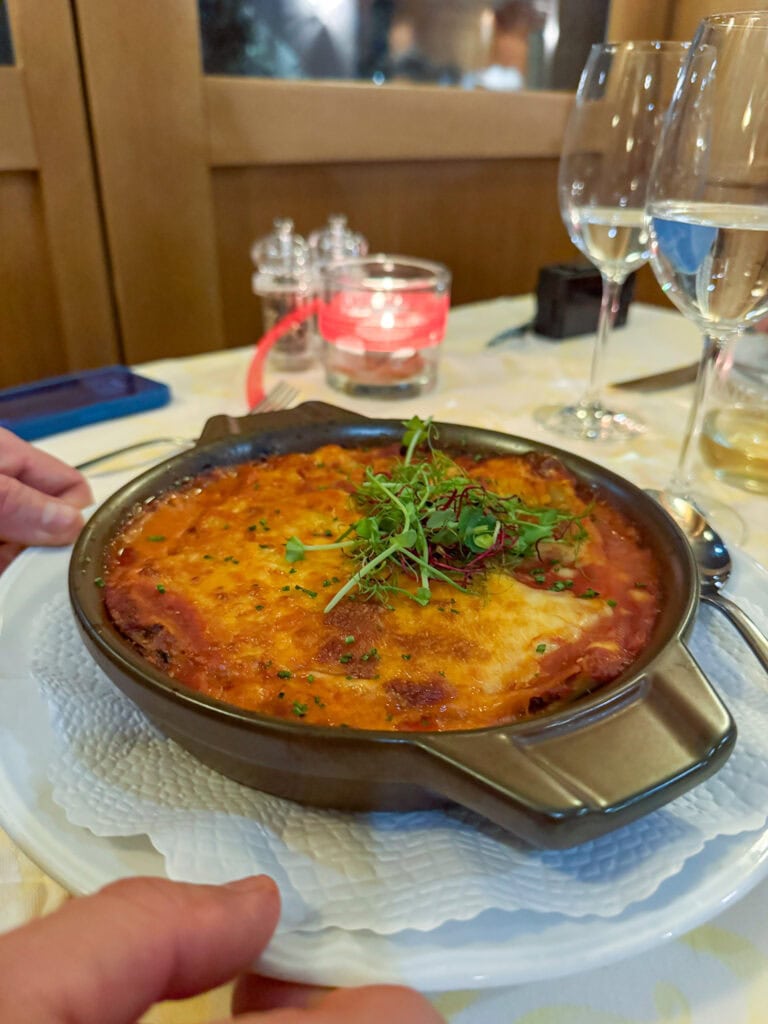
    At the top we went in for some lunch- spaghetti Bolognese, burgers, and fries, which we enjoyed while watching some Olympics. Once fed and warm we decided to head to the highest part of the mountain and… well, my goodness it turned out to be the ultimate highlight of our skiing.

    The skies were clear, the snow park was empty, the views were out of this world, and we spent the afternoon skiing that area as many times as we possibly could. We went over the hills, skied the course, and took the lift back up on repeat until finally they closed the lift for the day and we had to accept it was time to head down. That afternoon will forever be concreted in my memory.

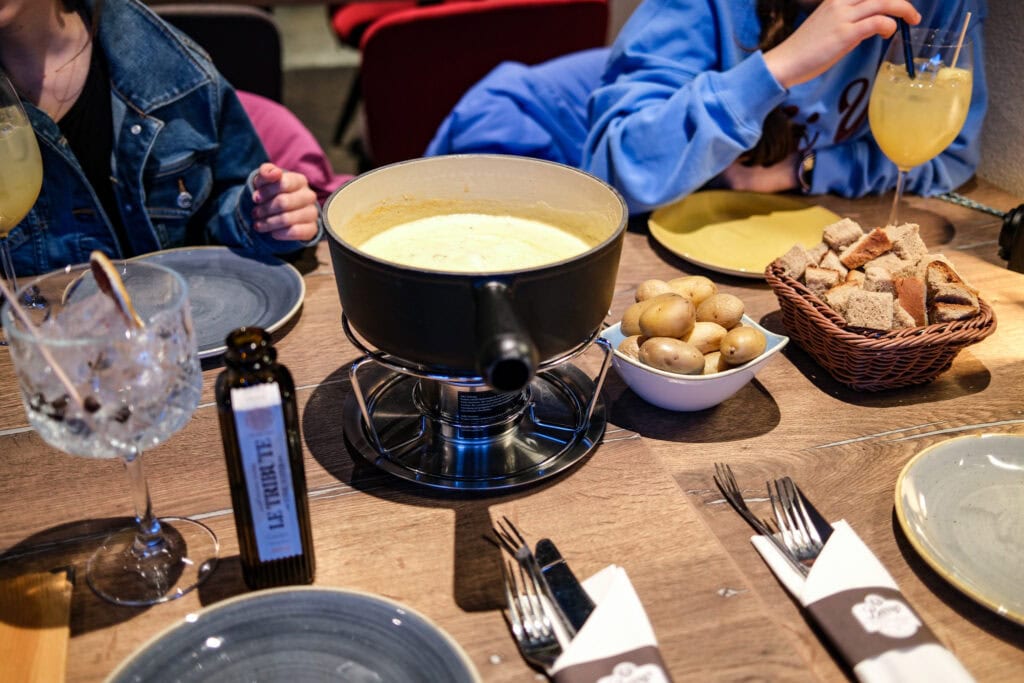
    Back at the apartment we changed and headed to dinner. We popped into a few places, none that had space for us (reservations needed), so we returned to Barry’s where we enjoyed a traditional Switzerland cheese fondue! The girls were just so-so on the Raclette cheese, but the potatoes and bread were a hit for all.

    The girls got cozy back at the apartment afterwards while David and I made us of the saunas in the spa area at the hotel. As a family we sure missed the hot tub experience (it definitely is not as prevalent in Europe as in the US), but the sauna was beautiful and provided a nice warm up before calling it a night.


    Skiing at Grindelwald First | Family Ski Trip to Grindelwald Switzerland
    Family Skiing at Grindelwald First | Family Ski Trip to Grindelwald Switzerland
    cozy lunch | Family Ski Trip to Grindelwald Switzerland
    Family Ski Trip to Grindelwald Switzerland
    snow park | Family Ski Trip to Grindelwald Switzerland
    Barry's
    Barry's Switzerland cheese fondue

    .

    Day 5: Skiing at Kleine Scheidegg-Männlichen

    Our last ski day we decided to return to Kleine Scheidegg-Männlichen via Grindelwald Terminal, taking the Eiger Express gondola up. We knew wet weather was supposed to be returning and while it was rain in the town, on the mountain it was ALL snow! It was beautiful and we enjoyed it until it really started pounding down so hard that it was hard to see.

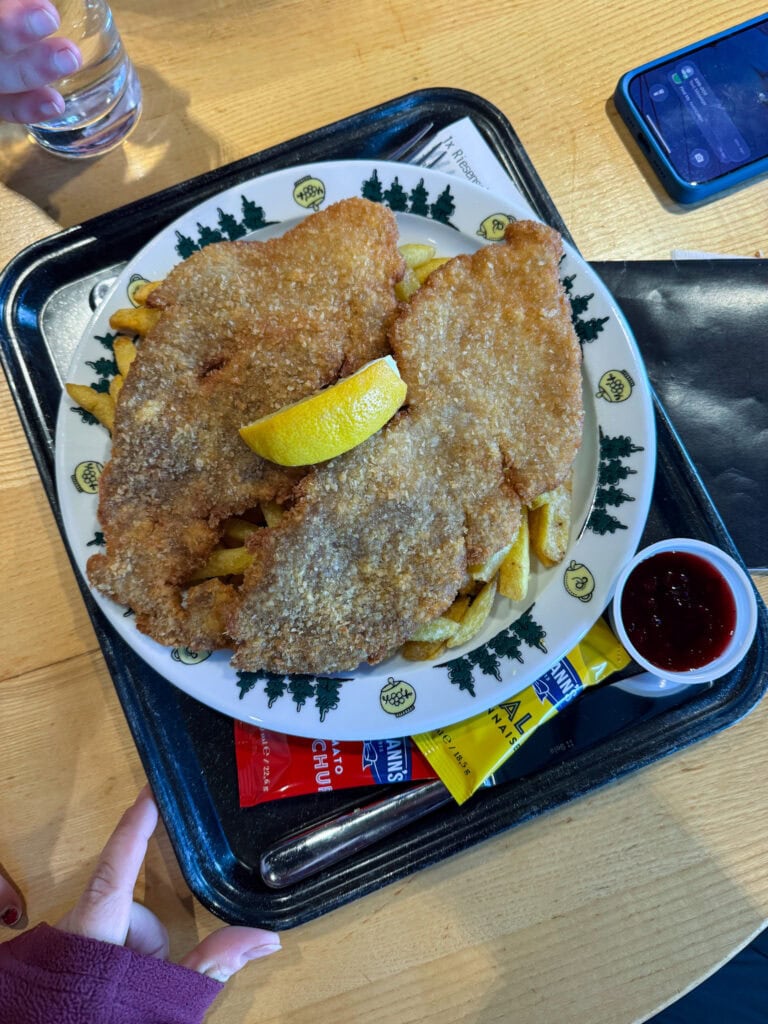
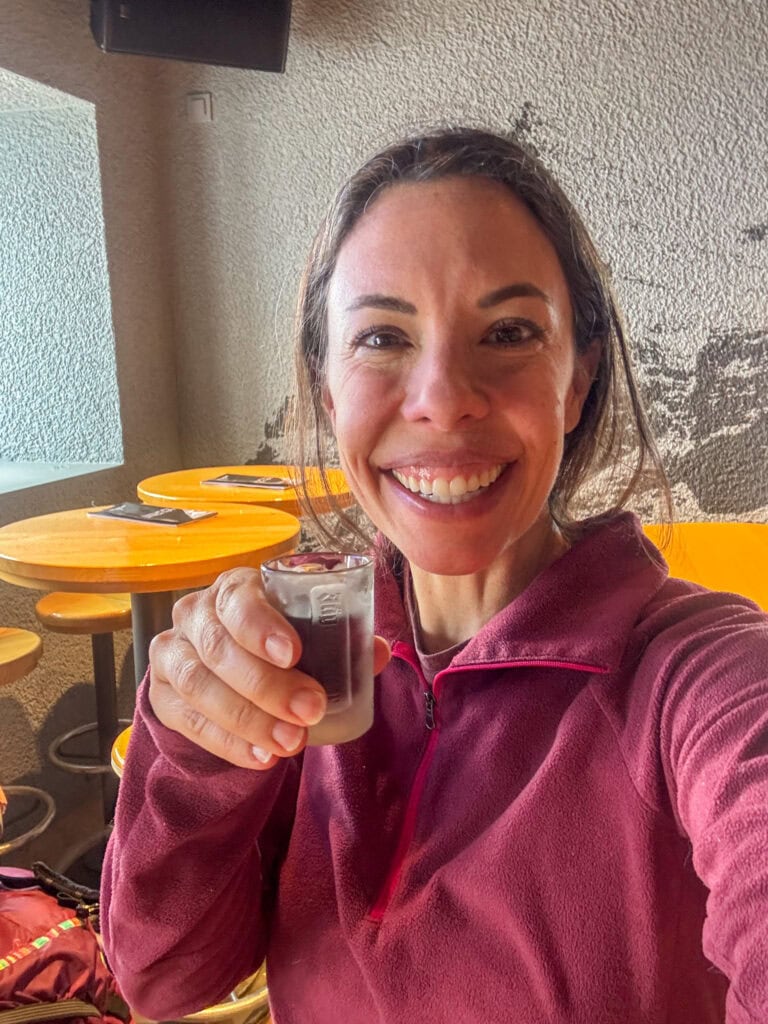
    We took the opportunity to stop at The Wall Bar on the mountain, order schnitzel, sip coffee and hot chocolate, and watch the Olympics. I also had a shot of Jägermeister, for warming up purposes of course.

    Afterwards we headed back out and were thrilled at the 6+ inches of fresh powder the storm has delivered! The weather ebbed and flowed all afternoon from clear to quite snowy. The girls loved the powder. We attempted another T-bar and lost Hailey again. I jumped offf with her and we skied down under it to attempt another ride up, which was successful! Kaitlyn fell in a hill of deep powder and it took a solid 10 minutes to dig her skies out, which she laughed endlessly at. We enjoyed the day very much and closed down the mountain.

    Hungry and tired we went in search for dinner that night, stumbling upon the restaurant at Hotel Spinne completely by happenstance. The views were beautiful from the dining room, the food was hearty and delicious, and it made for a wonderful last evening in Grindelwald.


    Skiing at Kleine Scheidegg-Männlichen
    snow ski day | Family Ski Trip to Grindelwald Switzerland
    back to skiing | Family Ski Trip to Grindelwald Switzerland
    dinner Hotel Spinne

    .

    Day 6: Zurich & The Lindt Chocolate Factory

    We woke up our last morning, packed up, grabbed breakfast, and walked across the street to the train station to be ready to leave Grindelwald by on the 9:15 train. Feeling much fresher and having finally downloaded the train app, the trip back to Zurich felt much smoother than the one there. We played cards and watched the rain hit the windows, which the girls were delighted at for the very authentic Harry Potter Hogwarts train feel.

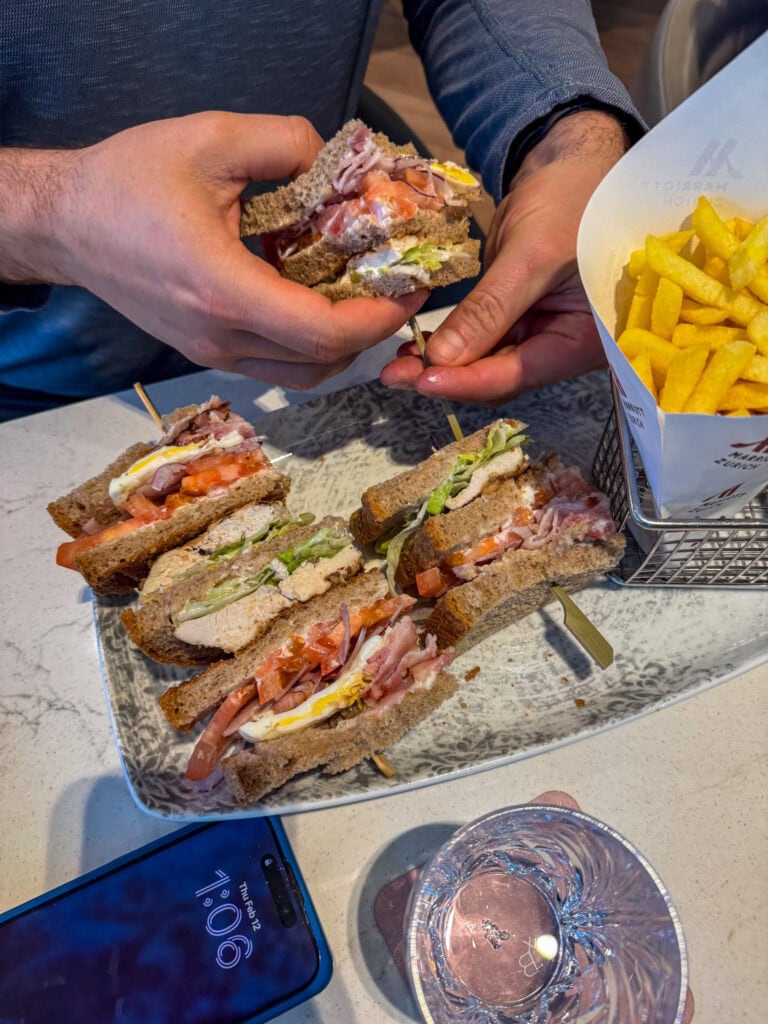
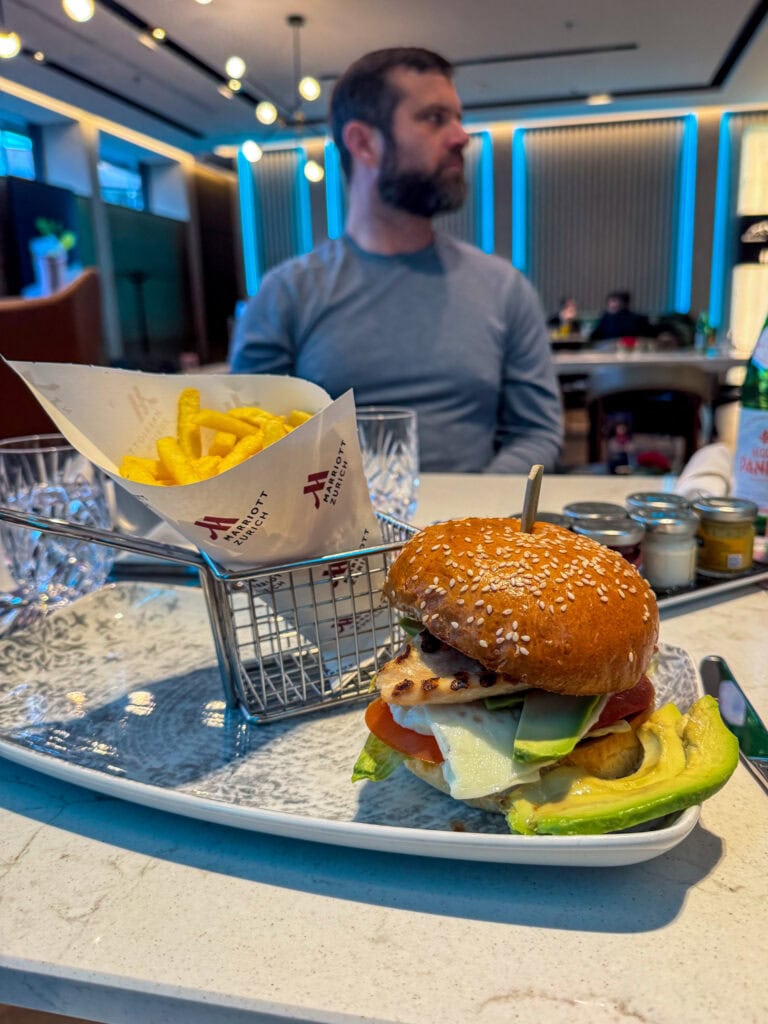
    It was pouring when we got to Zurich and we walked the quarter mile to our Marriott in it. We unloaded into our room and decided on lunch at the hotel bar, which was surprisingly good. At lunch we surprised the girls with the our rainy day activity- visiting the Lindt Chocolate Factory & Museum!

    They both were excited at the prospect of seeing where their favorite chocolate truffles were made, so much so that Kaitlyn burst into happy tears. After lunch we went back to the train station and a 15 minute train followed by a 15 minute walk had us arriving at the grand site of the Lindt Chocolate Factory!

    Let me tell you, like dinners in Switzerland, this needs to be booked weeks in advance. We learned that the hard way when we tried to book it a few days prior and it was all sold out. We scored the very last set of tickets to a chocolate bar making class which allowed this trip to happen.

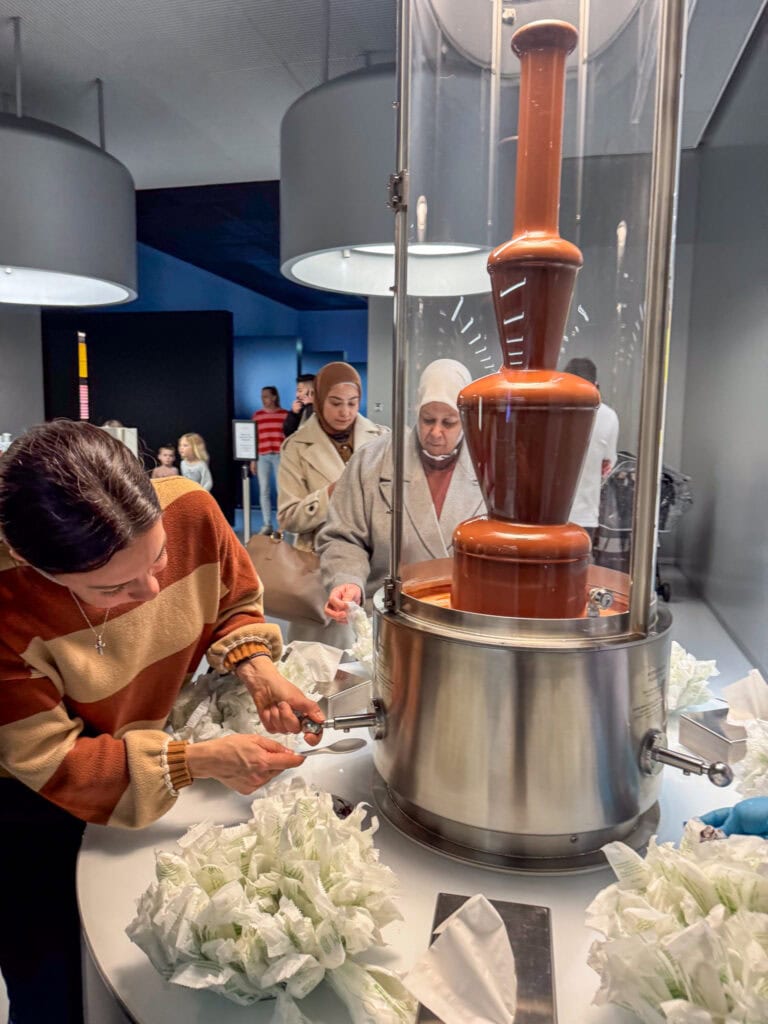
    The building itself is grand! Being greeted by the world’s tallest chocolate fountain sets the tone and every experience that follows matches up. Our chocolate bar making tickets didn’t grant us entry into the museum, but we were told there were a few available last minute in person (even though online it said sold out). We decided to go for the full experience to learn the history of chocolate and revel in the unlimited chocolate tastings.

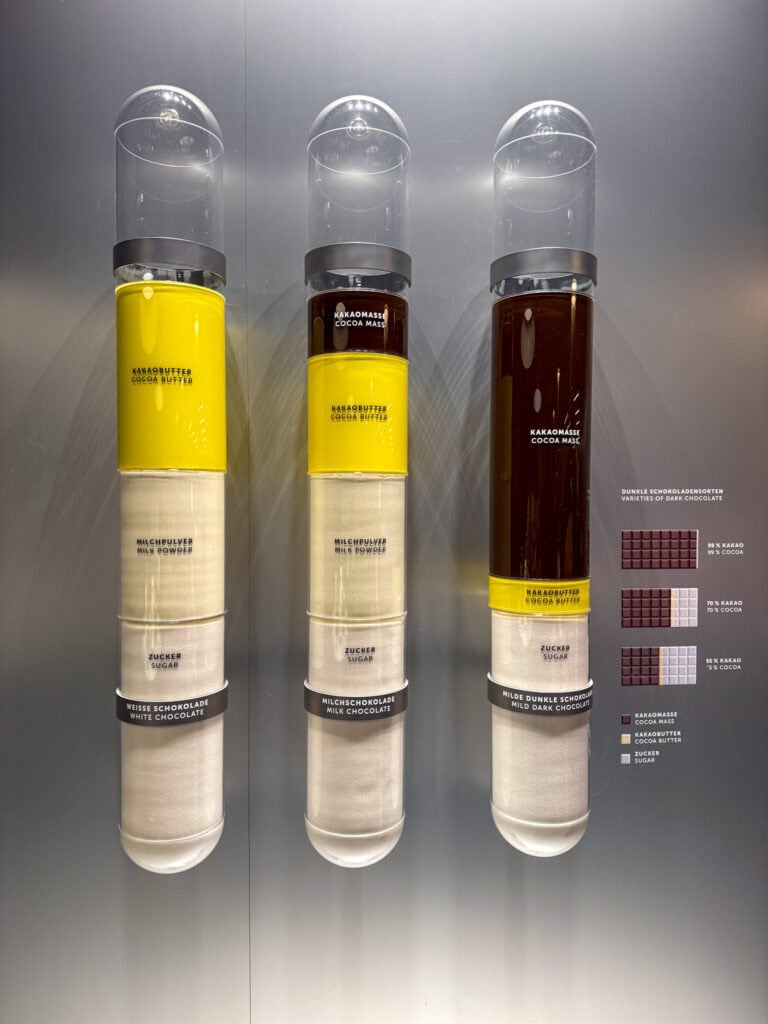
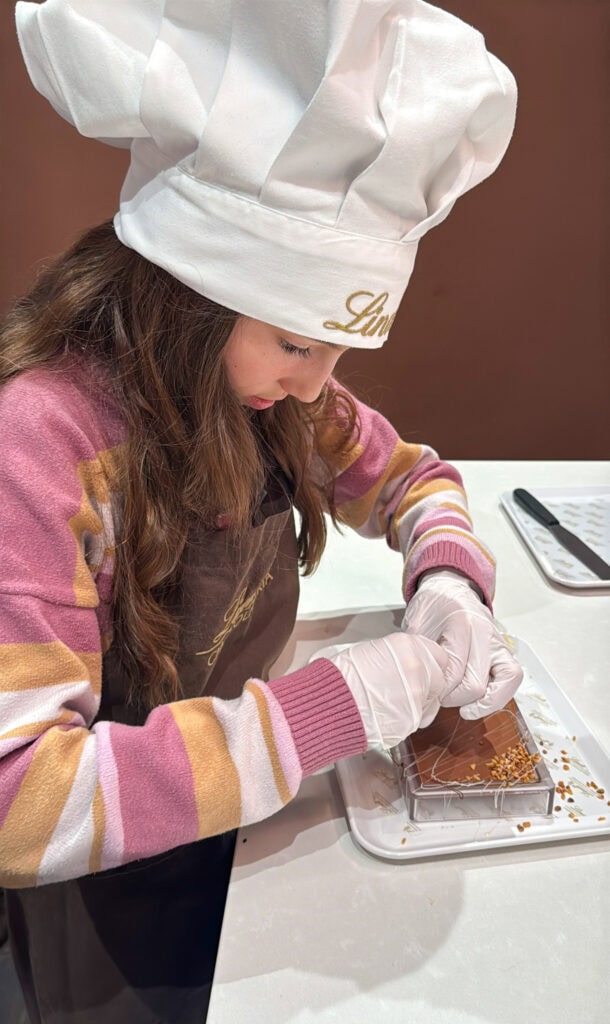
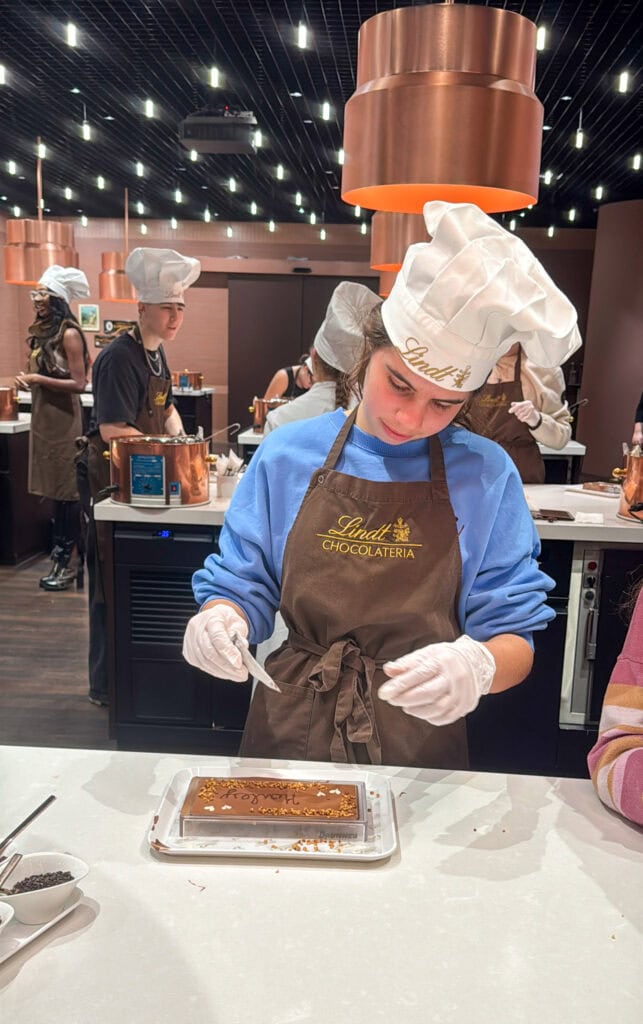
    Everything is very well done, from the museum experience to our chocolate bar making class. They dressed us in chef hats and aprons, walked us through the bar making process, educated us on the differences in chocolate types, and made the whole experience deeply enjoyable for us all. Highly recommend!


    train station
    lindt chocolate factory activity
    lindt chocolate factory fun activity

    .

    We stayed approximately three hours at the museum, including the hour of our class, and took the train back to Zurich all hopped up on chocolate.

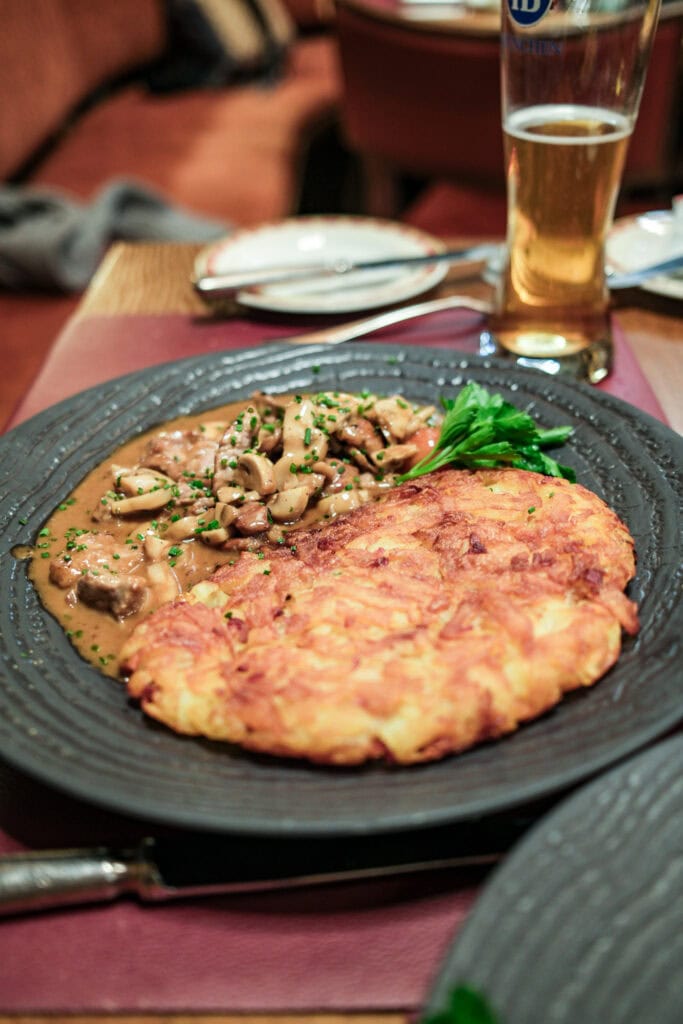
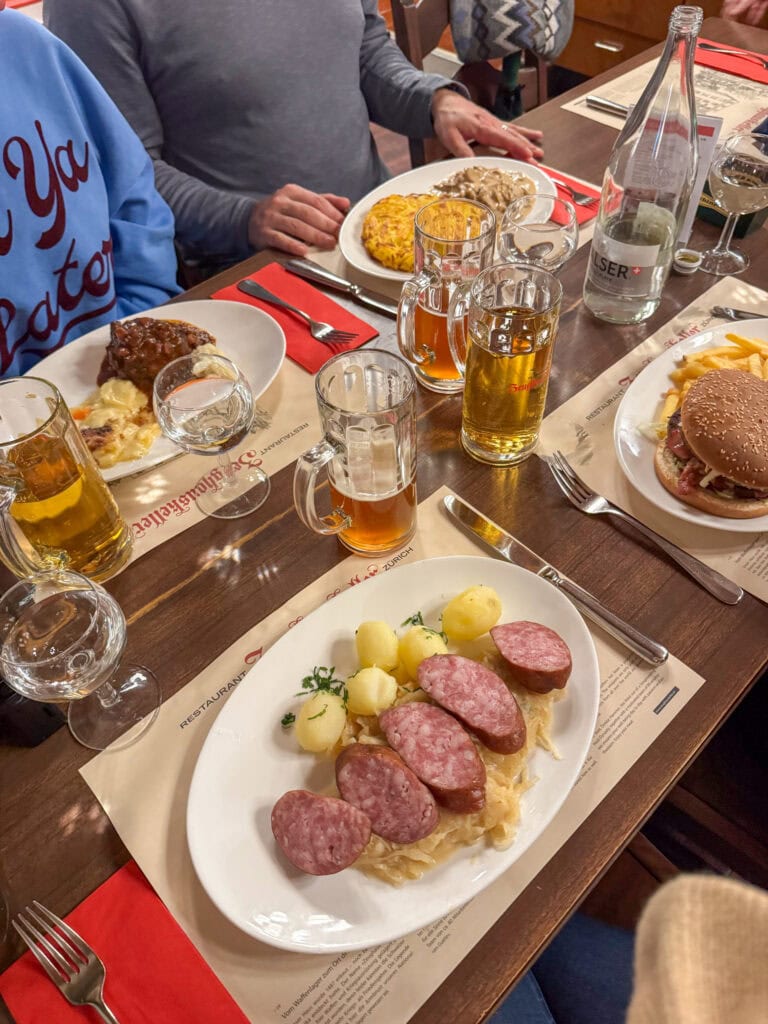
    We went in search of dinner and a friend had told me about a place called Zeughauskeller, so we went in search of this historic and popular restaurant. We lucked out and they were able to fit us into the packed place without a reservation where we enjoyed beer, apple juice in mugs, and sausages. The vibe and food were both excellent, and we all enjoyed reading the history of this for armory built in 1487. A perfect last night!


    strolling Zurich at night
    Zeughauskeller

    .

    Back at the hotel we rotated through showers and watching the Olympics before calling it a night. At 6:15 AM we were up and catching an Uber to the airport to started our travel back home, which included a flight to Chicago, a long layover, and our flight back to Greenville. All in all, we ended up being awake for 23 hours by the time we were stepping into showers back in our own home.

    Switzerland Ski Trip Conclusion and Takeaways

    • The travel was a LOT for a weeklong trip. If I were to do it again, I’d spend a day or two in Zurich before heading to Grindelwald.
    • The views of the Alps are absolutely stunning and I really don’t think you can find a more breathtaking mountain range on earth. (But if you have one you think could rival it, I’m all ears).
    • Get the train app. It solves all your problems.
    • Book dinners and tours a few weeks in advance.

    Trip Questions from Instagram

    What made you want to go to Switzerland? I enjoyed seeing your pictures- beautiful there.

    You hit the nail on the head- the beauty! I’ve always heard about the Swiss Alps and their beauty. Being that we love skiing, we decided to go for it. The country is so stunning in winter, I can only imagine how jaw dropping it is in summer.

    What’s the cost comparison to US ski destinations (like Big Sky)?

    On the whole, we found it to be less expensive to go to Switzerland than out west in the US. Flights are about even in cost. Lodging is less expensive in Switzerland. Lift tickets are significantly less expensive in Switzerland. Eating out is more expensive in Switzerland.

    Please share a blog post with your full itinerary! This trip is on our radar!

    Done! In a mere 2,700 words- ha! While we had some definite highlights, I’d do a few things differently. I’d get lodging as close to the Grindelwald First gondola as possible so you’d be close to our favorite mountain and only have to take the bus if heading to the other mountain. I would extend the trip to make travel easier on both sides. I’d make dinner reservations each night (even though I do think that can be hard to plan for based on how the day on the mountain goes).

    Did you take all your ski equipment with you?

    We packed our ski clothes, helmets, goggles, and gloves. We rented (very convenient, right next to the hotel) boots, skis, and poles.

    Did you have to rent a car to get to the Lindt Chocolate Factory?

    No car rental needed the whole trip! From Zurich it’s a short train ride to Kilchberg Station, then a 10-15 minute walk.

    No question, but thanks for bringing us along!

    My pleasure! I love getting to share travel destinations because I so enjoy seeing where and how other families travel myself!

    Loved your stories; what will you remember most from the trip?

    Oh, great question! My personal highlights: ziplining over the snowy alps together, the afternoon we we spent skiing the snow park on top of Grindelwald First over and over again with the insane views, walking through Europe’s longest glacier (the ice palace), and our last dinner together with good views, plates of pasta, and laughing together about the trip’s triumphs and mishaps.

    What made you choose Switzerland? I do Northern Italy so I’m biased. 😉

    We actually started off looking at both Switzerland and Italy, but prices in Italy were so much higher because of the Winter Olympics, so with the timing we needed, Switzerland won out. But I wouldn’t be against skiing Northern Italy to compare 😉

    How did you decide where to go in Switzerland? So many options!

    We originally were looking at Zermatt, which had us research top family skiing destinations in Switzerland online. Grindelwald kept showing up in the top three wherever we looked and promised the stunning views of the Alps. That plus the fact we’re huge Harry Potter fans sealed the deal. David does not agree with that last statement 😉

    If you’re planning a trip and have any questions, please comment below and I’m happy to answer them. I think planning travel in Europe can feel intimidating and so I’m always happy to chat about our experiences if it’s helpful!

  • Mona’s Eyes: A Novel by Thomas Schlesser – Reviewed by Sharon Lorenzo

    Mona’s Eyes: A Novel by Thomas Schlesser – Reviewed by Sharon Lorenzo

    Barnes and Noble Book of the Year: 2025

    International book seller Barnes and Noble chose this book as its 2025 best seller, translated into 38 languages from the original by French art historian, Thomas Schlesser.   He is a professor of art history at the Ecole Polytechnique in Paris, and this is his American debut with the work featured by Europa Editions in New York. He chose the image of a work of art by Johannes Vermeer from 1665 known as the Girl with the Pearl Earring which is in the Mauritshuis House in the Hague for his cover. The painting was donated there by Arnoldus Tombe in 1902 who had paid about 24 euros for same in 1881.

    Girl with a Pearl Earring, oil on canvas, 1665, Mauritshuis House.

    Professor Schlesser has taken on a very unusual task with this novel which highlights 52 works of art and the story of a young girl, age 11, who wakes up one morning and cannot see.  After medical exams and testing, her sight returns in a few days. Physicians cannot explain this blackout and insist that she see specialists in sight control and a psychiatrist to keep her calm and relaxed.  Instead of a tedious weekly session with the latter, her grandfather steps in and says he will manage the situation.  His plan is to take her each Wednesday to one of the three major museums in Paris for a detailed look and examination of a work of art.  Mona loves this idea, and the book goes into detail on each of the 52 visits.

    What is such fun is that the author divided the book into three sections with works of art from the Louvre in part one, the Museé D’Orsay in part two, and the Pompidou from the Beaubourg suburb in part three.  These are very cleverly illustrated in the two-part cover of the book.

    There is an expression in Spanish that reads: “Puede ver pero no puede mirar,” which translates that one can look but did not see enough. As museum statistics have claimed that the average visitor spends about 20 seconds in front of each work of art, I can relate that looking and seeing can be different experiences.  With the details on each work of art, the grandfather tells Mona about the artist, his or her country, and the medium of the artwork. They then together stand in front of same for at least 20 minutes and talk about the image, its content, its meaning, its details and how they each think it became a very special work of art.

    In part one Schlesser chose the Mona Lisa by Leonardo da Vinci as one of 19 works from the Louvre, and the grandfather explains that this was a private commission by a wealthy Florentine businessman, Francesco del Giocondo, who wanted to capture the smile of his lovely wife Lisa.  In my art history classes, I learned that the Catholic church forbid women to be used in works of art in the 16th century unless they were to look like the Virgin Mary or her helpers.  To engage also with the viewer in a direct pose was also considered sinful and most portraits were done in profile.  The Mona Lisa thus became famous for her engaging smile and simple repose.  Ironically Da Vinci never delivered the work of art and instead took it to France with him when he went to work for King Francis I who bought it from him in 1519. Subsequent kings had it in Versailles until it was moved to the Louvre where it is now under bullet proof glass where 80% of the visitors line up to see her.

    Leonardo da Vinci, Mona Lisa, 1519. Louvre Museum.

    One more favorite in the second chapter of the book is the work of Paul Cezanne from 1890 called Montagne Sainte-Victoire, a view that he captured in oil from his studio window in Provence about 90 times. Cezanne’s father was a banker and not happy that his son chose to be an artist, but the famous French art dealer, Paul Durand Ruel, saved him by selling his work in his Paris gallery.  Cezanne was quoted as saying that the mountain had a raging thirst for sunshine which he tried to capture in the details of the foreground, mid-level, and background.  Mona said, “Grandpa I think Cezanne wanted to light up the world with his paintings.”  (p. 256)

    Paul Cezanne, Montagne Sainte- Victoire, 1890. Museé D’Orsay.

    In the third section Mona loves many of the works but identifies the work of Georgia O’Keeffe from 1924 as her favorite.  Entitled Red, Yellow and Black Streaks, the grandfather says that O’Keeffe painted this one when she was living near Lake George in the Adirondack Mountains.   He explained that her style became known as bio-morphism as she tried to turn nature into abstractions.   Mona said, “Grandpa she has created a heaven of colors here with vapors and clouds moving all over the sky!” (p.335).

    Georgia O’Keeffe, Red, Yellow and Black Streaks, 1924. Centre Pompidou.

    As the story ends Mona occasionally loses her sight again but when it returns, she relished the reminders of her 52 wonderful days with her grandfather looking at so many works of art. It is a complex ending to a wonderful book that captures the message that we need to both LOOK and SEE more in the wonderful world around us every day.  Enjoy!


    Source:
    Thomas Schlesser, Mona’s Eyes. New York, Europa Editions, 2025.

    The post Mona’s Eyes: A Novel by Thomas Schlesser – Reviewed by Sharon Lorenzo appeared first on Sharp Eye.

  • Mona’s Eyes: A Novel by Thomas Schlesser – Reviewed by Sharon Lorenzo

    Mona’s Eyes: A Novel by Thomas Schlesser – Reviewed by Sharon Lorenzo

    Barnes and Noble Book of the Year: 2025

    International book seller Barnes and Noble chose this book as its 2025 best seller, translated into 38 languages from the original by French art historian, Thomas Schlesser.   He is a professor of art history at the Ecole Polytechnique in Paris, and this is his American debut with the work featured by Europa Editions in New York. He chose the image of a work of art by Johannes Vermeer from 1665 known as the Girl with the Pearl Earring which is in the Mauritshuis House in the Hague for his cover. The painting was donated there by Arnoldus Tombe in 1902 who had paid about 24 euros for same in 1881.

    Girl with a Pearl Earring, oil on canvas, 1665, Mauritshuis House.

    Professor Schlesser has taken on a very unusual task with this novel which highlights 52 works of art and the story of a young girl, age 11, who wakes up one morning and cannot see.  After medical exams and testing, her sight returns in a few days. Physicians cannot explain this blackout and insist that she see specialists in sight control and a psychiatrist to keep her calm and relaxed.  Instead of a tedious weekly session with the latter, her grandfather steps in and says he will manage the situation.  His plan is to take her each Wednesday to one of the three major museums in Paris for a detailed look and examination of a work of art.  Mona loves this idea, and the book goes into detail on each of the 52 visits.

    What is such fun is that the author divided the book into three sections with works of art from the Louvre in part one, the Museé D’Orsay in part two, and the Pompidou from the Beaubourg suburb in part three.  These are very cleverly illustrated in the two-part cover of the book.

    There is an expression in Spanish that reads: “Puede ver pero no puede mirar,” which translates that one can look but did not see enough. As museum statistics have claimed that the average visitor spends about 20 seconds in front of each work of art, I can relate that looking and seeing can be different experiences.  With the details on each work of art, the grandfather tells Mona about the artist, his or her country, and the medium of the artwork. They then together stand in front of same for at least 20 minutes and talk about the image, its content, its meaning, its details and how they each think it became a very special work of art.

    In part one Schlesser chose the Mona Lisa by Leonardo da Vinci as one of 19 works from the Louvre, and the grandfather explains that this was a private commission by a wealthy Florentine businessman, Francesco del Giocondo, who wanted to capture the smile of his lovely wife Lisa.  In my art history classes, I learned that the Catholic church forbid women to be used in works of art in the 16th century unless they were to look like the Virgin Mary or her helpers.  To engage also with the viewer in a direct pose was also considered sinful and most portraits were done in profile.  The Mona Lisa thus became famous for her engaging smile and simple repose.  Ironically Da Vinci never delivered the work of art and instead took it to France with him when he went to work for King Francis I who bought it from him in 1519. Subsequent kings had it in Versailles until it was moved to the Louvre where it is now under bullet proof glass where 80% of the visitors line up to see her.

    Leonardo da Vinci, Mona Lisa, 1519. Louvre Museum.

    One more favorite in the second chapter of the book is the work of Paul Cezanne from 1890 called Montagne Sainte-Victoire, a view that he captured in oil from his studio window in Provence about 90 times. Cezanne’s father was a banker and not happy that his son chose to be an artist, but the famous French art dealer, Paul Durand Ruel, saved him by selling his work in his Paris gallery.  Cezanne was quoted as saying that the mountain had a raging thirst for sunshine which he tried to capture in the details of the foreground, mid-level, and background.  Mona said, “Grandpa I think Cezanne wanted to light up the world with his paintings.”  (p. 256)

    Paul Cezanne, Montagne Sainte- Victoire, 1890. Museé D’Orsay.

    In the third section Mona loves many of the works but identifies the work of Georgia O’Keeffe from 1924 as her favorite.  Entitled Red, Yellow and Black Streaks, the grandfather says that O’Keeffe painted this one when she was living near Lake George in the Adirondack Mountains.   He explained that her style became known as bio-morphism as she tried to turn nature into abstractions.   Mona said, “Grandpa she has created a heaven of colors here with vapors and clouds moving all over the sky!” (p.335).

    Georgia O’Keeffe, Red, Yellow and Black Streaks, 1924. Centre Pompidou.

    As the story ends Mona occasionally loses her sight again but when it returns, she relished the reminders of her 52 wonderful days with her grandfather looking at so many works of art. It is a complex ending to a wonderful book that captures the message that we need to both LOOK and SEE more in the wonderful world around us every day.  Enjoy!


    Source:
    Thomas Schlesser, Mona’s Eyes. New York, Europa Editions, 2025.

    The post Mona’s Eyes: A Novel by Thomas Schlesser – Reviewed by Sharon Lorenzo appeared first on Sharp Eye.

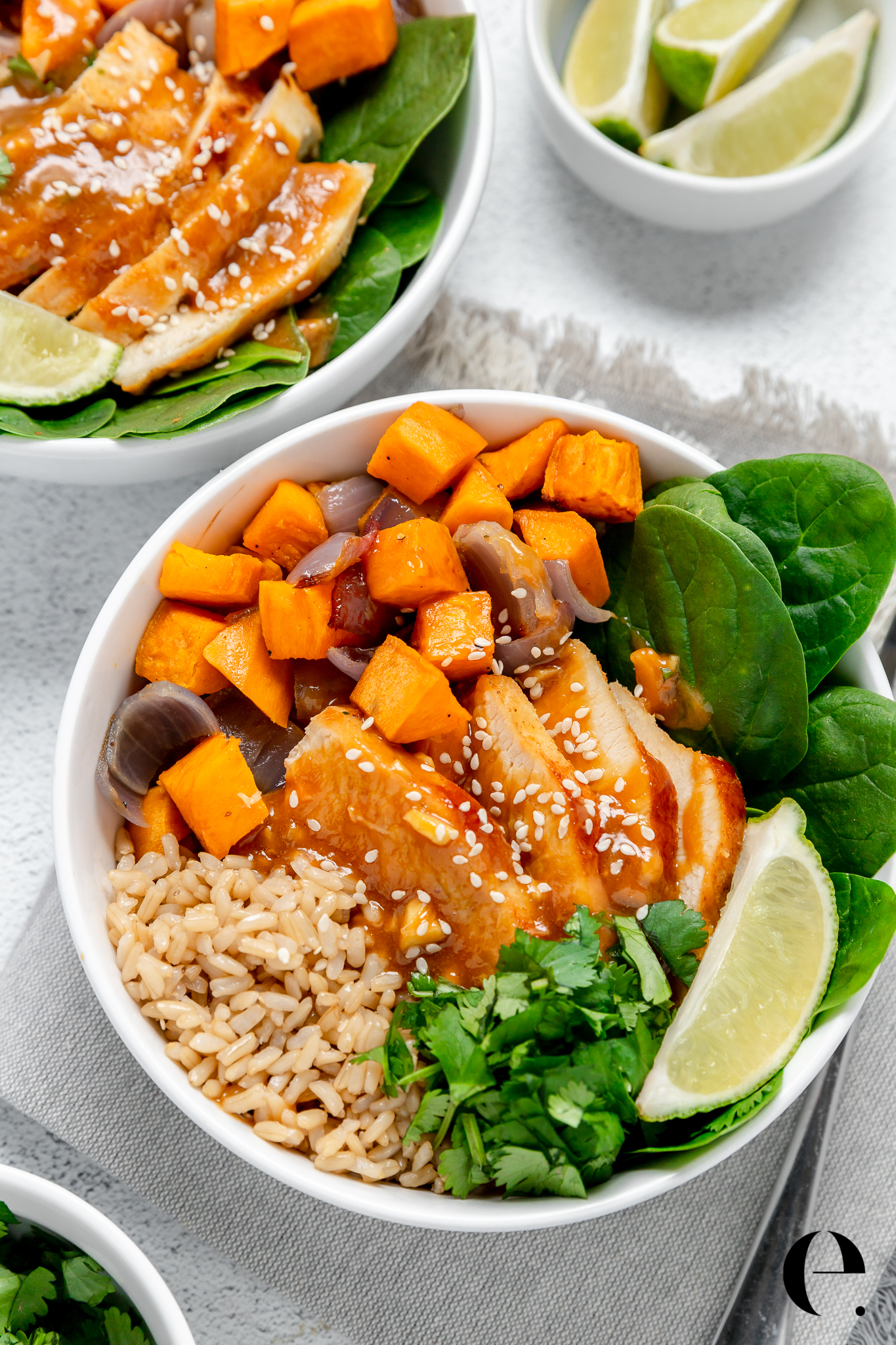
  • Peanut Chicken Rice Bowls with Roasted Sweet Potatoes

    Peanut Chicken Rice Bowls with Roasted Sweet Potatoes

    If you love a nourishing bowl that feels balanced and satisfying, these Peanut Chicken Rice Bowls With Roasted Sweet Potatoes are going to become a regular in your kitchen.

    They are colorful, hearty, and layered with texture. Caramelized sweet potatoes. Savory golden chicken. Fluffy brown rice. Fresh spinach. And a creamy peanut lime sauce that brings everything together.

    This is the kind of meal that leaves you feeling energized and grounded. It is balanced with protein, fiber, and healthy fats, and it works beautifully for both weeknight dinners and meal prep.

    What You’ll Love About this Peanut Chicken Rice Bowl

    • Protein-Rich: High in protein from lean chicken to support steady energy
    • Nutrient Packed: Rich in fiber from sweet potatoes and brown rice
    • Gluten-Free: Naturally gluten free when using tamari or coconut aminos
    • Meal-Prep Friendly: Great for meal prep and stores well for several days
    • Customizable: Easy to customize with extra vegetables or spice

    Peanut Chicken Protein Bowl Ingredients

    For the Bowls

    • Sweet potato: Roasts into tender, naturally sweet bites and adds fiber
    • Red onion: Becomes soft and lightly caramelized in the oven
    • Brown rice: A hearty whole grain base that adds fiber and staying power
    • Baby spinach: Adds freshness and important micronutrients
    • Fresh cilantro: Brings a bright herbal finish
    • Sesame seeds: Add subtle crunch and texture
    • Extra virgin olive oil: Used for roasting and adds richness

    For the Chicken:

    • Boneless skinless chicken breasts: Lean protein that keeps the bowl balanced and satisfying
    • Garlic powder: Adds savory depth
    • Ground ginger: Brings subtle warmth
    • Sea salt and black pepper: Enhance all the flavors
    • Extra virgin olive oil: Helps create a golden sear

    For the Peanut-Lime Dressing

    • Creamy peanut butter: Forms the rich base of the sauce
    • Fresh lime juice: Brightens and balances the richness
    • Honey: Adds a touch of natural sweetness
    • Soy sauce or tamari: Provides savory umami flavor. You can also use coconut-aminos
    • Toasted sesame oil: Adds nutty depth of flavor. Do not skip.
    • Fresh garlic: Gives the dressing bold flavor.

    (See printable recipe card below for full ingredient amounts)

    How to Make Peanut Chicken Rice Bowls

    1. Roast the vegetables: Preheat your oven to 425 degrees F. Toss the cubed sweet potatoes and red onion with olive oil, sea salt, and black pepper. Spread them evenly on a baking sheet. Roast for 20 to 25 minutes until tender and lightly caramelized.
    2. Cook the chicken: While the vegetables roast, season the chicken with garlic powder, ground ginger, salt, and pepper. Heat olive oil in a skillet over medium high heat. Cook the chicken for about 7 to 8 minutes per side, until golden and cooked through. Let it rest before slicing to keep it juicy.
    3. Make the peanut lime dressing: In a small bowl, whisk together fresh garlic, lime juice, peanut butter, honey, and soy sauce. Add sesame oil and olive oil and whisk until smooth. If the sauce is too thick, add one to two teaspoons of warm water until it reaches a pourable consistency.
    4. Assemble the bowls: Divide the brown rice among bowls. Top with roasted sweet potatoes, sliced chicken, and fresh spinach.
    5. Add the dressing: Drizzle generously with peanut sauce and sprinkle with cilantro and sesame seeds. Serve immediately.

    Tips & Variations

    • Add heat: Add red pepper flakes or sriracha for heat
    • Swap the grain: Swap brown rice for quinoa or jasmine rice
    • Add vegetables: Add steamed broccoli or shredded carrots for extra vegetables
    • Try dark meat: Use chicken thighs if you prefer richer flavor
    • Meal prep tip: Store components separately for best texture when meal prepping

    The post Peanut Chicken Rice Bowls with Roasted Sweet Potatoes appeared first on Elizabeth Rider – Modern Healthy Living.

  • Peanut Chicken Rice Bowls with Roasted Sweet Potatoes

    Peanut Chicken Rice Bowls with Roasted Sweet Potatoes

    If you love a nourishing bowl that feels balanced and satisfying, these Peanut Chicken Rice Bowls With Roasted Sweet Potatoes are going to become a regular in your kitchen.

    They are colorful, hearty, and layered with texture. Caramelized sweet potatoes. Savory golden chicken. Fluffy brown rice. Fresh spinach. And a creamy peanut lime sauce that brings everything together.

    This is the kind of meal that leaves you feeling energized and grounded. It is balanced with protein, fiber, and healthy fats, and it works beautifully for both weeknight dinners and meal prep.

    What You’ll Love About this Peanut Chicken Rice Bowl

    • Protein-Rich: High in protein from lean chicken to support steady energy
    • Nutrient Packed: Rich in fiber from sweet potatoes and brown rice
    • Gluten-Free: Naturally gluten free when using tamari or coconut aminos
    • Meal-Prep Friendly: Great for meal prep and stores well for several days
    • Customizable: Easy to customize with extra vegetables or spice

    Peanut Chicken Protein Bowl Ingredients

    For the Bowls

    • Sweet potato: Roasts into tender, naturally sweet bites and adds fiber
    • Red onion: Becomes soft and lightly caramelized in the oven
    • Brown rice: A hearty whole grain base that adds fiber and staying power
    • Baby spinach: Adds freshness and important micronutrients
    • Fresh cilantro: Brings a bright herbal finish
    • Sesame seeds: Add subtle crunch and texture
    • Extra virgin olive oil: Used for roasting and adds richness

    For the Chicken:

    • Boneless skinless chicken breasts: Lean protein that keeps the bowl balanced and satisfying
    • Garlic powder: Adds savory depth
    • Ground ginger: Brings subtle warmth
    • Sea salt and black pepper: Enhance all the flavors
    • Extra virgin olive oil: Helps create a golden sear

    For the Peanut-Lime Dressing

    • Creamy peanut butter: Forms the rich base of the sauce
    • Fresh lime juice: Brightens and balances the richness
    • Honey: Adds a touch of natural sweetness
    • Soy sauce or tamari: Provides savory umami flavor. You can also use coconut-aminos
    • Toasted sesame oil: Adds nutty depth of flavor. Do not skip.
    • Fresh garlic: Gives the dressing bold flavor.

    (See printable recipe card below for full ingredient amounts)

    How to Make Peanut Chicken Rice Bowls

    1. Roast the vegetables: Preheat your oven to 425 degrees F. Toss the cubed sweet potatoes and red onion with olive oil, sea salt, and black pepper. Spread them evenly on a baking sheet. Roast for 20 to 25 minutes until tender and lightly caramelized.
    2. Cook the chicken: While the vegetables roast, season the chicken with garlic powder, ground ginger, salt, and pepper. Heat olive oil in a skillet over medium high heat. Cook the chicken for about 7 to 8 minutes per side, until golden and cooked through. Let it rest before slicing to keep it juicy.
    3. Make the peanut lime dressing: In a small bowl, whisk together fresh garlic, lime juice, peanut butter, honey, and soy sauce. Add sesame oil and olive oil and whisk until smooth. If the sauce is too thick, add one to two teaspoons of warm water until it reaches a pourable consistency.
    4. Assemble the bowls: Divide the brown rice among bowls. Top with roasted sweet potatoes, sliced chicken, and fresh spinach.
    5. Add the dressing: Drizzle generously with peanut sauce and sprinkle with cilantro and sesame seeds. Serve immediately.

    Tips & Variations

    • Add heat: Add red pepper flakes or sriracha for heat
    • Swap the grain: Swap brown rice for quinoa or jasmine rice
    • Add vegetables: Add steamed broccoli or shredded carrots for extra vegetables
    • Try dark meat: Use chicken thighs if you prefer richer flavor
    • Meal prep tip: Store components separately for best texture when meal prepping

    The post Peanut Chicken Rice Bowls with Roasted Sweet Potatoes appeared first on Elizabeth Rider – Modern Healthy Living.

  • Declutter Your Life: Why Moving Is the Perfect Time to Start Fresh

    📦 How Do You Declutter Before Moving?

    Decluttering before moving starts with the three-box method: Keep, Donate/Sell, and Discard. Sort items by category rather than room, apply the one-year rule (if you haven’t used it in a year, let it go), and digitize documents to reduce paper clutter. Start 6-8 weeks before your move for best results.

    ⚡ Quick action: Tackle one room per weekend using the three-box approach. This moving strategy helps you organize efficiently and start fresh in your new space without unnecessary clutter weighing you down.

    Moving to a new home presents a unique opportunity, one that forces you to confront every possession you own. Whether you’re downsizing, relocating across the country, or simply seeking a fresh start, decluttering before your move isn’t just practical. It’s transformative. This complete guide will show you how to turn the chaos of moving into a strategic reset, with proven organization strategies that make the process manageable and even liberating.

    Something shifts when you shift places. Truth tends to tag along.

    The closed closet needs no attention. Boxes tucked behind garage walls? They matter less than they seem. Yet here you are, moving every item you keep into boxes, then moving them forward. Hiding won’t work now.

    Every so often, the right question makes things clearer. What if “Do I actually need this?” was it?

    Moving brings heavy moments, not just because of boxes or deadlines. Hidden beneath the surface sits a quieter unease. Shifting places does what staying cannot. Routine breaks when boxes stack high. Open air arrives where walls once stood. When intentional, such moments extend beyond relocation. Starting again becomes possible.

    🔄 Why Moving Creates a Natural Reset

    Quietly, things pile up. Not loud, just steady. A drawer on its own, a shelf filling a corner. A single trinket grows into half a dozen. Years pass, then you see how the room breathes differently under the weight.

    That rhythm breaks when you move. Everything that needs lifting, wrapping, and labeling helps you see which things truly fit where you’re going. Cost shows up, not only in feelings but also in space and weight. When something takes effort to move, it may not belong anywhere. Unpacking trouble might mean letting go.

    💡 The psychology of moving:

    Movement creates momentum. What once dragged on for weeks now has a firm cutoff date. Not only does clarity arrive early, but decisions begin to turn into action. What belonged before gets returned: space, time, clutter, all reclaimed without guilt. Letting go becomes less about resistance and more about release.

    That is the reason movement carries weight. It builds momentum.

    And permission matters.

    📋 Start With a Clear Moving Strategy

    Start by pausing what feels like chaos. A basic plan for moving begins with sorting, just enough to clear confusion. Jumping in without order risks clutter piling up again.

    🎯 The foundation of effective decluttering:

    Begin by sorting into types, not by room name. Consider what matters most: must-haves, keepsakes, useful pieces, along with extra clutter. That change aligns with intent rather than location.

    Picture your fresh environment before setting foot there. Think about what atmosphere matters most: quiet, light-filled, with few things showing. Feel how space can breathe easily while still holding warmth through purposeful placement. Let that image shape every move.

    If you’re relocating far away, choosing a reliable long-distance moving company early in the process helps anchor everything else. Knowing your belongings will arrive safely allows you to focus on what truly deserves to make the journey.

    🔍 Three Categories for Every Item

    1

    Essential Items

    Lay out what matters most, things you cannot replace, like bills or health records. Alongside them, place whatever helps get regular tasks done. Stuff people actually reach for during the day. Even if it’s just a toaster or a screwdriver, position it so hands can grab it fast. These picks don’t require second thoughts.

    ✅ Pack these first: Important documents, daily-use items, and irreplaceable belongings.
    2

    Maybe Items

    Next, tackle the tougher groups. Items you’ve kept but never worn since last summer. Kitchen gadgets that once felt helpful now sit unused. That old décor might have looked good once, but now it just sits there. Truth is, keeping something you barely remember exists makes little sense. Odds are, if it’s been gathering dust, it’s time to let it go.

    ⚠ Apply the one-year rule: If you haven’t used it in 12 months, you won’t miss it.
    3

    Clear Decisions

    Start by outlining where things will go. Donations need a checklist, too. Stuff meant for sale gets its own section. Recyclables go into separate piles. Having a straight path forward stops endless wondering later.

    📦 Three-box method: Keep, Donate/Sell, Discard. No fourth “maybe” pile allowed.

    When you sort things by purpose, it feels easier. This way, cleaning up stops being messy inside and outside. Decisions come slowly, yes, yet they carry less weight than old arguments about who left what where.

    💭 The Emotional Side of Letting Go

    What seems like cleaning up often points elsewhere. Objects pile because something deeper stays buried under them.

    💔 Why we hold on:

    • Worn college gear sometimes says who you are
    • Pages from years ago often whisper about a drive that never stopped
    • Objects passed on keep lives alive inside them
    • Releasing things might seem close to wiping out parts of your own story

    Yet this changes. Memories don’t reside in things. Inside you, they exist.

    One special thing can stay, while many others are left behind because they no longer fit. Letting go doesn’t erase what came before, even when boxes are gone.

    🌱 The truth about sentimental items:

    Emotionally, change begins before you move. Stepping into what’s next helps loosen ties to things that no longer belong. The act of going forward clears space behind you. Not just clearing space. It’s about fitting things together right.

    ✨ Creating Space for What Matters

    Stuff piling up usually points to thoughts doing the same. Every corner packed means thinking never really stops. Overflowing drawers add up, small irritations piling on quietly. Without notice, your surroundings shape how sharp your mind feels, how free your thoughts are, and even where inspiration hides.

    Starting fresh with a new place opens space to shape life just right.

    🏡 Envision your ideal space:

    • Picture taking out just the things you actually reach for
    • Opening shelves where space isn’t packed tight
    • Stepping into spaces where air moves freely

    That kind of clarity helps build stronger routines. Cleaning becomes simpler when things are sorted correctly. Less effort means fewer delays throughout the day.

    What stands out isn’t just what it can do. It shifts something inside you, too.

    A new setup, shaped by what matters to you now, often sparks possibility. This shift might say change is real. Not because life forced it, but because moving forward happened anyway. Growth hides here. Starting fresh proves that standing still was never an option.

    🎯 10 Practical Tips to Declutter Efficiently Before Your Move

    1

    Start Early (6-8 Weeks Before)

    Start by splitting the work into smaller chunks. Instead of tackling everything at once, pick just one area each weekend. That keeps things steady and doable. One step at a time makes it easier to stay on track.

    ⏰ Timeline tip: Six weeks gives you enough time without feeling rushed.
    2

    Use the Three-Box Method

    Try the three-box approach: Keep, Donate or Sell, Discard. Avoid starting a fourth pile labeled “maybe.” That stack often spreads, slowing things down.

    📦 Keep it simple: Three choices only. Make the decision and move on.
    3

    Apply the One-Year Rule

    Set clear boundaries you can track. Say you haven’t worn something in a year with no special occasion involved, then it’s time to let it go. When multiple versions are available, pick the strongest and keep only that.

    ✂ The cut: Twelve months unused means it goes. No exceptions.
    4

    Digitize Documents

    Stuff like old papers, pictures, or user guides tends to pile higher than they should. Try scanning key pieces instead of keeping everything physical. Once done, toss the rest without hesitation.

    💾 Go digital: Photos and documents take zero physical space.
    5

    Sort by Category, Not Location

    Gather all similar items together, like all books or all kitchen tools, regardless of which room they’re in. This prevents duplicate keeping and helps you see exactly how much you have.

    🔍 See the whole picture: You might not realize you own five can openers until they’re all together.
    6

    Take Photos of Sentimental Items

    Can’t part with your child’s artwork or your college t-shirt collection? Take a photo, then let the physical item go. The memory stays, the clutter doesn’t.

    📸 Memory hack: A photo album takes less space than boxes of memorabilia.
    7

    Schedule Donation Pickups

    Book donation pickups for 2 weeks before your move. Having a firm deadline prevents you from second-guessing your decisions and pulling items back out of the donate pile.

    🚚 Commit to it: Once it’s scheduled, the decision is final.
    8

    Sell High-Value Items Early

    List valuable items for sale 4-6 weeks out. Furniture, electronics, and collectibles need time to find buyers. The money you make can offset moving costs.

    💰 Double win: Less to move plus extra cash for your new place.
    9

    Pack an “Open First” Box

    As you declutter, identify the essentials you’ll need immediately in your new home. Pack these separately and clearly label the box. This prevents frantic searching on move-in day.

    🎯 First night essentials: Toiletries, phone chargers, coffee maker, basic tools.
    10

    Don’t Pack Clutter

    What matters above all? Bringing along just what you’ve thoughtfully picked. Avoid shoving leftover items into spaces meant for moving, only to handle them afterward. This exercise aims nowhere near chaos relocation. Lowering that number is the main goal.

    ⚠ Hard truth: Moving unwanted items wastes money, time, and space.

    🚀 Moving Forward With Intention

    A part of who you are now walks away from where you once stood, moving toward someplace new. Something about that shift asks for care.

    Moving day isn’t just about crossing a line. It begins when boxes come undone. Upon taking things out, stop just short of stacking them on the shelves. Let the room stay open, uncluttered. The weight changes when there are fewer things around.

    🎯 Your fresh start action plan:

    • Start decluttering 6-8 weeks before moving day
    • Use the three-box method religiously
    • Apply the one-year rule to questionable items
    • Schedule donations and sales early
    • Only pack what deserves space in your new life

    A second chance doesn’t usually show up so plain. Things shift slowly in everyday routines. Still, changing locations makes the split between then and now stand out.

    What happened before doesn’t have to happen again. You might take a few things along, though. Picking what sticks changes everything.

    When moving, getting rid of things isn’t punishment. It brings focus instead. Seeing how room (real floor space and inner order) holds worth becomes clear.

    Closing the door on your old place isn’t only walking away from paint and plaster. It’s letting go of routines that no longer fit, quiet habits drifting in the air, unseen baggage slowing your steps.

    Then again, walking into your fresh space might let something feel lighter.

    📋 Your Pre-Move Decluttering Checklist

    • ☐ Start 6-8 weeks before moving day
    • ☐ Gather three boxes/bins for sorting (Keep, Donate/Sell, Discard)
    • ☐ Tackle one room per weekend
    • ☐ Apply the one-year rule to clothing and items
    • ☐ Digitize important documents and photos
    • ☐ Schedule donation pickups 2 weeks before move
    • ☐ List valuable items for sale on marketplace
    • ☐ Dispose of hazardous materials properly
    • ☐ Pack an “open first” essentials box
    • ☐ Do a final walk-through to ensure nothing gets left behind

    💚 Remember: Every item you don’t move is money saved, space gained, and stress reduced. Your new home deserves only the things that serve your life now, not the life you used to live.

    The post Declutter Your Life: Why Moving Is the Perfect Time to Start Fresh appeared first on Better Living.

  • Foods That Lower Blood Pressure: 27 Science-Backed Options (2026 Guide)

    💓 What Foods Lower Blood Pressure?

    Foods that lower blood pressure include leafy greens (spinach, kale), berries, bananas, beets, fatty fish (salmon, mackerel), oats, nuts, garlic, and dark chocolate. These foods are rich in potassium, magnesium, nitrates, and omega-3s that help relax blood vessels and reduce hypertension.

    ⚡ Quick action: Adding just 2-3 of these foods to your daily diet can start lowering blood pressure within weeks. The most effective? Beets, leafy greens, and berries show results fastest.

    High blood pressure affects nearly half of American adults and is the leading preventable risk factor for heart disease, stroke, and kidney disease. The good news? What you eat has a direct, measurable impact on your blood pressure levels.

    According to the American Heart Association’s 2025 guidelines, lifestyle changes including diet are now recommended as first-line treatment for elevated blood pressure and stage 1 hypertension. And the science is clear: certain foods can lower blood pressure naturally, often within just a few weeks.

    Below you will find 27 foods organized by category, each backed by research showing how they work to reduce blood pressure. These are not theoretical recommendations. They are foods with documented effects on hypertension that you can find at any grocery store.

    💉 Understanding Blood Pressure Numbers

    Blood pressure is measured in two numbers: systolic (the pressure when your heart beats) and diastolic (the pressure when your heart rests between beats). It is written as systolic over diastolic, like 120/80 mmHg.

    Here is what the numbers mean:

    • ✅ Normal: Less than 120/80 mmHg
    • ⚠ Elevated: 120-129 systolic and less than 80 diastolic
    • 🟡 Stage 1 Hypertension: 130-139 systolic or 80-89 diastolic
    • 🔴 Stage 2 Hypertension: 140/90 mmHg or higher

    The DASH eating plan (Dietary Approaches to Stop Hypertension) has been proven in clinical trials to reduce blood pressure in all of these categories. In fact, the 2025 U.S. News & World Report ranked DASH as the number one diet for high blood pressure for the eighth consecutive year.

    The foods below all fit within the DASH framework and have individual research supporting their blood pressure benefits.

    🥗 5 Vegetables That Lower Blood Pressure

    Vegetables are packed with potassium, magnesium, fiber, and nitrates that all work together to lower blood pressure by relaxing blood vessels, reducing inflammation, and improving blood flow.

    1

    🥬 Spinach

    Spinach contains high amounts of potassium, magnesium, and folate. Potassium helps your body balance sodium levels, which directly lowers blood pressure. According to the National Institutes of Health, clinical trials consistently show that increased potassium intake reduces blood pressure, with the greatest effects in people with hypertension. Magnesium relaxes blood vessel walls, improving circulation. Folate lowers homocysteine, an amino acid linked to damaged blood vessels and higher blood pressure.

    💪 Power stat: One cup of cooked spinach delivers 839 mg of potassium.
    🍽 Try this: Add to morning smoothies, sauté as a side dish, or use as the base for salads.

    2

    🥬 Kale

    Kale provides the same benefits as spinach plus nitrates, which your body converts into nitric oxide. Nitric oxide is a molecule that widens and relaxes blood vessels, lowering blood pressure and improving blood flow throughout your body.

    💡 Pro tip: Massaging raw kale with a bit of olive oil breaks down the tough fibers and makes it easier to digest.
    🍽 Try this: Use in salads, make baked kale chips, or blend into smoothies.


    3

    🥗 Beets

    Beets are one of the most researched vegetables for blood pressure. The American Heart Association notes that beets are high in nitrates, and a systematic review of clinical trials confirms that drinking beet juice can lower blood pressure within hours. Beets also contain betalains, pigments with anti-inflammatory and antioxidant properties that protect blood vessels from oxidative stress.

    ⚡ Fast action: Beet juice can lower blood pressure in just 2-3 hours.
    🍽 Try this: Roast them, add raw to salads, or drink beetroot juice with no added sugar.

    For more on beets and their health benefits, see our full guide to the benefits of beets.

    4

    🥕 Carrots

    Carrots are rich in beta-carotene, which your body converts to vitamin A. Vitamin A plays a role in regulating blood pressure by influencing hormone production that affects blood vessels. Carrots also contain potassium, which balances sodium and lowers blood pressure.

    💡 Pro tip: Carrot juice is surprisingly sweet and mixes well with apple or ginger.
    🍽 Try this: Eat raw as a snack, roasted as a side dish, or juiced.

    5

    🍠 Sweet Potatoes

    Sweet potatoes are high in potassium, magnesium, and fiber. They also have a low glycemic index, meaning they do not spike blood sugar levels. High blood sugar damages blood vessels and raises blood pressure over time, so stable blood sugar helps protect cardiovascular health.

    💪 Added bonus: Low glycemic index helps keep blood sugar stable.
    🍽 Try this: Bake whole, roast in cubes, or mash as a substitute for regular potatoes.

    🍓 5 Fruits That Lower Blood Pressure

    Fruits provide natural sugars, fiber, vitamins, and powerful antioxidants that lower blood pressure by protecting blood vessels and reducing inflammation.


    6

    🫐 Berries

    Blueberries, strawberries, raspberries, and blackberries are packed with anthocyanins, antioxidant pigments that give berries their color. A clinical review published in Nutrients found growing evidence that berry consumption may help reduce blood pressure, particularly through anthocyanins that prevent oxidative stress and inflammation in blood vessels. Berries also contain polyphenols, compounds that improve the function of the endothelium (the inner lining of blood vessels).

    🎯 Why they work: Anthocyanins prevent oxidative stress and improve blood vessel function.
    🍽 Try this: Add to oatmeal, yogurt, smoothies, or eat plain as a snack.

    7

    🍌 Bananas

    Bananas are one of the best fruit sources of potassium. One medium banana contains about 420 mg of potassium, which helps your body excrete excess sodium and relax blood vessel walls. Bananas also contain resistant starch, a type of fiber that improves insulin sensitivity and reduces inflammation by feeding beneficial gut bacteria.

    💪 Power stat: 420 mg potassium per medium banana.
    🍽 Try this: Eat plain, add to smoothies, or slice over oatmeal or whole grain toast.

    8

    🍉 Watermelon

    Watermelon is mostly water, which helps you stay hydrated and reduces blood volume. It also contains citrulline, an amino acid that increases nitric oxide production and relaxes blood vessels. Watermelon contains lycopene, a pigment with antioxidant and anti-inflammatory properties that protects blood vessels from damage.

    💡 Pro tip: Watermelon juice is naturally sweet and super refreshing.
    🍽 Try this: Eat fresh in cubes, blend into smoothies, or juice it.

    9

    🍊 Oranges

    Oranges are high in vitamin C, a powerful antioxidant that protects blood vessels from oxidative stress and inflammation. Vitamin C also helps your body produce collagen, a protein that strengthens blood vessels and prevents them from becoming stiff. Oranges contain hesperidin, a flavonoid that improves endothelial function and relaxes blood vessels.

    💪 Power stat: 70 mg vitamin C per medium orange.
    🍽 Try this: Eat whole oranges rather than juice to get the fiber.


    10

    🥝 Kiwi

    Kiwi is high in vitamin C and also contains lutein, a pigment with antioxidant and anti-inflammatory properties. Kiwi is also rich in potassium, which helps balance sodium levels and relax blood vessel walls. A randomized controlled trial found that eating three kiwis daily for eight weeks lowered 24-hour systolic blood pressure by 3.6 mmHg compared to controls.

    ⚡ Research finding: Three kiwis daily showed blood pressure reductions in clinical trials.
    🍽 Try this: Eat whole, add to fruit salad, or blend into smoothies.

    🌾 4 Whole Grains That Lower Blood Pressure

    Whole grains retain their bran, germ, and endosperm, which means they contain fiber, vitamins, minerals, and phytochemicals that improve cholesterol, blood sugar, and blood vessel health.

    11

    🌾 Oats

    Oats are high in beta-glucan, a type of soluble fiber that lowers blood pressure by reducing cholesterol absorption in the intestines. A meta-analysis of 21 randomized controlled trials found that oat consumption significantly reduced systolic blood pressure, especially in people with hypertension. Oats also contain avenanthramides, antioxidants that prevent oxidative stress and inflammation in blood vessels.

    🎯 Why they work: Beta-glucan lowers cholesterol and protects blood vessels.
    🍽 Try this: Plain oatmeal with berries and nuts. Avoid flavored instant oats with added sugar and salt.

    12

    🌾 Quinoa

    Quinoa is high in protein, fiber, and minerals. It also contains saponins, compounds that bind to cholesterol and bile acids, preventing their reabsorption. Quinoa is also a good source of magnesium and potassium, both of which support healthy blood pressure.

    💡 Pro tip: Rinse quinoa before cooking to remove any bitter coating.
    🍽 Try this: Use as a base for grain bowls, add to salads, or serve as a side dish.

    13

    🍚 Brown Rice

    Brown rice keeps its bran and germ intact, making it more nutritious and fiber-rich than white rice. It also contains gamma-oryzanol, a compound that research suggests may inhibit angiotensin-converting enzyme (ACE). ACE converts angiotensin I to angiotensin II, a hormone that constricts blood vessels and raises blood pressure.

    🎯 Why it works: Gamma-oryzanol blocks the enzyme that raises blood pressure.
    🍽 Try this: Substitute brown rice for white rice in any recipe.

    14

    🌾 Whole Wheat

    Whole wheat contains all three parts of the grain, making it more nutritious than refined wheat. It provides fiber, vitamins, and minerals, and also contains lignans, plant compounds that help regulate hormones and improve endothelial function.

    💡 Pro tip: Check labels to make sure whole wheat is the first ingredient.
    🍽 Try this: Choose 100% whole wheat bread, pasta, and flour.

    🥜 4 Nuts and Seeds That Lower Blood Pressure

    Nuts and seeds are high in healthy fats, protein, fiber, and minerals that improve cholesterol, blood sugar, and blood vessel health.

    15

    🥜 Almonds

    Almonds are high in monounsaturated fats, which lower LDL (bad) cholesterol levels. High LDL cholesterol clogs arteries and raises blood pressure. Almonds also contain magnesium, which relaxes blood vessels, and arginine, an amino acid that increases nitric oxide production.

    💪 Serving size: A small handful (about 1 ounce) of unsalted almonds.
    🍽 Try this: Eat as a snack, or add to salads and oatmeal.

    16

    🌰 Walnuts

    Walnuts are high in omega-3 fatty acids, which reduce triglyceride levels (fats that increase blood thickness and pressure). Omega-3s also improve endothelial function and reduce inflammation in blood vessels. Walnuts contain melatonin, a hormone that helps regulate circadian rhythm and hormone production, both of which affect blood pressure.

    💪 Serving size: About 1 ounce (7 whole walnuts).
    🍽 Try this: Add to salads, oatmeal, or yogurt.


    17

    🌻 Flaxseeds

    Flaxseeds are high in alpha-linolenic acid (ALA), a plant-based omega-3 fatty acid that provides the same benefits as the omega-3s in walnuts. Flaxseeds also contain lignans, which help regulate hormones and improve endothelial function, and soluble fiber, which lowers cholesterol. A 2023 meta-analysis of 33 clinical trials confirmed that flaxseed supplementation significantly reduces both systolic and diastolic blood pressure.

    💡 Pro tip: Grind flaxseeds before eating to improve absorption.
    🍽 Try this: Add ground flaxseeds to smoothies, oatmeal, or yogurt.

    18

    🌾 Chia Seeds

    Chia seeds are high in ALA, fiber, and minerals. They also form a gel when mixed with water, which slows digestion and absorption of carbohydrates and fats. This helps stabilize blood sugar and prevent blood pressure spikes.

    💡 Pro tip: Make chia pudding by soaking them overnight in milk.
    🍽 Try this: Add to smoothies, yogurt, or oatmeal.

    🐟 4 Fish That Lower Blood Pressure

    Fatty fish are high in omega-3 fatty acids and vitamin D, both of which improve cholesterol, blood sugar, and blood vessel health. The American Heart Association recommends eating fatty fish at least twice a week for cardiovascular benefits.


    19

    🐟 Salmon

    Salmon is high in omega-3 fatty acids, which the American Heart Association has linked to lower blood pressure at doses of about 3 grams per day. Omega-3s reduce triglycerides, improve endothelial function, and reduce inflammation. Salmon also contains astaxanthin, a pigment with antioxidant and anti-inflammatory properties that protects blood vessels from oxidative stress.

    💡 Pro tip: Choose wild-caught salmon when possible.
    🍽 Try this: Bake, grill, or pan-sear with minimal seasoning.

    20

    🐟 Mackerel

    Mackerel is high in omega-3s and also contains coenzyme Q10 (CoQ10), a compound involved in cellular energy production. CoQ10 improves mitochondrial function, which affects blood pressure by influencing nitric oxide and reactive oxygen species production.

    💡 Pro tip: Look for low-sodium varieties if buying smoked or canned.
    🍽 Try this: Often sold smoked or canned for convenience.

    21

    🐟 Sardines

    Sardines are high in omega-3s and also contain calcium, which regulates muscle and blood vessel contraction and relaxation. Calcium also modulates the renin-angiotensin system, which controls blood pressure.

    💪 Added bonus: High in calcium for bone health too.
    🍽 Try this: Eat on whole grain crackers or add to salads.

    22

    🐟 Trout

    Trout is high in omega-3s and also contains selenium, a mineral that protects blood vessels from oxidative stress and inflammation. Selenium enhances glutathione production, an antioxidant that neutralizes harmful reactive oxygen species.

    🎯 Why it works: Selenium is a powerful antioxidant protector.
    🍽 Try this: Bake or grill with lemon and herbs for a simple, flavorful meal.

    🥛 3 Dairy Options That Lower Blood Pressure

    Dairy products and plant-based alternatives provide protein, calcium, and potassium, all of which help lower blood pressure.

    23

    🥣 Low-Fat Yogurt

    Low-fat yogurt is made by fermenting milk with live bacteria. It provides calcium and potassium, which help regulate blood vessel function. Yogurt also contains probiotics, beneficial bacteria that improve gut health. A meta-analysis published in Hypertension found that probiotic consumption reduced systolic blood pressure by 3.56 mmHg, with greater effects from products containing multiple bacterial strains. A healthy gut microbiome produces short-chain fatty acids that help regulate blood pressure by modulating the immune system and nervous system.

    💡 Pro tip: Choose plain, unsweetened yogurt and add fresh fruit for flavor.
    🍽 Try this: Top with berries and nuts for breakfast or a snack.

    24

    🥛 Skim Milk

    Skim milk provides calcium and potassium without the saturated fat found in whole milk. It also contains peptides, protein fragments that inhibit ACE activity, which helps lower blood pressure by preventing blood vessel constriction.

    🎯 Why it works: Peptides block the enzyme that constricts blood vessels.
    🍽 Try this: Use in smoothies, oatmeal, or coffee.

    25

    🌱 Plant-Based Milk Alternatives

    Plant-based milks like soy, almond, and oat milk provide similar benefits to dairy milk, plus additional benefits depending on the source. Soy milk contains isoflavones, plant compounds that help regulate hormones and improve endothelial function. Almond milk contains monounsaturated fats, which lower LDL cholesterol. Oat milk contains beta-glucan, which lowers cholesterol.

    💡 Pro tip: Choose unsweetened varieties to avoid added sugar.
    🍽 Try this: Use in place of dairy milk in any recipe.


    🧄 Garlic and Onions

    26

    🧄 Garlic and Onions

    Garlic and onions belong to the allium family and are widely used as flavorings in cooking. They contain allicin, a compound formed when garlic and onions are chopped, crushed, or chewed. A meta-analysis of 17 randomized controlled trials found that garlic intake reduced systolic blood pressure by an average of 3.75 mmHg, with even larger reductions in people with hypertension. Allicin inhibits ACE activity, which prevents blood vessel constriction, and stimulates nitric oxide production, which relaxes blood vessels. They also contain quercetin, a flavonoid that improves endothelial function and reduces inflammation in blood vessels.

    💡 Pro tip: Raw garlic provides maximum allicin, but roasting makes it sweet and mild.
    🍽 Try this: Add fresh to soups, stir-fries, roasted vegetables, and sauces.


    🍫 Dark Chocolate

    27

    🍫 Dark Chocolate

    Dark chocolate is made from cocoa beans, sugar, and cocoa butter. It contains flavanols, antioxidants shown in a Cochrane review of 35 clinical trials to lower blood pressure by improving endothelial function and stimulating nitric oxide production, which relaxes blood vessels. Dark chocolate also contains magnesium, which relaxes muscles and blood vessels, and theobromine, a compound that acts as a mild diuretic and vasodilator, reducing blood volume and relaxing blood vessels.

    🎯 Sweet spot: Choose dark chocolate with at least 70% cocoa content.
    🍽 Try this: A small square (about 1 ounce) daily is enough to see benefits.

    🫘 3 Beans and Legumes That Lower Blood Pressure

    Beans and legumes are high in protein, fiber, and minerals that improve cholesterol, blood sugar, and blood vessel health.

    K

    🫘 Kidney Beans

    Kidney beans are high in protein, fiber, and minerals. They also contain anthocyanins, the same antioxidants found in berries, which reduce blood pressure by preventing oxidative stress and inflammation in blood vessels.

    💡 Pro tip: Rinse canned beans to remove excess sodium.
    🍽 Try this: Add to soups, chilis, and salads.

    L

    🫘 Lentils

    Lentils are high in protein, fiber, and minerals. They also contain polyphenols, compounds that improve endothelial function and reduce inflammation.

    ⚡ Fast fact: Lentils cook faster than most beans.
    🍽 Try this: Add to soups, curries, and grain bowls.

    C

    🫘 Chickpeas

    Chickpeas are high in protein, fiber, and minerals. They also contain resistant starch, which improves insulin sensitivity and reduces inflammation by feeding beneficial gut bacteria.

    💡 Pro tip: Roasted chickpeas make a crunchy, satisfying snack.
    🍽 Try this: Roast for snacks, add to salads, or blend into hummus.

    🚫 Foods to Avoid With High Blood Pressure

    While adding blood pressure-lowering foods to your diet helps, it is equally important to limit or avoid foods that raise blood pressure. Here is what to watch out for:

    🚫 High-Sodium Foods:

    • Processed meats (hot dogs, sausage, deli meat, bacon)
    • Canned soups and vegetables (unless labeled low-sodium)
    • Salty snacks (chips, pretzels, salted nuts, microwave popcorn)
    • Fast food and restaurant meals
    • Frozen dinners and pizza
    • Condiments (soy sauce, ketchup, salad dressing, pickles)
    • Boxed meal mixes (rice, pasta, potatoes)

    🚫 Foods High in Saturated Fat:

    • Fatty cuts of red meat (ribeye, lamb chops, pork ribs)
    • Full-fat dairy products (whole milk, butter, cream, regular cheese)
    • Fried foods
    • Baked goods made with butter or shortening

    🚫 Added Sugars:

    • Sugar-sweetened beverages (soda, sweet tea, energy drinks, flavored coffee drinks)
    • Candy and desserts
    • Sweetened cereals and granola bars
    📊 By the numbers: The American Heart Association recommends consuming less than 2,300 mg of sodium per day, with an ideal limit of 1,500 mg for people with high blood pressure. Most Americans consume about 3,400 mg daily, primarily from processed and restaurant foods.


    📋 The DASH Diet: Putting It All Together

    The DASH (Dietary Approaches to Stop Hypertension) diet is an eating plan developed by the National Heart, Lung, and Blood Institute specifically to lower blood pressure. The 2025 U.S. News & World Report ranked it the number one diet for high blood pressure for the eighth consecutive year.

    ⚡ What makes DASH effective?

    Clinical trials show that following the DASH diet can lower systolic blood pressure by 1 to 13 mmHg and diastolic pressure by 1 to 10 mmHg. When combined with sodium reduction to 1,500 mg daily, the effects are even greater. A dose-response meta-analysis published in the Journal of the American Heart Association also found that consuming 2 to 3 grams of omega-3 fatty acids daily from fish and other sources provides optimal blood pressure reduction.

    🎯 The DASH framework:

    • 🥗 Vegetables: 4-5 servings daily
    • 🍓 Fruits: 4-5 servings daily
    • 🌾 Whole grains: 6-8 servings daily
    • 🥛 Low-fat or fat-free dairy: 2-3 servings daily
    • 🐟 Lean protein (fish, poultry, beans): 6 or fewer servings daily
    • 🥜 Nuts, seeds, and legumes: 4-5 servings per week
    • 🫒 Healthy fats and oils: 2-3 servings daily
    • 🍬 Sweets and added sugars: 5 or fewer servings per week
    All 27 foods in this guide fit within the DASH framework. If you focus on adding these foods while reducing sodium, saturated fat, and added sugar, you are following the DASH approach.

    For more on managing hypertension naturally, see our guide on improving gut health, which also plays a role in blood pressure regulation.

    ❓ Common Questions About Foods and Blood Pressure

    What food lowers blood pressure quickly?

    Beets and beet juice have the fastest documented effect on blood pressure. Studies show that drinking beet juice can lower systolic blood pressure by 4 to 10 mmHg within 2 to 3 hours. The effect comes from nitrates, which your body converts to nitric oxide that relaxes blood vessels.

    Other foods with relatively fast effects include leafy greens, berries, and dark chocolate. However, sustainable blood pressure reduction requires consistent dietary changes over weeks and months, not single foods eaten once.

    How long does it take for food to lower blood pressure?

    Most people see measurable blood pressure reductions within 2 to 4 weeks of consistently following a blood pressure-lowering diet like DASH. Some foods like beets work within hours, but lasting change requires sustained effort.

    In clinical trials, participants following the DASH diet for just two weeks saw average reductions of 6 mmHg systolic and 3 mmHg diastolic. After 8 weeks, reductions were even greater.

    Can you lower blood pressure in 3 days with food?

    It is unlikely. While some foods like beets can lower blood pressure temporarily within hours, sustained reduction takes longer. Three days of healthy eating will not reverse months or years of dietary patterns that contributed to high blood pressure.

    Focus on long-term changes rather than short-term fixes. Consistency matters more than speed.

    Do eggs lower blood pressure?

    Eggs do not directly lower blood pressure, but they do not raise it either when consumed in moderation. Eggs are a good source of protein and contain nutrients like potassium and vitamin D that support cardiovascular health.

    The key is how you prepare them. Scrambled eggs with vegetables cooked in olive oil fit into a blood pressure-friendly diet. Eggs fried in butter and served with bacon do not.

    For more on eggs and daily health, see our guide to what happens when you eat eggs every day.

    What should I not eat with high blood pressure?

    Avoid or limit high-sodium foods (processed meats, canned soups, salty snacks, fast food), foods high in saturated fat (fatty meats, full-fat dairy, fried foods), and added sugars (soda, candy, sweetened baked goods).

    These foods raise blood pressure by increasing sodium intake, damaging blood vessels, and promoting weight gain.

    Is coffee bad for high blood pressure?

    Coffee can temporarily raise blood pressure by 5 to 10 mmHg in people who do not regularly consume caffeine. However, regular coffee drinkers develop tolerance, and the effect diminishes.

    Research shows that moderate coffee consumption (3 to 4 cups daily) is not associated with long-term increases in blood pressure or higher risk of hypertension in most people. If you are sensitive to caffeine or have uncontrolled high blood pressure, talk to your healthcare provider about limiting intake.

    For more on coffee and health, see our guide to how coffee can boost your longevity.

    Can I take supplements instead of eating these foods?

    Whole foods are more effective than supplements for lowering blood pressure. Foods contain fiber, antioxidants, vitamins, and minerals that work together in ways that isolated supplements cannot replicate.

    That said, some people benefit from targeted supplementation under medical supervision. Magnesium, potassium, omega-3, and CoQ10 supplements may help when dietary intake is insufficient. Always talk to your healthcare provider before starting supplements, especially if you take blood pressure medication.

    For information on specific supplements, see our guides to magnesium deficiency and omega-3 fatty acids.

    💓 Final Thoughts

    High blood pressure is serious, but it is also highly responsive to dietary changes. The 27 foods in this guide are not theoretical. They have documented effects on blood pressure backed by clinical research and endorsed by the American Heart Association and other major health organizations.

    🎯 Your action plan:

    • Start by adding 2 to 3 of these foods to your daily diet
    • Focus on the ones you already enjoy or are most willing to try
    • As those become habits, add more
    • Combine these additions with reducing sodium, saturated fat, and added sugar

    Remember that food is only one part of blood pressure management. Regular physical activity, maintaining a healthy weight, managing stress, limiting alcohol, and not smoking are all equally important. If you have high blood pressure or any other health condition, work with your healthcare provider to create a personalized plan.

    Small, consistent changes add up. The sooner you start, the sooner you will see results.

    Disclaimer: This article is for educational purposes only and is not intended to diagnose, treat, cure, or prevent any disease. The information provided is not a substitute for professional medical advice, diagnosis, or treatment.

    Always seek the advice of your physician or other qualified health provider with any questions you may have regarding a medical condition. Never disregard professional medical advice or delay in seeking it because of something you have read in this post.

    The post Foods That Lower Blood Pressure: 27 Science-Backed Options (2026 Guide) appeared first on Better Living.

  • How to Get Red Wine Out of Clothes: What Actually Worked When I Ruined My Favorite White Shirt

    Last week I spilled an entire glass of pinot noir on my white shirt during movie night. Not a splash. Not a dribble. The entire glass, right down the front, like some kind of dramatic movie scene except I was the only one watching and there was nothing romantic about it.

    I’ll be honest – my first reaction was to panic. My second reaction was to grab my phone and frantically Google “how to get red wine out of clothes emergency.” My third reaction? Actually trying four different methods to see what really works.

    Spoiler: Some methods are absolute magic. Others are complete myths. Here’s what I learned from turning my laundry room into a wine stain laboratory.

    Quick Answer: How to Get Red Wine Out of Clothes

    The fastest way to get red wine out of clothes is to blot immediately (never rub), then apply hydrogen peroxide mixed with dish soap for white fabrics or club soda with white vinegar for colored clothes. Let sit 20-30 minutes, rinse with cold water, and launder normally. Time is critical – treat stains within 5 minutes for best results.

    Why Red Wine Stains Are So Stubborn

    Before we get into solutions, let me tell you why red wine is such a nightmare for clothing. Wine contains natural pigment compounds called chromogens that act like permanent dyes once they bond with fabric fibers. Add in tannins (the same compounds that stain your teeth and are used in commercial inks), and you’ve got a staining powerhouse that’s designed to stick around.

    The sweeter the wine, the worse the stain. So that cheap sweet red you bought for sangria? Yeah, that’s going to be harder to remove than a dry cabernet. And the longer you wait, the deeper these compounds sink into the fabric. Time is absolutely not on your side here.

    The Golden Rule: Act Fast

    Every single method I tried worked better when I caught the stain immediately. I actually tested this by intentionally staining multiple white cotton shirts (yes, I sacrificed four perfectly good shirts for this experiment) and treating them at different time intervals.

    The shirt I treated within 5 minutes? Almost perfect. The one I left overnight? Still faintly pink even after my best efforts.

    So whatever you do, don’t let that stain sit while you finish the movie. I know it’s tempting, but trust me – future you will regret it.

    1

    Method 1: The Salt Treatment (Overrated But Still Useful)

    This is the method everyone talks about. You’ve probably heard someone swear by it at a dinner party.

    The idea is simple: salt is dry and absorbent, so it should pull the liquid wine out of the fabric.

    Here’s how it works: Blot the stain immediately with a clean cloth or paper towel. Don’t rub – that just pushes the wine deeper into the fibers. Just blot, blot, blot until you’re not picking up any more liquid.

    Then completely cover the stain with table salt. Like, really pile it on until you can’t see the red anymore. Let it sit for a few minutes while the salt absorbs the wine.

    Some people recommend pouring club soda over the salt after it’s been sitting, then letting the whole thing work for an hour before brushing it off. I tried this variation too.

    My results: The salt alone worked okay as immediate damage control, but it definitely didn’t remove the stain completely. Maybe 30-40% of the stain lifted. The salt + club soda combo did slightly better – I’d say it got about half the stain out – but it still wasn’t a complete solution.

    Verdict: Good for damage control if you’re out at a restaurant or party and can’t do a full treatment right away. Not a complete solution on its own. By the way, this same approach works for white wine stains too, though they’re generally easier to remove since they don’t have the same dark pigments.

    2

    Method 2: Club Soda and White Vinegar (Surprisingly Effective)

    I was skeptical about this one because it sounds like something your grandma would suggest. But it actually worked better than I expected.

    After blotting up the excess wine, I poured club soda directly onto the stain. The carbonation creates a gentle fizzing action that helps loosen the wine from the fabric fibers – it’s not just folklore.

    Then I applied white vinegar to the stain and gently worked it in with my fingers. The acidity in vinegar works against the red pigments. I actually watched the stain get noticeably lighter as I applied it.

    I let the vinegar sit for about 10 minutes, then rinsed everything under cold water and threw the shirt in the wash with regular detergent.

    My results: The fresh stain was about 85% gone. You had to look pretty hard to see any remaining discoloration. The overnight stain was more stubborn – maybe 60% improved.

    Verdict: Solid method if you have these items on hand. The vinegar smell was strong but washed out completely. I’d use this again.

    3

    Method 3: Hydrogen Peroxide and Dish Soap (The Winner)

    This is the method that actually saved my white shirt. Fair warning: only use this on white or very light-colored fabrics because hydrogen peroxide can have a bleaching effect.

    I mixed about 3 parts hydrogen peroxide (the regular 3% kind from the drugstore) to 1 part blue Dawn dish soap. (I’ve seen some people use a 2:1 ratio or even equal parts – they all seem to work, so don’t stress about being exact.) Then I poured this mixture directly onto the wine stain, making sure to completely saturate it.

    The reaction was almost immediate. I watched the stain start to lighten within seconds. I let it sit for about 20 minutes to an hour, occasionally checking on it and adding a bit more solution if needed.

    Then I rinsed it thoroughly with cold water and threw it in the washing machine with my regular detergent.

    My results: The fresh stain? Completely gone. I cannot find where it was even when I’m actively looking for it. The overnight stain took two treatments, but it also came out completely clean.

    Verdict: This is now my go-to method. It’s cheap, it uses stuff I already have under my sink, and it actually works. Just remember – white fabrics only.

    Pro Tip for Tough Stains

    If you have an enzyme-based stain remover, these can be really effective on wine stains. I didn’t have any during my testing, but enzyme cleaners are designed to break down organic compounds like the ones in wine. Use it after your initial treatment and give it time to work before washing. For particularly stubborn stains on white fabrics, oxygen bleach powder is another strong option – it’s much gentler on fabric than chlorine bleach while still being effective at lifting tough stains.

    4

    Method 4: Boiling Water (Works But Scary)

    This is an old-school technique that involves some precision and nerve. You stretch your stained fabric tightly over a bowl or pot, then carefully pour boiling water through the stain from about 8-10 inches above it.

    The idea is that the force and heat of the water literally push the wine through and out of the fabric, rather than letting it set into the fibers.

    My results: It worked reasonably well – I’d say about 70% of the stain came out. But honestly? Pouring boiling water on your clothes feels slightly insane. I was worried the whole time about burning myself or somehow damaging the fabric with the extreme temperature.

    Verdict: It works, but there are safer methods that work just as well or better. I wouldn’t recommend this unless you’re really desperate and have nothing else available.

    What About Commercial Stain Removers?

    I also tested a Tide stain remover pen because I keep one in my purse. Here’s the thing: it helped lighten the stain when I used it immediately at the beginning of movie night, but it didn’t remove it completely.

    These pens are great for emergencies when you’re out and about – they can prevent the stain from setting until you get home and can treat it properly. But don’t expect miracles from them alone.

    For serious wine stains at home, the hydrogen peroxide method beat every commercial product I tried.

    Fabric Matters More Than You Think

    All my testing was on 100% cotton shirts because that’s what I ruined. But I did some research on other fabrics, and the approach really does need to change:

    Silk and delicate fabrics: Skip the hydrogen peroxide entirely. Use the club soda and vinegar method, but test it on an inconspicuous area first. Better yet, take it to a dry cleaner. And here’s a pro tip I learned: if it’s a dry-clean only piece, don’t even rinse it yourself – just blot as much as you can and get it to the cleaner ASAP.

    Rayon and acrylic: These need a gentler touch. Fill a sink with cool water and a bit of mild detergent, then soak the garment and gently work the soapy water through the fabric with your hands. Wash in the warmest water the care tag allows, but check before drying.

    Polyester blends: These actually handle wine stains better than pure cotton because the synthetic fibers don’t absorb liquid as readily. The hydrogen peroxide method still works great here.

    Wool and cashmere: Cold water and a tiny bit of gentle detergent, then professional cleaning. Don’t experiment with wool – it’s too easy to damage.

    My Step-by-Step Emergency Protocol

    Based on everything I learned, here’s exactly what I do now when wine meets clothing:

    Step 1 – Immediate response (first 60 seconds): Blot frantically with anything absorbent. Don’t rub. If possible, hold the fabric taut (pull it tight) and blot from the back of the stain – this helps push the wine out rather than deeper into the fibers. If I’m out somewhere, I’ll use club soda or even regular water to dilute and blot some more.

    Step 2 – Quick treatment (first 5 minutes): If I have salt available and I’m not at home, I’ll pile it on to prevent spreading while I figure out my next move.

    Step 3 – Real treatment (as soon as I get home): For white clothes, straight to hydrogen peroxide and dish soap. For colored clothes, club soda and vinegar. Apply the solution and let it sit for at least 20-30 minutes (up to an hour for stubborn stains).

    Step 4 – Rinse thoroughly with cold water – pour it through the back of the stain if you can to help flush it out. Never hot water – that can set the stain permanently.

    Step 5 – Launder normally but check the stain before putting it in the dryer. The heat from the dryer will set any remaining stain forever.

    Step 6 – If there’s still a stain: Repeat the treatment. Sometimes it takes two rounds for older or larger stains.

    Warning: Never Do These Things

    According to the American Cleaning Institute, these common “solutions” can actually make wine stains worse or permanent:

    • Don’t use hot water – Heat sets protein-based stains permanently
    • Don’t rub or scrub – This pushes the stain deeper into fibers
    • Don’t put it in the dryer until the stain is completely gone
    • Don’t use white wine to neutralize red wine – this is a myth that wastes good wine

    What Definitely Doesn’t Work

    While I was researching, I came across some methods that are pure myth:

    White wine on red wine: This is supposed to neutralize the stain. It doesn’t. It just makes you smell like a winery and waste good white wine.

    Rubbing alcohol: Some people swear by it. I found it didn’t do much beyond spreading the stain around.

    Hot water: Never, ever, ever use hot water on a wine stain unless you want it to become permanent. Always cold.

    Baking soda alone: While baking soda paste can work (mix it with a bit of water, apply to the stain, let it dry completely, then vacuum or brush it off), I found the hydrogen peroxide method worked faster and better for clothes.

    The One Thing I Wish I’d Known Sooner

    The biggest lesson from my wine stain adventure? Keep a simple stain-fighting kit ready to go. After this experience, I now keep a small container in my laundry room with:

    • A bottle of hydrogen peroxide
    • A bottle of white vinegar
    • Blue Dawn dish soap
    • Clean white cloths for blotting

    Having everything in one place means I can tackle spills immediately instead of running around looking for supplies while the stain sets in. If you’re serious about keeping your home clean with natural, non-toxic solutions, this kit is a great start.

    Beyond Clothes: Other Wine Stain Scenarios

    While this article focuses on clothing, wine spills happen on other surfaces too. The same hydrogen peroxide method works on white tablecloths and linens. For carpets and upholstery, check out these natural spring cleaning tips that include wine stain removal for different surfaces.

    And if you’re someone who entertains frequently (which probably means more wine stain opportunities), you might find our guide on summer entertaining tips helpful for preventing spills in the first place.

    Final Thoughts

    Look, accidents happen. Wine spills. Shirts get stained. It’s part of enjoying life (and wine). But it doesn’t mean your favorite clothes are doomed.

    The key takeaways: act immediately, use cold water, and for white fabrics, hydrogen peroxide and dish soap is your best friend. For everything else, club soda and vinegar will get you pretty far.

    And maybe, just maybe, consider drinking your wine a little more carefully during movie night. Or at least switch to white wine. Or beer. Or water.

    But probably not. Because where’s the fun in that?

    Have you dealt with wine stains? What methods worked for you? I’d love to hear what’s worked in your experience – drop a comment below and let me know if you’ve found any miracle solutions I haven’t tried yet.

    Related Cleaning Guides:

    Looking for more cleaning tips and tricks? Check out these helpful resources:

    The post How to Get Red Wine Out of Clothes: What Actually Worked When I Ruined My Favorite White Shirt appeared first on Better Living.

  • Splendid Spoon Review: Is It Worth It? (Honest 2026 Update)

    Splendid Spoon Review: Is It Worth It? (Honest 2026 Update)

    🌱 Is Splendid Spoon Worth It?

    Our rating: 4.2/5

    Splendid Spoon is a solid plant-based meal delivery service that actually tastes good and makes healthy eating ridiculously convenient. The soups and grain bowls are flavorful and filling, the smoothies save you from breakfast decision fatigue, and everything arrives ready to heat and eat.

    ⚡ Bottom line: Worth it if you value convenience, want to eat more plant-based meals without the hassle, or need help forming healthier eating habits. Not ideal if you’re on a tight budget or feeding a large family.

    Most trends come and go, but plant-based eating isn’t going anywhere. Not only has plant-based eating been linked in studies to lower risk of diseases like high blood pressure, heart disease, obesity, and diabetes, but eating a diet rich in veggies and fruits provides more nutrients and antioxidants which can help give us energy, lower inflammation, improve our immunity, and overall wellness. Plant-based eating is no doubt great for our bodies. But it’s also earth-friendly (the production of meat and dairy is a major contributor of greenhouse gases that fuel climate change) and kinder to our animal friends too.

    Eating plant-based doesn’t necessarily mean you need to commit to being a hard-core vegan or vegetarian. Healthier for our bodies and our planet, it just means eating lots more veggies and cutting down on meat and processed foods. And when done right, it can make you feel better.

    But changing the way we eat can be difficult and confusing at first. That’s why Splendid Spoon, a plant-based meal-delivery service, can be a great way to start or even keep you on track with plant-based eating.

    Splendid Spoon plant-based smoothie in recyclable bottleSplendid Spoon plant-based smoothie in recyclable bottle

    Splendid Spoon smoothies come in two-serving bottles – perfect for breakfast or a post-workout snack.

    🍲 What’s On The Splendid Spoon Menu?

    Splendid Spoon has over 50+ ready-to-eat plant-based meal options for breakfast, lunch, and dinner to fuel you through your week. With globally inspired dishes and so much variety, part of the fun of ordering from Splendid Spoon is trying dishes with ingredients and flavor profiles you wouldn’t normally cook on your own.

    You can use Splendid Spoon meals to fit into your diet any way you see fit. For example, smoothies make a great breakfast, but you can also use them for a healthy snack on the go or even a low-calorie dinner. The options are many, but the choice is yours.

    1

    🍲 Soups

    The soups at Splendid Spoon range from light veggie purees to more filling options with lentils and beans. They’re all nutrient-packed, easy to heat up, and a great way to get your veggies on the fly. The lighter veggie soups are perfect for dinner or lunch while half a soup serving can work as a snack. Some of our favorites were the Carrot Lentil Curry (this was our favorite), Butternut Turmeric, the Lentil and Kale, and the Garden Minestrone.

    💪 Calories: Typically 130-220 per soup
    🍽 Try this: Pair a heartier soup with a side salad for a complete lunch.

    Splendid Spoon Garden Minestrone soup in recyclable container with vegetablesSplendid Spoon Garden Minestrone soup in recyclable container with vegetables

    The Garden Minestrone was packed with fresh veggies and had great flavor straight from the microwave.

    2

    🥤 Smoothies

    With two servings in every bottle, Splendid Spoon offers 16+ low-sugar smoothie flavors to choose from. They’re packed with a variety of fruits, veggies, and superfoods including spirulina, camu camu, goji berries, dragon fruit, baobab powder, and matcha. Not only do these smoothies serve up some serious vitamins, minerals, and antioxidants, but they’re also a good source of gut-healthy fiber that will help keep you full.

    Some smoothie flavors also have a boost of protein from almonds, cashews, or pea protein. We really enjoyed the AB & J Smoothie (a Splendid Spoon favorite) and their Chocolate Cherry Smoothie. The Raspberry Cacao is perfect if you love raspberries and chocolate, and the Mint Chip is next on our list to try since rumor has it tastes like ice cream.

    💪 Calories: Typically 200-400 per smoothie
    💡 Pro tip: If any smoothie tastes too sweet, a few splashes of almond or coconut milk will do the trick.
    🍽 Try this: Perfect for breakfast or a snack on the go.

    Here are some other ways customers are hacking their smoothies.

    Splendid Spoon smoothie bottles in various flavors including chocolate and berrySplendid Spoon smoothie bottles in various flavors including chocolate and berry

    Smoothie flavors rotate seasonally, so there’s always something new to try.

    3

    🍜 Grain & Noodle Bowls

    There are 36+ different grain and noodle bowls to choose from at Splendid Spoon, which are perfect for lunch or dinner. Noodle bowls are made with a base of anti-inflammatory rice noodles and grain bowls are made with healthy ingredients like quinoa, wild rice, black beans, chickpeas, lentils, squash, and sweet potatoes.

    With so many to choose from you’ll find dishes inspired from a variety of cuisines including Italian, Indian, Thai, Mexican, and more.

    💪 Calories: Typically 300-500 per bowl
    ⚡ Fast fact: The “Dishes” category offers higher-protein options that are more filling.
    🍽 Try this: Heat and eat straight from the container – no dishes required.

    Splendid Spoon brown rice taco bowl with plant-based protein and vegetablesSplendid Spoon brown rice taco bowl with plant-based protein and vegetables

    The Brown Rice Taco Bowl had bold flavors and was surprisingly filling for lunch.

    4

    💉 Wellness Shots

    One of our favorites, these shots are pressed juices that can give you a quick boost of nutrients and are made with ingredients like turmeric, ginger, kale, oregano extract and apple cider vinegar to help boost immunity. There are currently 4-5 to choose from including Digestive, Detox, Immune, and Recovery.

    We tried all but the Recovery shot and absolutely loved each one. If you don’t like spicy ingredients like ginger or cayenne, stick with the Detox or Recovery shots. Luckily you can bulk order these because we really can’t get enough.

    ⚡ Quick boost: 3-ounce shots packed with superfoods
    💡 Pro tip: Take first thing in the morning on an empty stomach for maximum benefit.

    Splendid Spoon wellness shots with turmeric and ginger for immune supportSplendid Spoon wellness shots with turmeric and ginger for immune support

    Wellness shots are spicy and bold – exactly what you’d expect from concentrated superfoods.

    📏 About Serving Sizes: Each 16 oz Splendid Spoon bowl or bottle is equivalent to 1 meal or 2 snack portions. The nutrition facts on the labels are based on a snack portion (half the container).

    💰 Splendid Spoon Pricing & Plans (2026)

    Splendid Spoon pricing is straightforward and based on how many meals you order per week. The more you order, the lower the per-meal cost.

    Current 2026 Pricing

    Individual meals range from $9.99 to $13.49 depending on what you order and your plan size.

    Plan options:

    • 7 meals/week: ~$12 per meal ($84.42 total)
    • 14 meals/week: ~$9-11 per meal (varies by selection, includes $10 off discount)
    • 21 meals/week: ~$9.37 per meal ($196.79 total, includes $25 off discount)
    💡 Money-saving tip: Free shipping on orders of 10+ meals. Larger orders get bigger discounts ($10 off for 14-19 meals, $25 off for 20-24 meals, $40 off for 25-28 meals).

    What affects the price:

    • Smoothies are typically on the lower end ($9.99-11)
    • Soups fall in the middle range
    • Noodle bowls and Dishes (higher protein options) are on the higher end
    • Wellness shots are sold in 5-packs
    💵 Real talk about the cost: Yes, Splendid Spoon is more expensive than cooking from scratch (average home-cooked meal costs about $4.23 per serving). But when you factor in grocery shopping time, food waste, cooking, and cleanup, the convenience premium starts to make sense. You’re paying for time back in your day and the certainty of eating healthy meals.
    Splendid Spoon meal delivery box with plant-based soups and smoothiesSplendid Spoon meal delivery box with plant-based soups and smoothies

    Meals arrive frozen or chilled in recyclable insulation with dry ice to keep everything fresh.

    📦 How Does Splendid Spoon Work?

    With Splendid Spoon you can have over 50+ vegan smoothies, wellness shots, soups, and bowls delivered right to your door. Once you pick a plan, you can choose your meals and/or smoothies, and how often you want to receive your deliveries.

    🔄 The Process

    1. Choose Your Plan: Select how many meals you want per week (7, 14, or 21)

    2. Customize Your Box: Pick from 50+ meals or let Splendid Spoon curate for you. You can filter by dietary needs, ingredients to avoid, or nutritional goals.

    3. Set Your Delivery: Choose weekly, every other week, or monthly delivery. Delivery days are typically Wednesday or Friday depending on your location.

    4. Receive & Enjoy: Meals arrive frozen or chilled. Store in freezer or fridge and heat when ready.

    ✅ Flexibility:

    • Change your subscription at any time
    • Skip weeks when needed
    • Cancel anytime (no commitment)
    • Swap out meals you didn’t like

    🔥 How to Store & Reheat

    Splendid Spoon meals are flash-frozen to preserve nutrients and freshness. Your delivery can arrive either still frozen or partially thawed. You can leave the bowls, smoothies, or soups in the fridge to thaw completely or keep them frozen to preserve freshness.

    Soups, bowls, and noodle dishes:

    • Fridge: Up to 7 days
    • Freezer: Up to 3 months
    • Microwave: 2-3 minutes if thawed, 3-5 if frozen
    • Stovetop: Thaw first, then heat until 165°F

    Smoothies:

    • Keep in fridge
    • Consume by printed “enjoy by” date
    • Shake well before drinking

    Wellness shots:

    • Store in refrigerator
    • Best consumed chilled

    Splendid Spoon Carrot Lentil Curry soup with creamy texture and spicesSplendid Spoon Carrot Lentil Curry soup with creamy texture and spices

    The Carrot Lentil Curry was our absolute favorite – rich, warming, and perfectly spiced.

    🔄 What is the Splendid Spoon Reset?

    Designed by nutritionists and chefs, the Splendid Spoon “Soup Reset” is a gentle way to rebalance your digestive system, give it a rest, and reduce your total weekly calorie intake (great if weight loss is your goal).

    A gentle cleanse you can do without starving yourself, this is Splendid Spoon’s easy approach to intermittent fasting (IF), which has become one of the most popular tools in weight loss today.

    ⚡ What is Intermittent Fasting?

    • A way of eating that cycles periods of eating with fasting
    • Has been linked to many health benefits including weight loss, an increase in metabolism, and a decrease in inflammation
    • Can be difficult and take getting used to as it requires many hours of not eating

    To do the reset you just enjoy their lighter nutrient-packed soups as your breakfast, lunch, and dinner and drink plenty of water in between to stay hydrated. If you’re not ready to do a full cleanse day quite yet, you can still order the reset soups and eat them whenever you want a light meal or healthy plant-based snack.

    Splendid Spoon Tuscan White Bean and Tomato Bowl with herbs and vegetablesSplendid Spoon Tuscan White Bean and Tomato Bowl with herbs and vegetables

    The Tuscan White Bean & Tomato Bowl was hearty enough for dinner with a side salad.

    🌍 Is Splendid Spoon Sustainable?

    Did you know eating one plant-based meal a week cancels out the same amount of greenhouse gases equal to those produced by driving 1,160 miles?

    As a plant-based meal company, it’s no surprise that Splendid Spoon is committed to sustainability and its impact on the environment. Not only does plant-based eating reduce billions of pounds of the methane-emitting food waste in landfills that contribute to climate change, but Splendid Spoon reports that cooking and sending Splendid Spoon meals directly to your door is more environmentally efficient than buying the same meal at the grocery store.

    ♻ Packaging Details:

    • All packaging is 100% recyclable
    • BPA-free plastic containers
    • Dry ice instead of gel packs (lower carbon footprint)
    • Plant-derived insulation materials
    • Currently working on plastic-free alternatives

    ✅ Who Would Benefit From Splendid Spoon?

    Splendid Spoon is the perfect solution for anyone looking for a convenient way to eat more plant-based meals, without dealing with meal prep, shopping, or planning. Not only are the meals made with clean healthy ingredients that are low in sugar, but eliminating the cleanup of cooking daily alone can make it totally worthwhile.

    🎯 Splendid Spoon is worth trying if:

    • You want to do a “reset” and clean up your diet
    • You love the benefits of plant-based eating but don’t know where to start
    • You want an easy way to get more superfoods and veggie dishes into your diet
    • You’re already vegan or vegetarian
    • You want healthy ready-to-go convenient meals
    • You’re busy and want to minimize time spent food shopping, cooking, and cleaning
    • You want to eliminate food waste
    • You’re looking for anti-inflammatory foods

    ❌ Splendid Spoon might NOT work if:

    • You have severe nut allergies (many items contain nuts)
    • You prefer hot, freshly-cooked meals over frozen
    • You’re feeding a large family on a tight budget
    • You dislike smoothies or soups (they’re a major part of the menu)
    • You want high-protein bodybuilding meals (plant-based = moderate protein)
    • You need to customize ingredients (you pick from pre-set recipes)

    Since I’ve received my Splendid Spoon delivery, that’s what I’ve been reaching for every time I get hungry. And the healthier I’ve been eating, my cravings for the not-so-great stuff are just about gone. I feel lighter and less bloated too.

    Plus, I love not having to think about what to make for every meal. Convenience is key if you want to stay on track with eating healthy and that’s the ultimate benefit I’ve found with Splendid Spoon.

    Splendid Spoon Parsnip Apple Puree soup with creamy smooth textureSplendid Spoon Parsnip Apple Puree soup with creamy smooth texture

    The Parsnip Apple Puree was surprisingly sweet and satisfying – perfect for a light dinner.

    🥬 What About the Ingredients?

    All Splendid Spoon meals are 100% plant-based and made with organic ingredients when it matters (95% of smoothies and wellness shots are organic, plus they source the “dirty dozen” ingredients organically for bowls and dishes).

    🌱 Splendid Spoon meals are:

    • 100% Vegan
    • Anti-inflammatory
    • Dairy-free
    • Gluten-free
    • Soy-free
    • Non-GMO with no preservatives or fillers
    • Low in sugar with no artificial sweeteners
    • Low in sodium

    ⚖ Is Splendid Spoon Good For Weight Loss?
    Splendid Spoon doesn’t promote itself as a weight loss program or make claims that you will lose weight with their meals. What they do suggest is that with their service they can help you form healthier eating habits while eating clean.

    But it’s extremely likely that if you currently eat a high-calorie processed diet rich in carbs, fat, and sugar and then substitute some of your less healthy choices with Splendid Spoon you’ll most likely shed some pounds.

    Many members of their community group on Facebook have successfully reported dropping weight with Splendid Spoon.

    Here’s a sample meal plan to see what a week on Splendid Spoon would look like.

    Splendid Spoon Facebook community group Spoon Crew with customer tips and reviewsSplendid Spoon Facebook community group Spoon Crew with customer tips and reviews

    The Spoon Crew Facebook group is a great place to get tips and connect with other Splendid Spoon customers.

    💬 The Spoon Crew Facebook Community

    Splendid Spoon also has an official Facebook community page called the Spoon Crew, where members ask questions, give Splendid Spoon tips and hacks, and share favorite meals and experiences with other customers. It’s a great place to learn how other members are working Splendid Spoon into their journey toward better health.

    🆚 How Does Splendid Spoon Compare?

    Splendid Spoon isn’t the only plant-based or meal delivery option out there. Here’s how it stacks up against other services we’ve tried:

    Looking for other meal delivery options?

    Splendid Spoon vs. Veestro: Both are fully plant-based, but Veestro offers heartier “traditional” meals (think lasagna, burgers, burritos) while Splendid Spoon focuses more on lighter soups, smoothies, and grain bowls. Veestro might be better if you want more substantial dinners.

    Splendid Spoon vs. Eat Clean: Eat Clean offers fresh (not frozen) meals with more variety including meat and fish options. Splendid Spoon is 100% vegan and frozen for longer storage. Choose Eat Clean if you want fresh-prepared meals with more protein variety.

    Splendid Spoon vs. Forkful: Forkful delivers fresh, chef-prepared meals (not plant-based only) with customization options. Splendid Spoon is frozen, fully vegan, and focused on convenience. Forkful is better for omnivores who want restaurant-quality meals at home.

    💡 The bottom line: Different services work for different needs. Splendid Spoon excels at convenient, plant-based eating with minimal effort. If you want meat options, fresh meals, or heartier portions, check out the other services above.

    Splendid Spoon Lemon Wild Rice and Broccoli Bowl with colorful vegetablesSplendid Spoon Lemon Wild Rice and Broccoli Bowl with colorful vegetables

    The Lemon Wild Rice & Broccoli Bowl was fresh-tasting and surprisingly filling.

    ✅ Splendid Spoon Pros & Cons

    SPLENDID SPOON PROS

    • Offers 50+ plant-based vegan smoothies and meals with rotating seasonal menu
    • Makes eating healthy easy and helps you form healthier eating habits
    • Can be used as part of an anti-inflammatory diet, weight-loss program, cleanse, or current diet
    • Removes the stress of figuring out what to eat
    • Cuts down on time spent food shopping
    • Eliminates household food waste
    • There’s no prep time and everything is freezer friendly
    • Customer service is awesome and goes above and beyond
    • Free shipping on larger orders
    • No commitment – cancel anytime
    • Every order earns loyalty points toward future purchases

    SPLENDID SPOON CONS

    • May not be doable for some budgets or large families
    • Portion sizes might feel light for dinner (better for lunch)
    • You must order from all categories (smoothies, soups, bowls) – can’t pick all from one category
    • Some packaging is harder to recycle (plastic #5 and #4)
    • May not work for those with severe food allergies
    • Smoothies are counted as “meals” which affects the value

    Yes, some of the Splendid Spoon plans may seem expensive at first glance. But when you factor in time spent food shopping (gas, time in the store), cooking (energy and utility costs, time), cleaning, and the uneaten rotten food you end up throwing away, you may actually end up saving some money or even breaking even in the end. Of course, this won’t work for all budgets.

    Splendid Spoon variety of plant-based meals soups and smoothies displaySplendid Spoon variety of plant-based meals soups and smoothies display

    The variety of flavors and cuisines keeps things interesting week after week.

    💡 Final Verdict: Is Splendid Spoon Worth It?

    Our Rating: 4.2/5

    Yes, Splendid Spoon is worth it if you value convenience and want to eat healthier without the hassle.

    The food actually tastes good (which is not a given with healthy meal delivery). The soups are flavorful and comforting, the grain bowls are satisfying, and the smoothies save you from decision fatigue every morning. The fact that everything is made with clean, organic ingredients and arrives ready to heat makes healthy eating genuinely easy.

    At the end of the day, Splendid Spoon is a tasty way to learn to love your veggies and find new ways to enjoy them in a super convenient way. Give it a try and you might be surprised at how great you feel.

    🎯 Quick Tips For Ordering

    Start small: Try the 7-meal plan first to see if you like it before committing to larger orders.

    Mix it up: Don’t order all smoothies or all soups – variety keeps it interesting.

    Rate everything: Thumbs down meals you didn’t like so they won’t show up again.

    Use loyalty points: Every order earns points toward future purchases.

    Gift it: Splendid Spoon makes a great gift – gift cards are available!

    🌟 Ready to Try Splendid Spoon?

    Try Splendid Spoon plant-based meal deliveryTry Splendid Spoon plant-based meal delivery

    🍽 Looking For More Meal Delivery Options?

    Check out our other meal delivery reviews:

    The post Splendid Spoon Review: Is It Worth It? (Honest 2026 Update) appeared first on Better Living.

  • 10 Recipes with Pinto Beans

    10 Recipes with Pinto Beans

    Recipes with Pinto Beans

    As I’ve spent more time in the kitchen over the years, I’ve come to appreciate the humble pinto bean for its versatility and nutritional value. These beans aren’t just a fantastic source of protein (15g per 1 cup of cooked pinto beans), fiber (15g per 1 cup, cooked), vitamins, and minerals; they’re also packed with antioxidants. Their earthy flavor and creamy texture make them incredibly adaptable, working beautifully in everything from soups to casseroles to quick weeknight burritos.

    Beans are also a great way to spend less at the grocery store. Whether canned, jarred, or dried, you can make beans the main event or mix them in with meat recipes to stretch it a bit further. If you want to eat more beans, but they mess with your digestion, I recommend trying a digestive enzyme about 15 minutes before the meal and seeing if that helps.

    Today, I’m excited to share with you a collection of pinto bean recipes that I’ve enjoyed making for my family, along with some favorites from fellow food enthusiasts. These dishes, ranging from comforting soups to flavorful side dishes and hearty main courses, showcase just how wonderful and adaptable pinto beans can be. I hope these ideas are useful as you meal plan!

    10 Recipes With Pinto Beans

    Recipes with Pinto Beans

    10 Recipes With Pinto Beans

    Crock Pot Pinto Beans

    Well Plated by Erin simplifies pinto bean preparation with her Crock Pot Pinto Beans. This no-soak recipe infuses pinto beans with sautéed onion, jalapeño, and Southwestern spices for bold flavor.

    Pinto Bean Soup

    The Cozy Cook’s Pinto Bean Soup is a rich medley of vegetables, pinto beans, and sausage. It’s adaptable for slow cookers and perfect for chilly nights.

    Oven Baked Bean Burritos

    In my own kitchen, I’ve created Oven Baked Bean Burritos, a quick 20-minute meal that combines refried pinto beans, rice, spices, green chiles, and cheese in a tortilla wrap. These burritos are freezer-friendly and ideal for busy nights. The kids dip them in sour cream, and I like mine served over iceberg and cabbage for extra crunch (and maybe a drizzle of hot sauce).

    Pinto Bean Casserole (Easy Mexican Recipe)

    The Picky Eater Blog introduces a cozy Pinto Bean Casserole, a one-pot vegetarian meal ready in less than 30 minutes.

    Pinto Bean & Cheese Freezer Burritos

    These Pinto Bean & Cheese Freezer Burritos combine pinto beans, brown rice, and cheese for an easy reheat-and-go meal. These were a go-to toddler meal when my kids were younger.

    Pinto Bean & Cheese Freezer Burritos

    Pinto Bean Casserole

    Southern Eats & Goodies offers a classic Southern Pinto Bean Casserole topped with cheese and baked to comfort-food perfection.

    The Best Homemade Bean Dip Recipe

    A Spicy Perspective presents a creamy Homemade Bean Dip featuring pinto beans, sweet onion, garlic, and spices. Add green chiles or hot sauce for extra kick.

    Pinto Bean Salad with Avocado and Tomatoes

    Kalyn’s Kitchen offers a refreshing Pinto Bean Salad with avocado, tomatoes, and cilantro for warmer days.

    Spanish Pinto Bean Stew

    This hearty stew is packed with vegetables and flavor from garlic, paprika, and broth. Serve with a crunchy baguette for the full experience.

    Healthy Turkey Chili with Pinto Beans

    This lighter turkey chili uses pantry spices and fresh vegetables. It’s even better the next day once flavors meld together.


    If you’re new to cooking with pinto beans, these quick tips can help you get even more out of them.

    What Are Pinto Beans Used For

    Pinto beans are incredibly versatile and work in everything from soups and stews to tacos, burritos, dips, and salads. They’re commonly used in Mexican and Southwestern cooking, especially alongside rice, cheese, green chiles, and warm spices like cumin and chili powder.

    They also mash beautifully, making them ideal for refried beans, sandwich spreads, enchilada fillings, and even as a thickener for soups. Their creamy texture allows them to blend into sauces while still holding their shape in heartier dishes.


    What Goes Well With Pinto Beans

    Pinto beans pair beautifully with both bold flavors and simple staples.

    They work especially well with:

    • Rice or quinoa
    • Tortillas and taco shells
    • Roasted vegetables
    • Grilled meats
    • Eggs
    • Avocado and cilantro

    A splash of acid like lime juice or vinegar brightens their earthy flavor. Cheese adds richness, and a drizzle of hot sauce can bring just the right amount of heat. I also love adding diced green chiles or a spoonful of salsa for freshness and depth.


    How To Make Canned Pinto Beans Taste Good

    Canned pinto beans are incredibly convenient, but a few small upgrades can make them taste homemade.

    Rinse and Drain Well

    Rinsing removes excess sodium and the starchy liquid from the can. This gives you a cleaner base and allows your seasonings to shine instead of tasting metallic or overly salty.

    Sauté With Aromatics

    Warm beans in olive oil or butter with onion, garlic, cumin, and chili powder. Cooking them briefly with aromatics adds depth and makes a big difference in flavor.

    Simmer With Broth or Spices

    Instead of reheating in water, simmer the beans in broth with smoked paprika, taco seasoning, or diced green chiles. Even 5–10 minutes transforms them.

    Finish With Acid and Heat

    Right before serving, add a squeeze of lime juice, a splash of apple cider vinegar, or a drizzle of hot sauce. That final brightness elevates the whole dish.


    What To Do With Leftover Pinto Beans

    Cooked pinto beans store beautifully and can easily be repurposed throughout the week.

    Turn Them Into Lunch Bowls

    Layer beans over rice or quinoa with roasted vegetables, shredded cheese, avocado, and a simple dressing for an easy lunch.

    Mash for Wraps or Toast

    Lightly mash with seasoning for burritos, quesadillas, tostadas, or even savory toast toppings.

    Freeze for Later

    Portion beans into freezer bags with a little cooking liquid to prevent drying out. Lay flat to freeze for easy stacking.

    Stir Into Soups and Skillets

    Add leftover beans to scrambled eggs, vegetable soups, skillet dinners, or pasta for extra protein and fiber.


    Fresh Pinto Bean Tips (New Since This Post Was First Published)

    Over time, I’ve learned a few extra tricks that make pinto beans even better:

    • Season in layers instead of all at once.
    • Add salt toward the end if cooking from dry beans to avoid tough skins.
    • Use beans as a base for meal prep—cook a big batch and reinvent them all week.
    • Blend a portion of the beans to naturally thicken soups without cream.
    • Toast spices briefly before adding beans to wake up their flavor.

    I also find that pinto beans taste even better the next day. Letting them sit overnight allows flavors to deepen and meld together, making leftovers something to look forward to instead of just reheating.


    Pinto beans have become a staple in my kitchen, offering incredible versatility in a myriad of delicious ways at a low price. Whether I’m in the mood for a warming soup, a hearty main course, or a light salad, these pinto bean recipes truly cater to all tastes and occasions. They’re not only nutritious but also deeply satisfying, making them a fantastic ingredient for everyday cooking.

    I hope these pinto bean recipe ideas inspire you to experiment with them, adapting dishes to your taste and dietary needs. If you’re new to cooking with beans, don’t be intimidated — they’re forgiving, affordable, and surprisingly simple to work with once you get started.

    If you are looking for other healthy side dish recipes, my easy green beans recipe is a kid favorite for their crunch and simple seasonings. For a vegetarian main dish, this hearty vegetable and lentil marinara is delicious over spaghetti. And for a bean-focused lunch entry, I can’t tell you how much this chickpea “chicken” salad will hit the spot.