Always one of the early highlights of the arts season in New York, The Winter Show opened last night at… Read More
The post The Winter Show 2025 appeared first on Quintessence.
Always one of the early highlights of the arts season in New York, The Winter Show opened last night at… Read More
The post The Winter Show 2025 appeared first on Quintessence.

Tag along to Tangier for a behind the scenes visit with designer Veere Grenney at Gazebo, his extraordinary Moroccan home… Read More
The post At Home with Veere Greeney in Tangier, Morocco appeared first on Quintessence.
Naturally, controlling squash bugs may be one of the biggest challenges for gardeners. In this blog post, I will teach you how to get rid of squash bugs naturally and without chemicals.
Squash bugs are one of my personal enemies in the garden. Surprisingly I find these pests to be one of the worst and hardest to handle in the garden as a natural gardener. Over the years, as I have watched many pumpkins, zucchini, Hubbard, and other squashes become demolished by these pests, I have learned some key tricks that really make a difference in controlling them.
Squash has a tendency to have quite a few different pests, including aphids. If you are wondering how to handle them, you can read about naturally controlling aphids on your squash plants here.
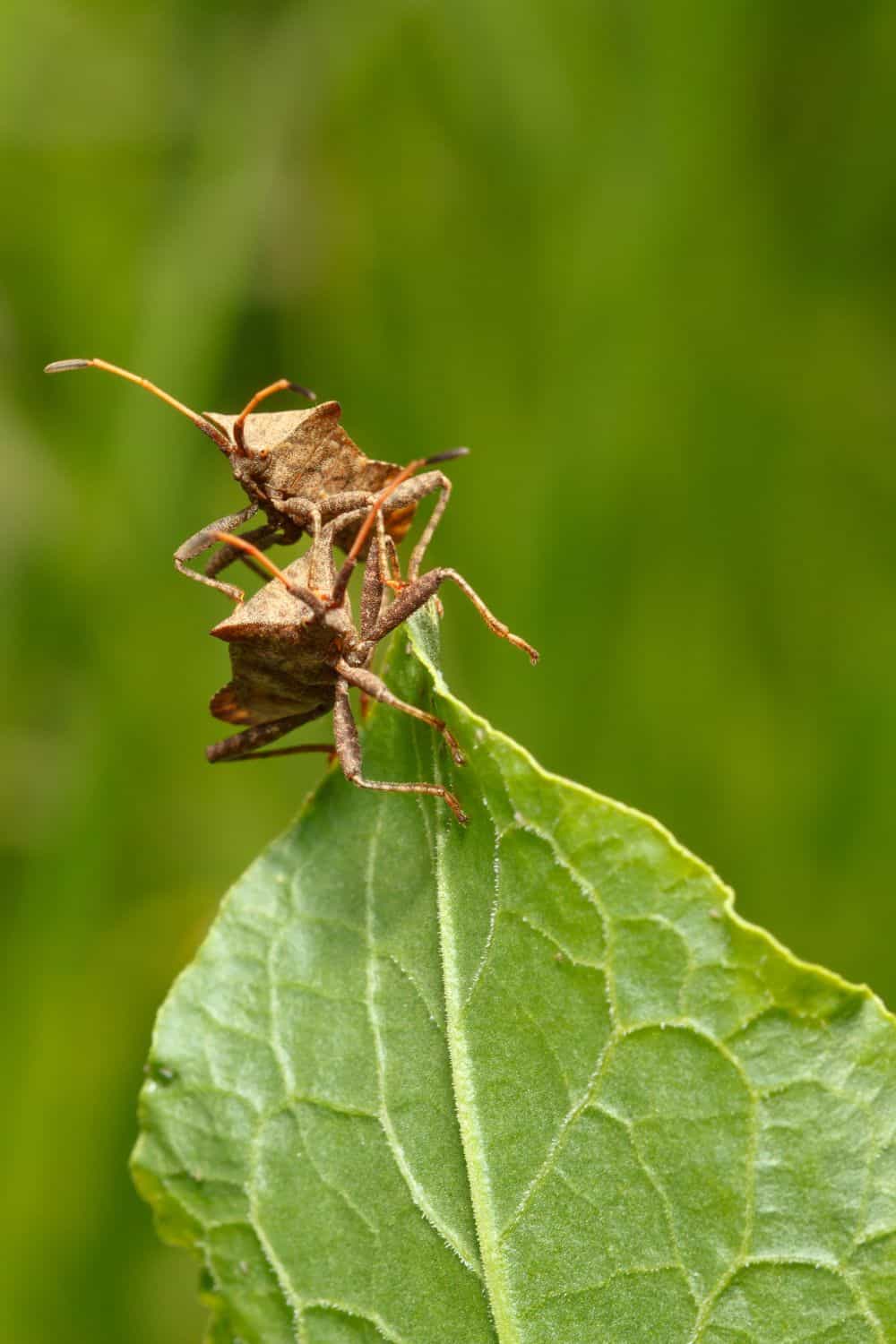
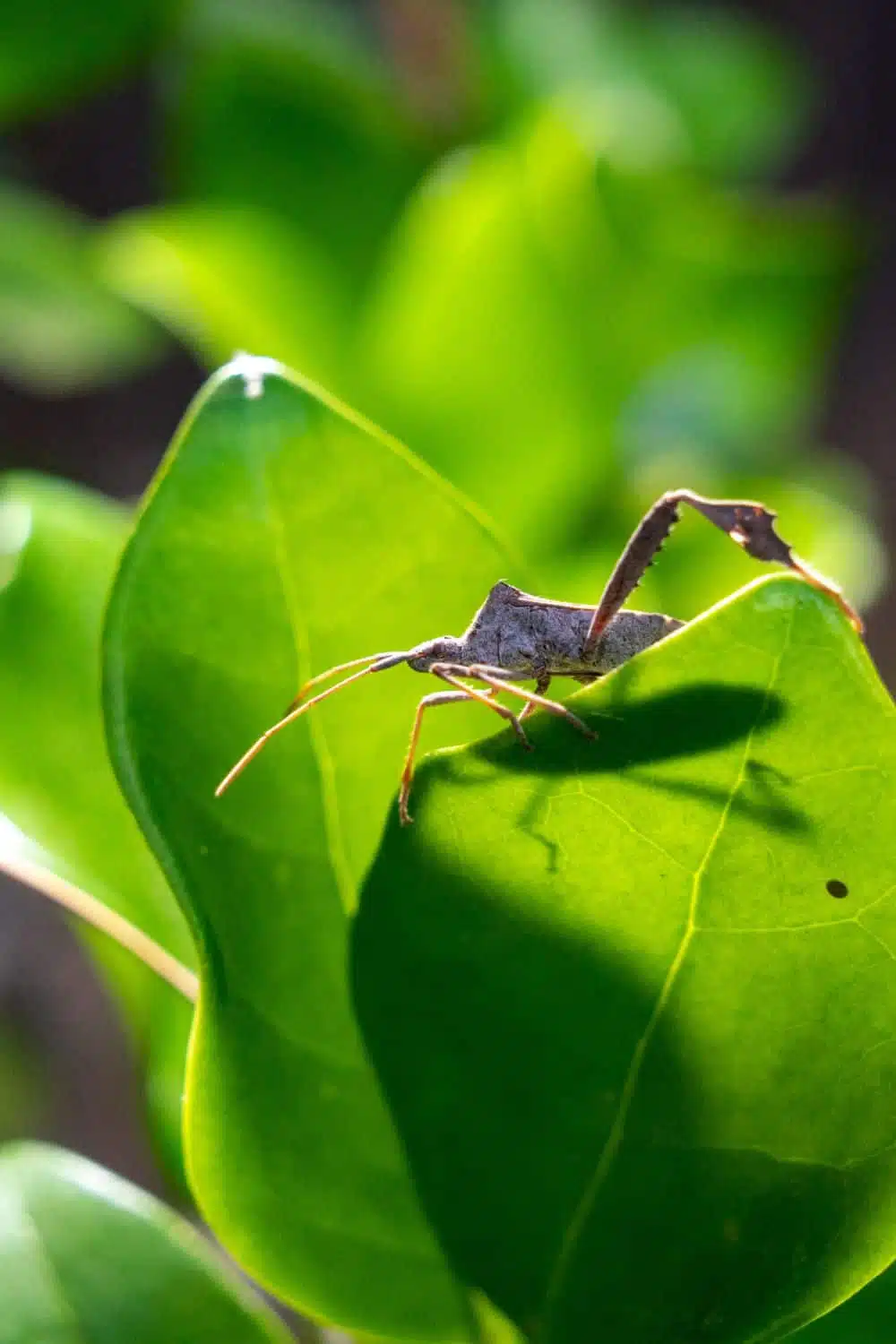
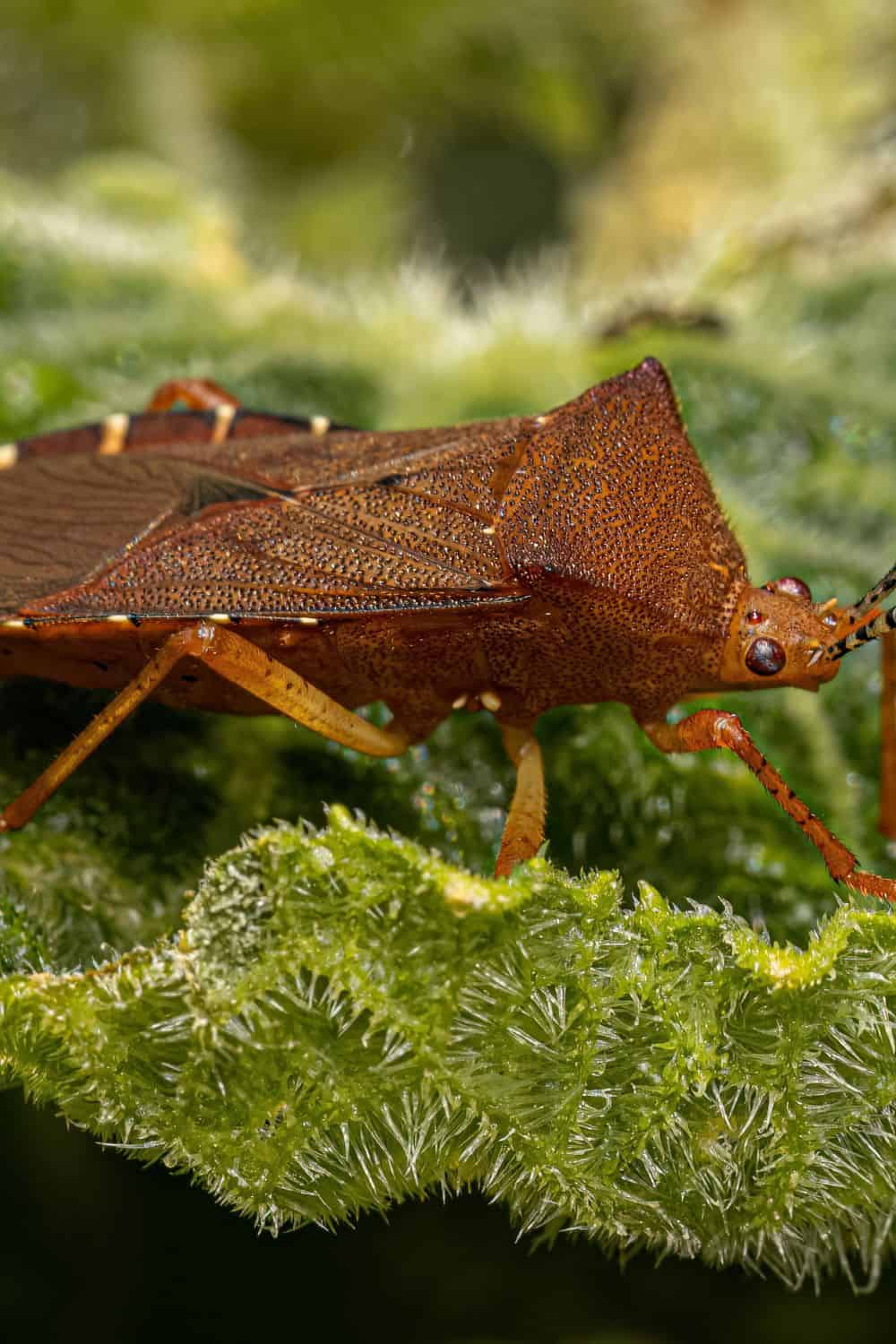
Squash bugs are sometimes a common pest of squash, pumpkin, and other cucurbit plants such as zucchini and cucumbers. They are large, brown insects with orange stripes on their abdomens and omit a foul order whenever they are disturbed. Squash bugs’ main food source is the sap of plants, which can cause wilting, yellowing, and even death. They can smell CO2 and are naturally drawn to actively growing plants. Not only are they destructive to plants through their feeding, but they can also transmit diseases.
Squash bugs fly, and their eggs are nearly impossible to squash, so they have many resiliencies to them. Squash bugs are also more commonly known as stink bugs because of the foul order they omit when they are touched.
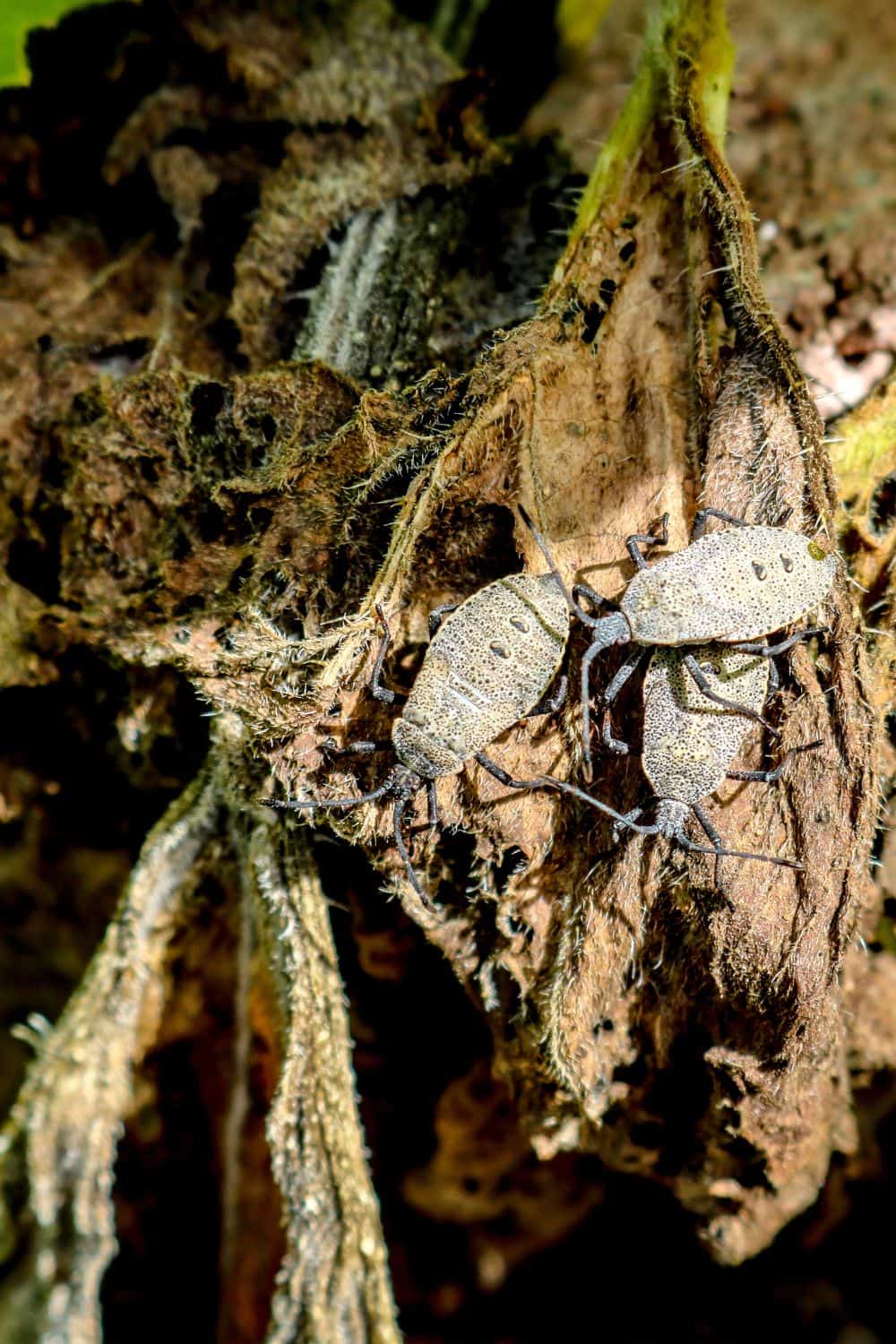
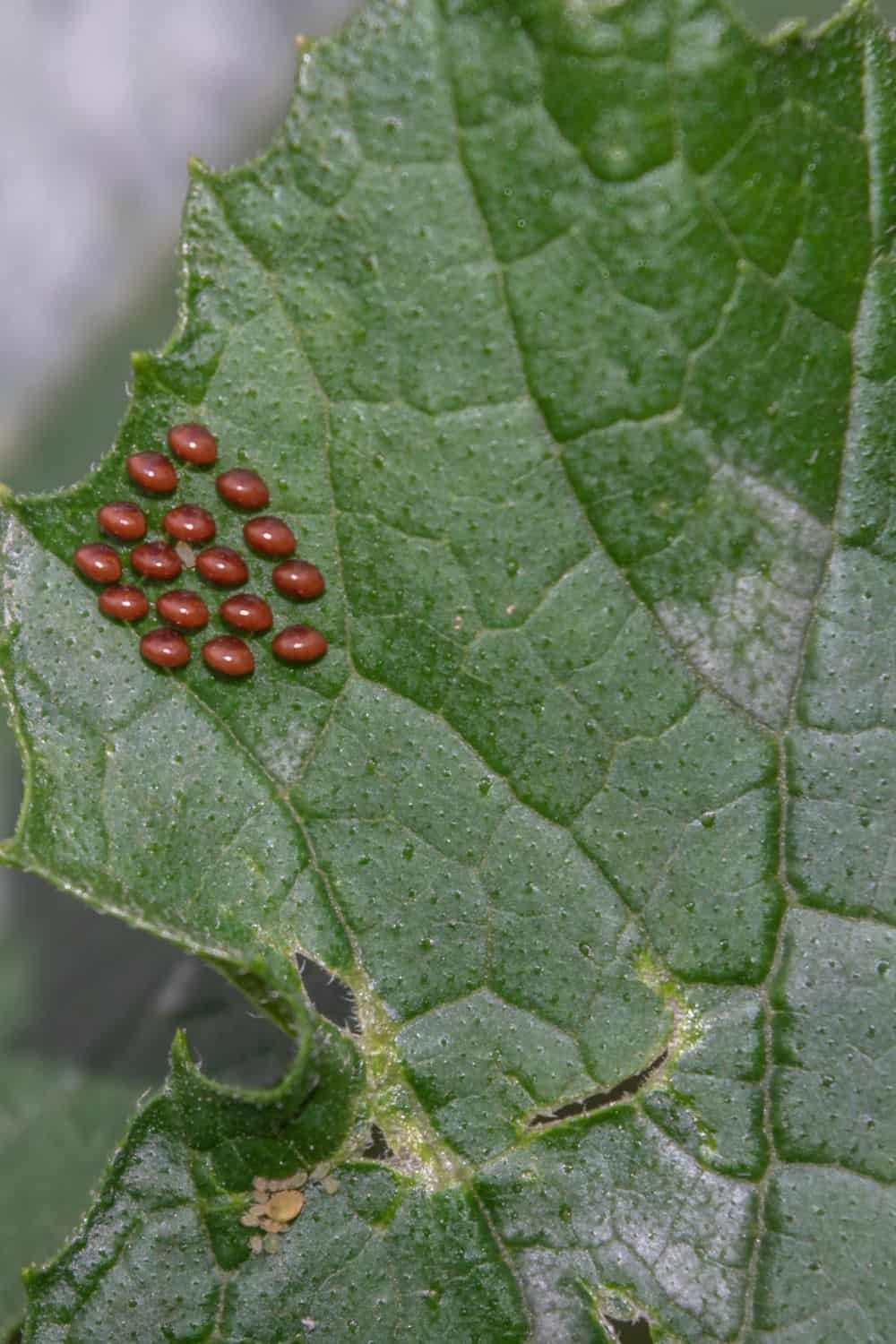
Squash bugs will complete the life cycle in about 6-8 weeks. In northern climates, there is only one generation per year. In warmer climates, there may be two or three generations per year. Since they can overwinter in protected areas, such as under leaves, in debris, or in buildings. In the spring, they emerge and begin laying eggs. The eggs hatch into nymphs, which go through five stages before adulthood. Adults can live for several months and can reproduce throughout the entire summer.
Here are all the stages of the squash bug life cycle:
Understanding the whole life cycle and stages of the squash bug can help us know how to handle them and when. Since the adults have a harder shelled body, they are harder to kill than the nymphs can be.
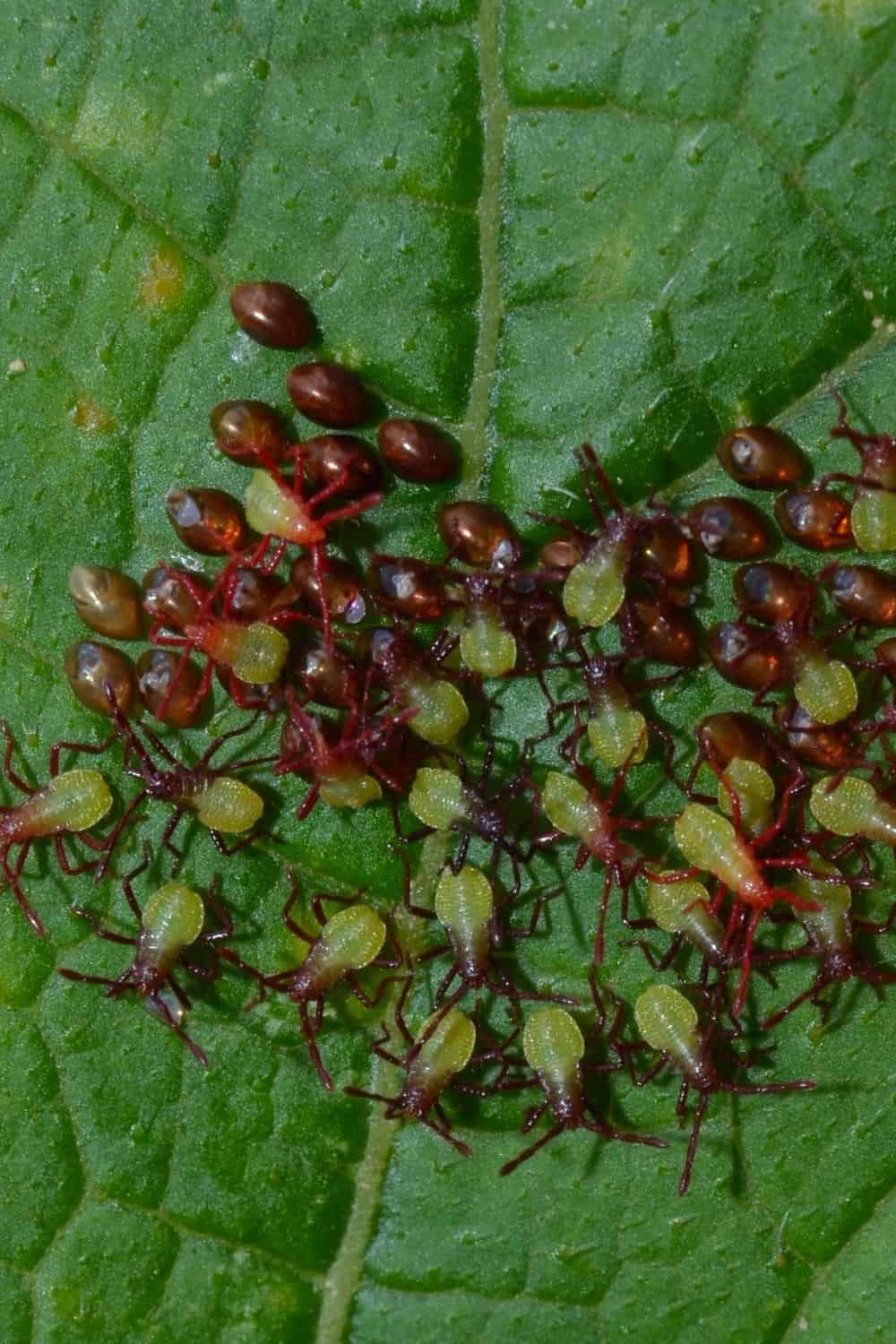
The different stages of a squash bug each has identifying factors, which can help us pay closer attention and detect the squash bug earlier in their life cycle. Thus, we can keep them in check so our plants can produce and be healthy before the squash bug takes over.
Here are the different stages and how to identify them clearly:
Identifying these different stages has been critical to choosing which natural method for controlling squash bugs is necessary.
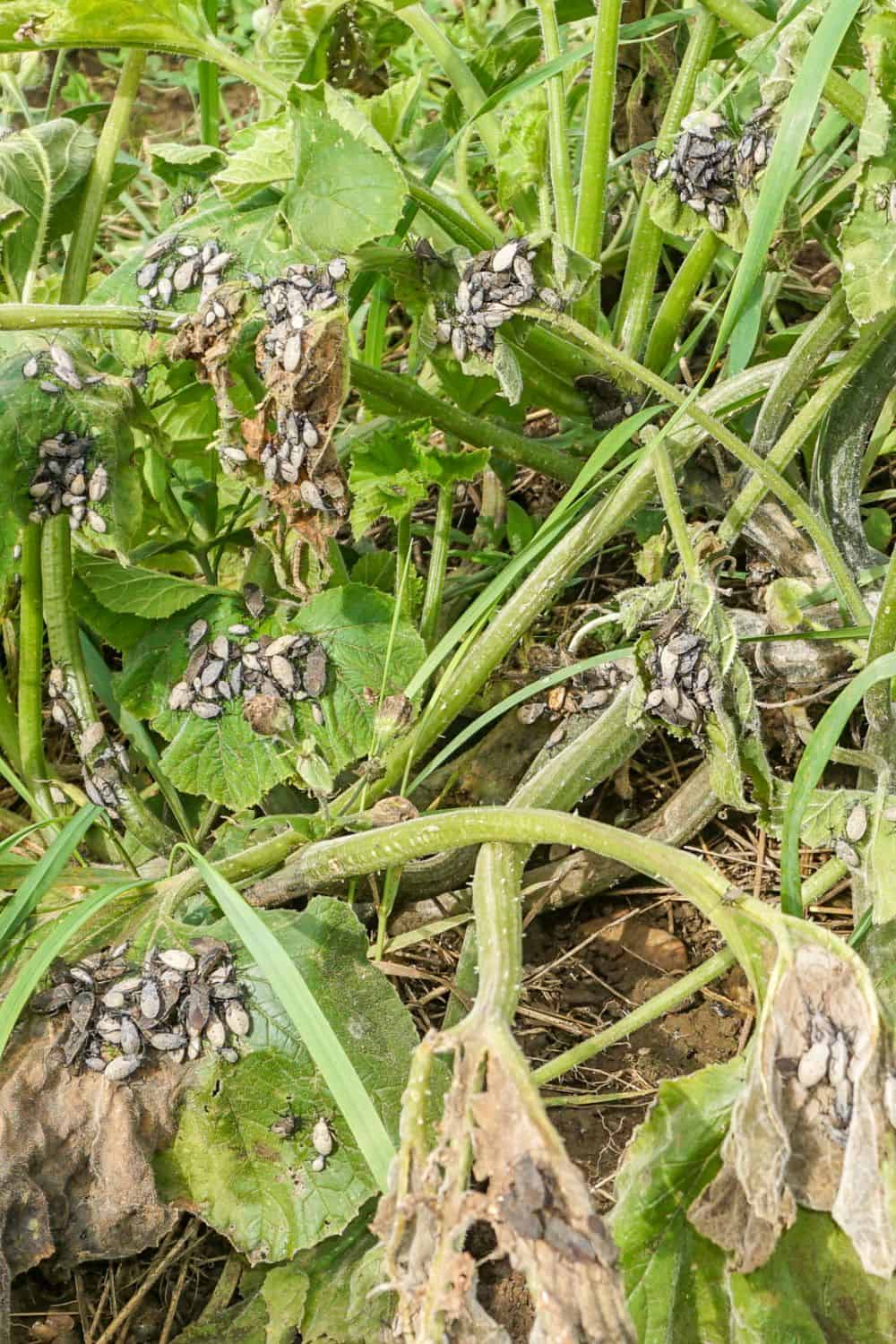
Sometimes the sign that something is wrong means we may be too late for our plants. The damage is usually a sign our squash plant may be in serious distress. Even a healthy plant can not withstand the destruction of the squash bug. These bugs inject a toxin into the plant so they can suck the sap from the stems and leaves through their mouthparts, this damage can become evident through the following signs:
The sign of squash bug damage is disheartening, but if you can remove the squash bugs quickly before it gets worse and then get rid of any struggling parts of the plants, you usually can recover the plant without issue, but it will take diligence on the part of the gardener.
To get rid of squash bugs naturally, you must use the following methods to keep them in check. The key is paying close attention to your squash plants early in their life in your garden. If you pay attention, you can usually offset the potential damage to the plant.
These methods are the ones I have been using for years that have worked. I cannot recommend them enough to maintain low populations and healthy squash harvests in a naturally grown garden.
Insecticides actually do not work against squash bugs. This is because squash bugs have actually built up a resistance to insecticides. The sprays typically only control the adults, not the nymphs or eggs. With the rate the squash bugs multiply, this may do very little while doing more harm to the environment and other beneficial bugs in your garden.
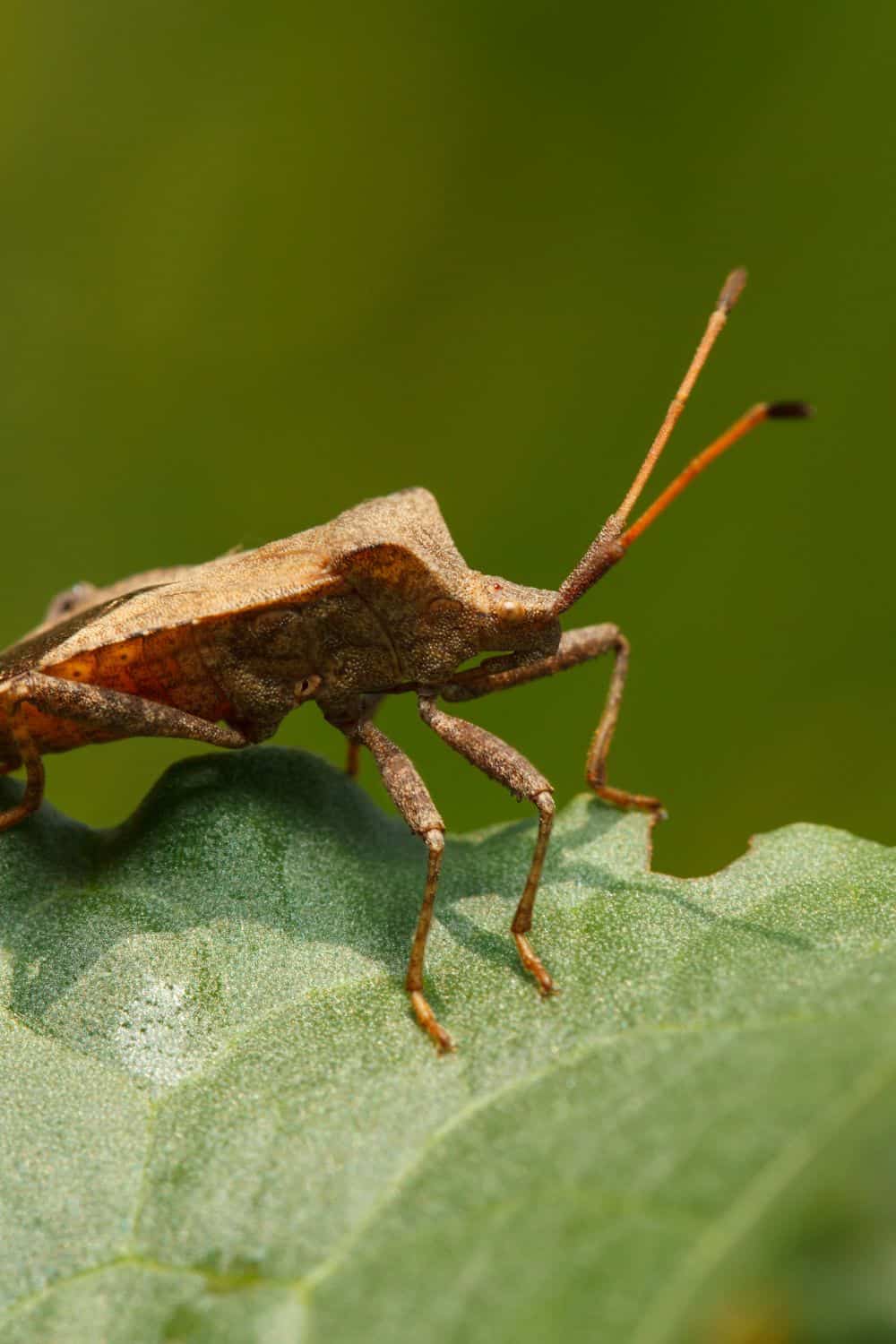
Squash bugs plague many home gardeners, but if you pay attention, you can actually keep their population low and easy to manage so you can have some very successful squash harvests this year! Naturally, handling squash bugs is the best way, not just for your and your garden’s health but because insecticides don’t affect squash bugs.
If you find this post helpful, you may also consider these posts:
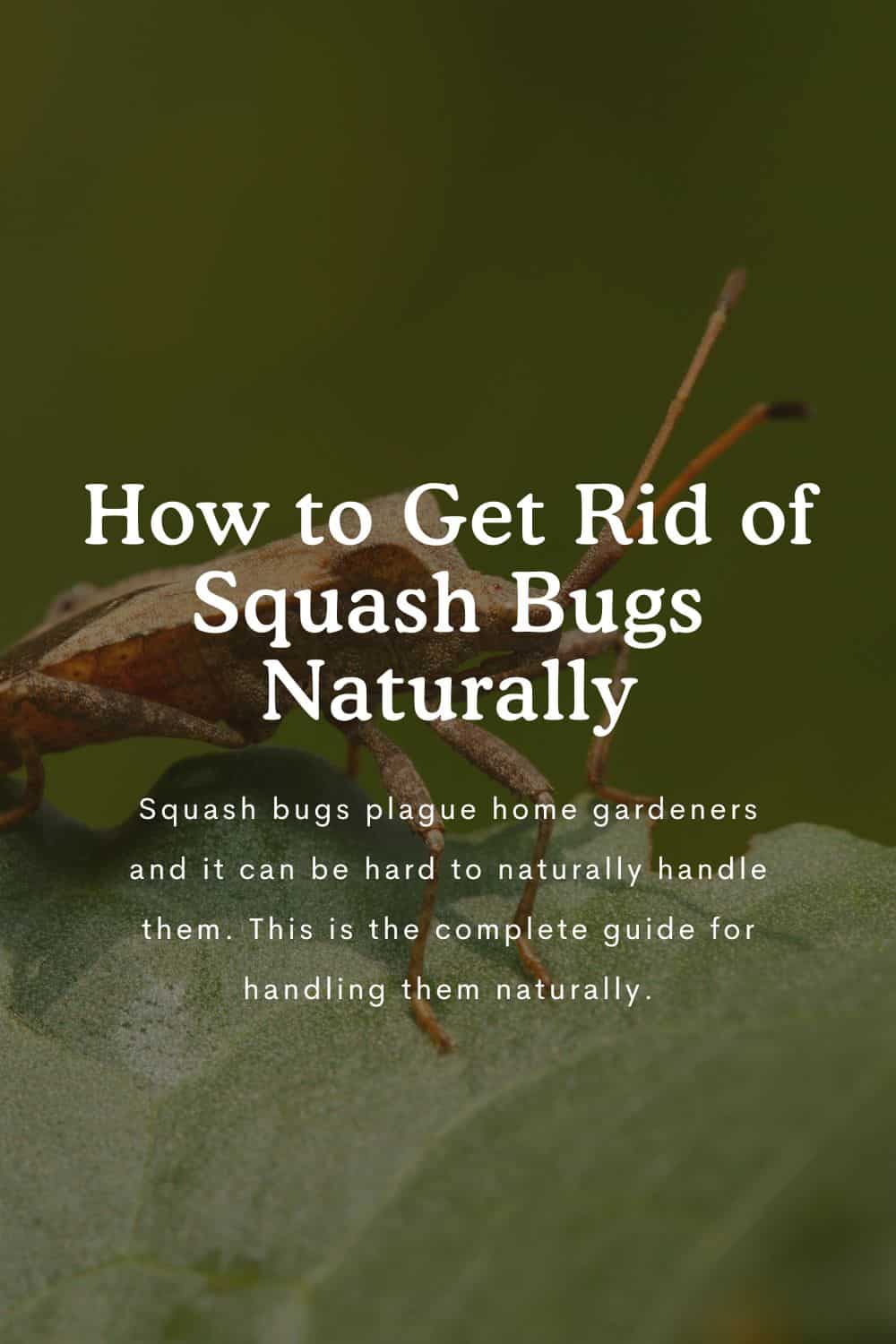
Naturally, controlling squash bugs may be one of the biggest challenges for gardeners. In this blog post, I will teach you how to get rid of squash bugs naturally and without chemicals.
Squash bugs are one of my personal enemies in the garden. Surprisingly I find these pests to be one of the worst and hardest to handle in the garden as a natural gardener. Over the years, as I have watched many pumpkins, zucchini, Hubbard, and other squashes become demolished by these pests, I have learned some key tricks that really make a difference in controlling them.
Squash has a tendency to have quite a few different pests, including aphids. If you are wondering how to handle them, you can read about naturally controlling aphids on your squash plants here.
Squash bugs are sometimes a common pest of squash, pumpkin, and other cucurbit plants such as zucchini and cucumbers. They are large, brown insects with orange stripes on their abdomens and omit a foul order whenever they are disturbed. Squash bugs’ main food source is the sap of plants, which can cause wilting, yellowing, and even death. They can smell CO2 and are naturally drawn to actively growing plants. Not only are they destructive to plants through their feeding, but they can also transmit diseases.
Squash bugs fly, and their eggs are nearly impossible to squash, so they have many resiliencies to them. Squash bugs are also more commonly known as stink bugs because of the foul order they omit when they are touched.
Squash bugs will complete the life cycle in about 6-8 weeks. In northern climates, there is only one generation per year. In warmer climates, there may be two or three generations per year. Since they can overwinter in protected areas, such as under leaves, in debris, or in buildings. In the spring, they emerge and begin laying eggs. The eggs hatch into nymphs, which go through five stages before adulthood. Adults can live for several months and can reproduce throughout the entire summer.
Here are all the stages of the squash bug life cycle:
Understanding the whole life cycle and stages of the squash bug can help us know how to handle them and when. Since the adults have a harder shelled body, they are harder to kill than the nymphs can be.
The different stages of a squash bug each has identifying factors, which can help us pay closer attention and detect the squash bug earlier in their life cycle. Thus, we can keep them in check so our plants can produce and be healthy before the squash bug takes over.
Here are the different stages and how to identify them clearly:
Identifying these different stages has been critical to choosing which natural method for controlling squash bugs is necessary.
Sometimes the sign that something is wrong means we may be too late for our plants. The damage is usually a sign our squash plant may be in serious distress. Even a healthy plant can not withstand the destruction of the squash bug. These bugs inject a toxin into the plant so they can suck the sap from the stems and leaves through their mouthparts, this damage can become evident through the following signs:
The sign of squash bug damage is disheartening, but if you can remove the squash bugs quickly before it gets worse and then get rid of any struggling parts of the plants, you usually can recover the plant without issue, but it will take diligence on the part of the gardener.
To get rid of squash bugs naturally, you must use the following methods to keep them in check. The key is paying close attention to your squash plants early in their life in your garden. If you pay attention, you can usually offset the potential damage to the plant.
These methods are the ones I have been using for years that have worked. I cannot recommend them enough to maintain low populations and healthy squash harvests in a naturally grown garden.
Insecticides actually do not work against squash bugs. This is because squash bugs have actually built up a resistance to insecticides. The sprays typically only control the adults, not the nymphs or eggs. With the rate the squash bugs multiply, this may do very little while doing more harm to the environment and other beneficial bugs in your garden.
Squash bugs plague many home gardeners, but if you pay attention, you can actually keep their population low and easy to manage so you can have some very successful squash harvests this year! Naturally, handling squash bugs is the best way, not just for your and your garden’s health but because insecticides don’t affect squash bugs.
If you find this post helpful, you may also consider these posts:
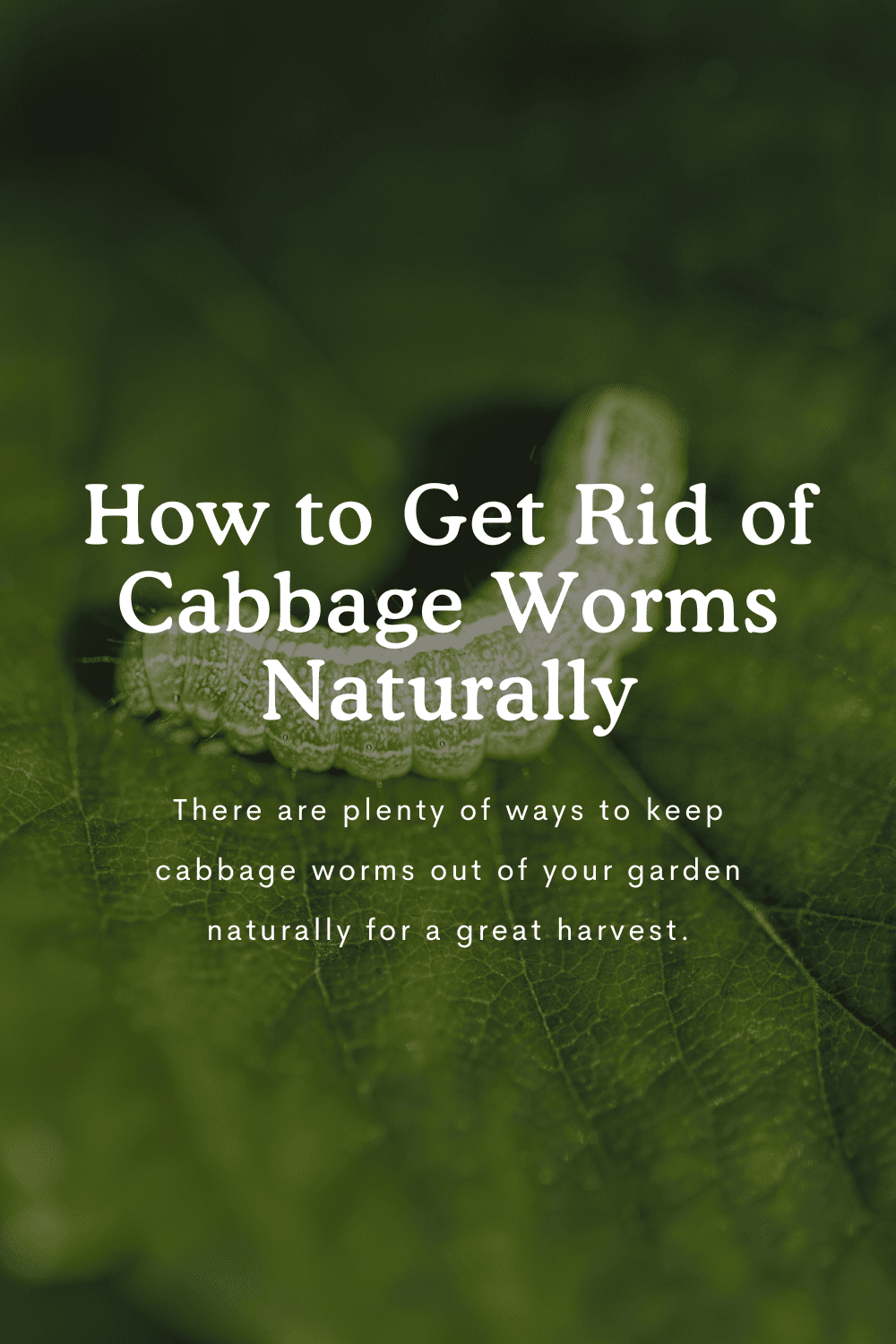
Cabbage worms and cabbage moths can create real issues in your garden, and you may be wondering how to get rid of cabbage worms because of the destruction they cause. It will bring you a lot of relief to know that it is simple and easy to organically get rid of cabbage worms and cabbage moths from your garden.
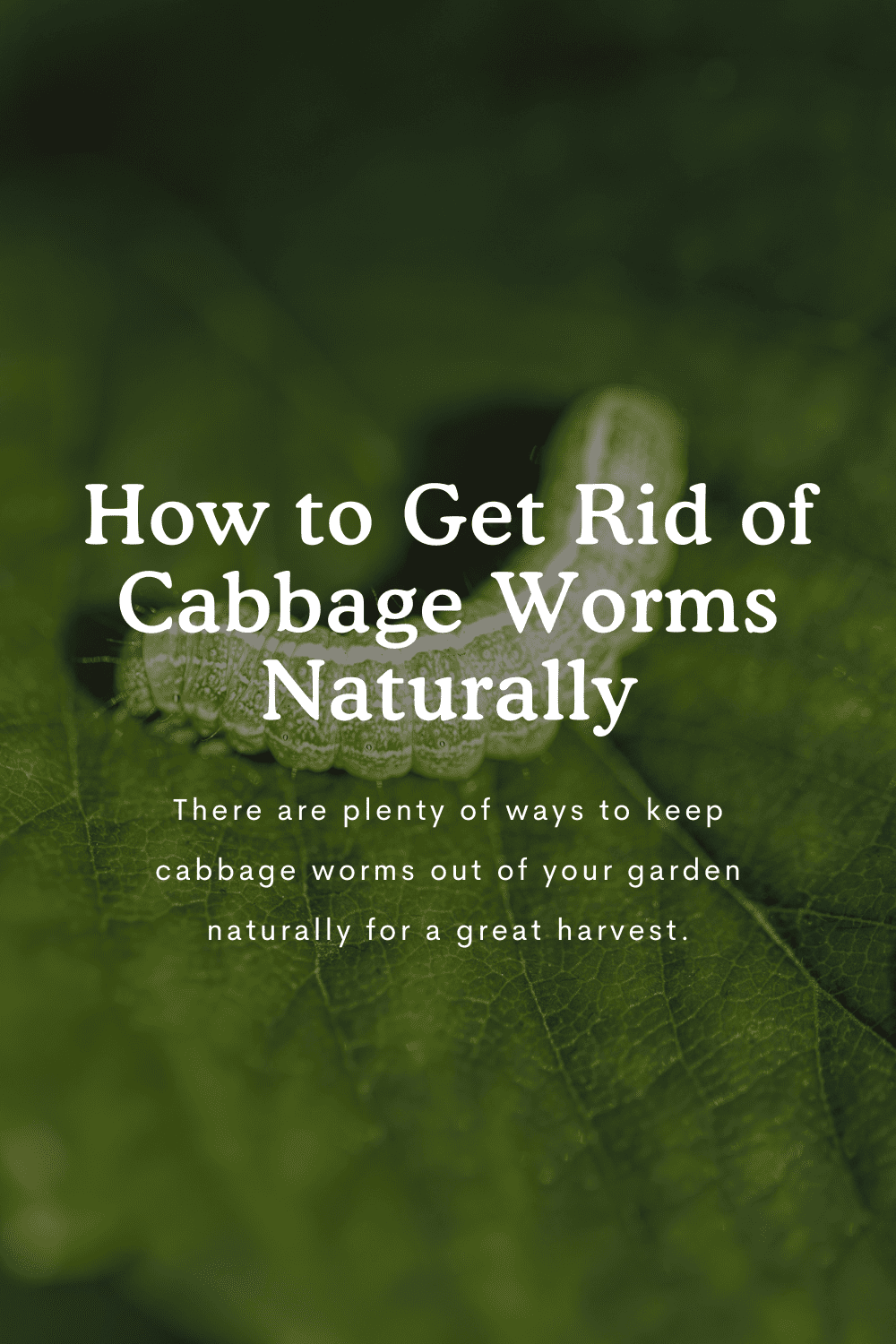
Cabbage worms and moths are among the pests I hear about the most from other gardeners. These green caterpillars quickly develop and can ravage the leaves of any and all brassicas plants. This would include broccoli, kale, turnips, cabbage, cauliflower, kohlrabi, collards, and Brussels sprouts. A whole head of cabbage can go bad with just a few cabbage moths.
Also, cabbage moths are among the earliest bugs to reveal themselves in the spring. This means that even before frost has passed, your kale may be in danger of being harmed by cabbage moths and worms.
The truth is there is plenty we can do in a low-intervention or natural way to deter cabbage moths from beginning with, and even more so, there is plenty we can do to get rid of cabbage moths in our gardens.
As with any pest, from deer to aphids, you can find a way to organically handle the pest without harm to yourself or other beneficial visitors to your garden. Organic gardening uses naturally derived products to deter pests and encourage plant growth. Though I practice these methods, we go even further in our garden and believe in back-to-nature or low-intervention style gardening. This means we work with nature to deter and handle pests. Building a healthy ecosystem is the number one goal in our garden. So all of these solutions revolve around working with nature and not harming it, even naturally.
In fact, you can read about some of the best companion plants for broccoli, which also work to deter cabbage worms naturally.
First, let’s learn more about cabbage moths and cabbage worms.
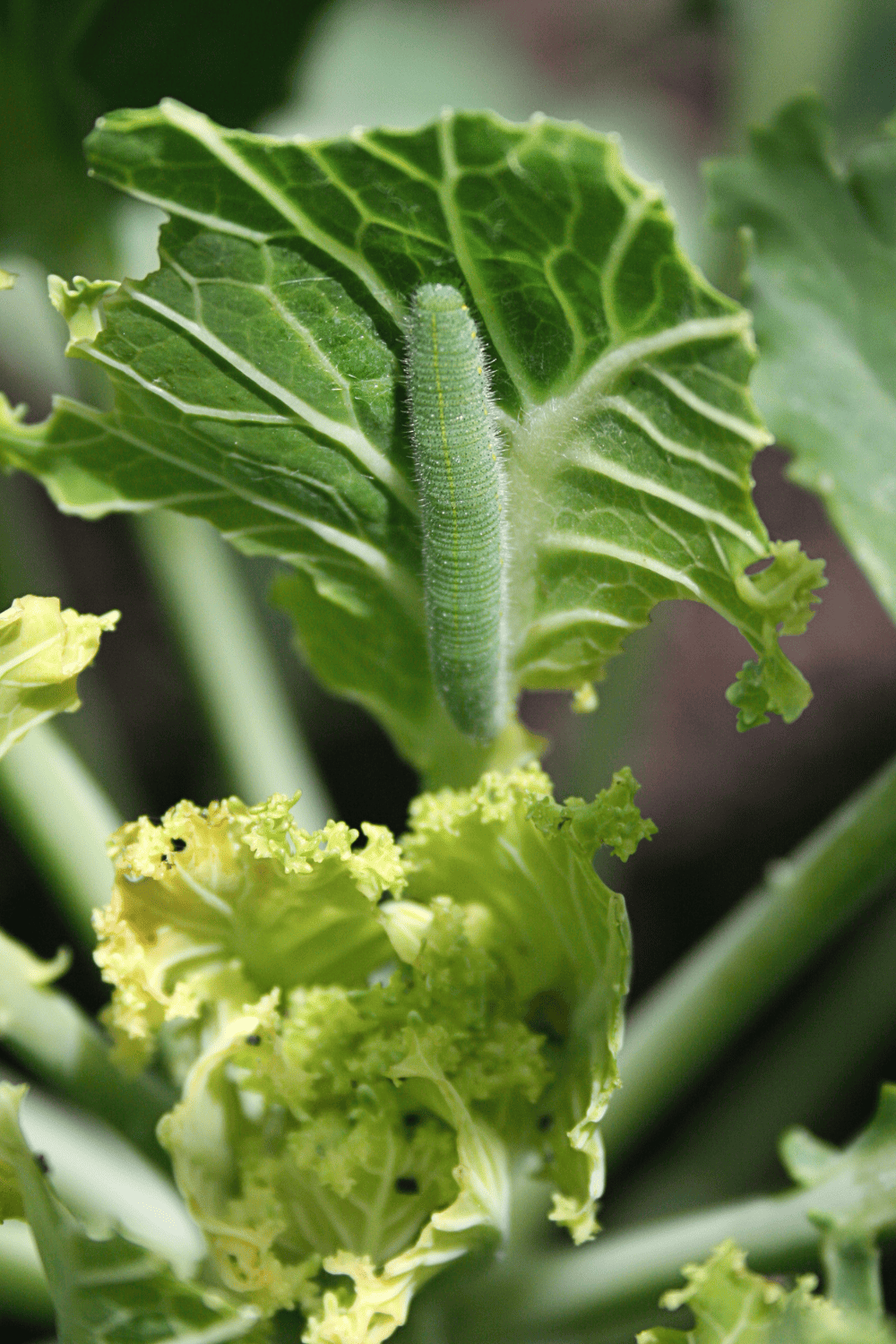
A cabbage moth is a small, white moth that is a common pest of cabbage and other brassica vegetables. The adult moth lays its eggs on the underside of leaves, and the larvae (caterpillars) that hatch from these eggs feed on the leaves, causing significant damage. It can appear in early April or whenever the weather consistently reaches above 50 degrees as a high.
A cabbage moth can lay between 200 -2,500 eggs in its lifetime. The eggs will usually hatch within 5-12 days and feed quickly on any sort of cabbage or brassica they can find.
Cabbage worms are the larvae of the cabbage moth. They are green or yellow-green in color, with a few faint yellow stripes. They are about 1 inch long when fully grown. Cabbage worms feed voraciously on cabbage and other brassica vegetables, and they can quickly destroy a crop.
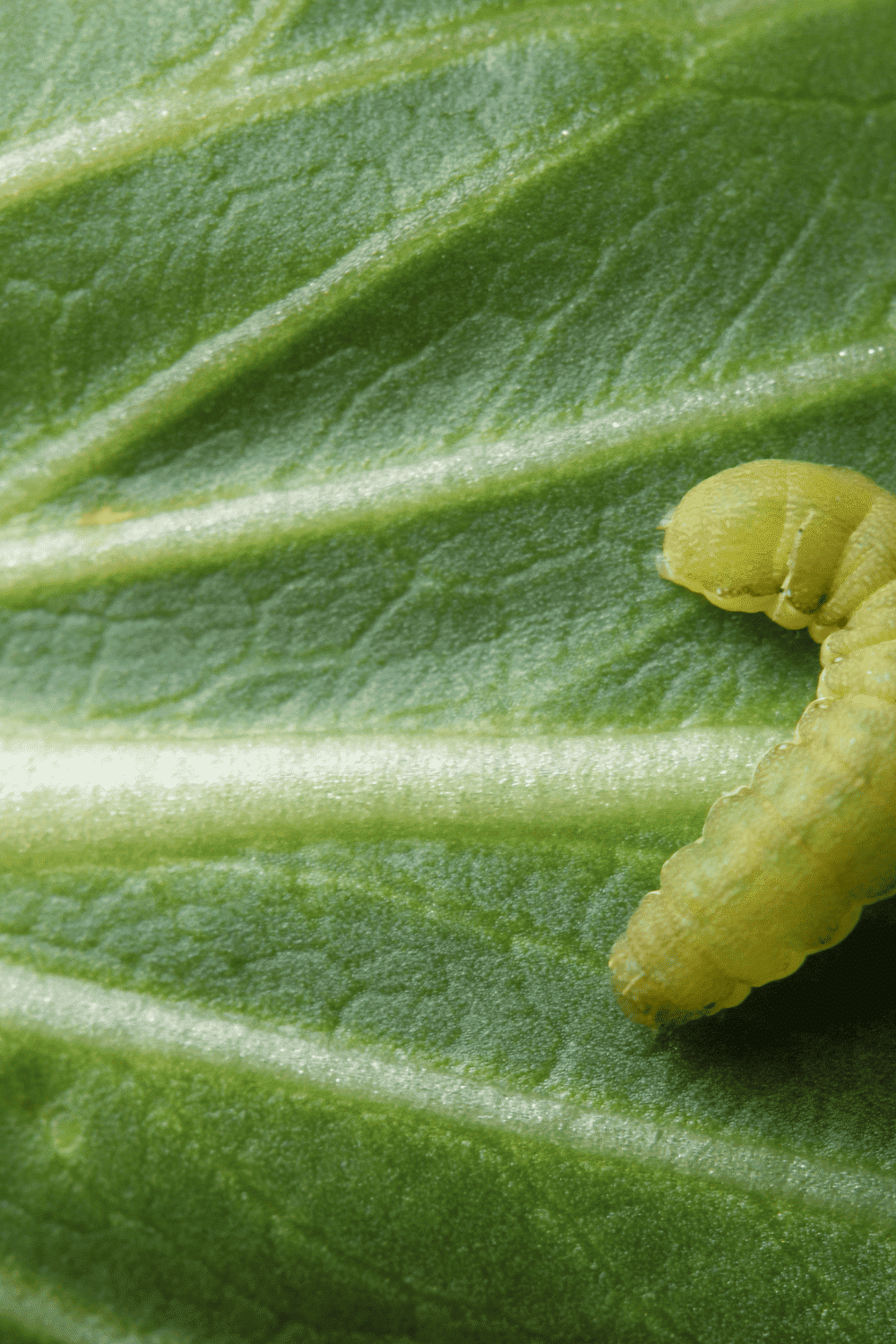
Here are some of the key features that can help you identify cabbage moths and cabbage worms:
You can find them by regularly checking your brassicas for the following:
If you see any of these things. You will want to continue and learn the natural ways to help your plants recover and continue their growth.
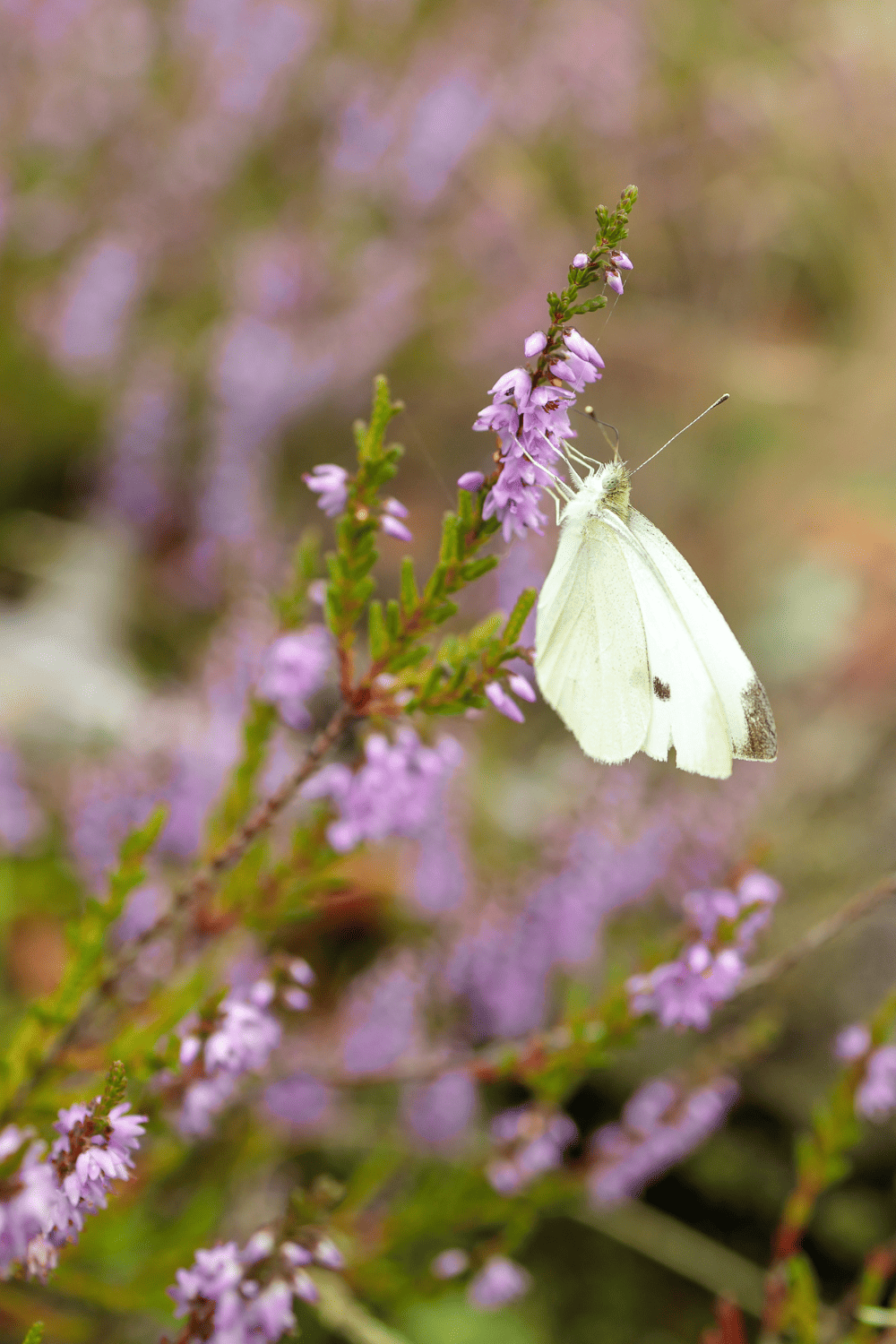
If you have discovered that you have cabbage worms in your garden, you will want to take one or more of the following measures. These are the best ways to get rid of cabbage worms naturally from your garden.
Read more below on each of these methods to figure out which ones are right for you to get rid of cabbage worms in your garden naturally.
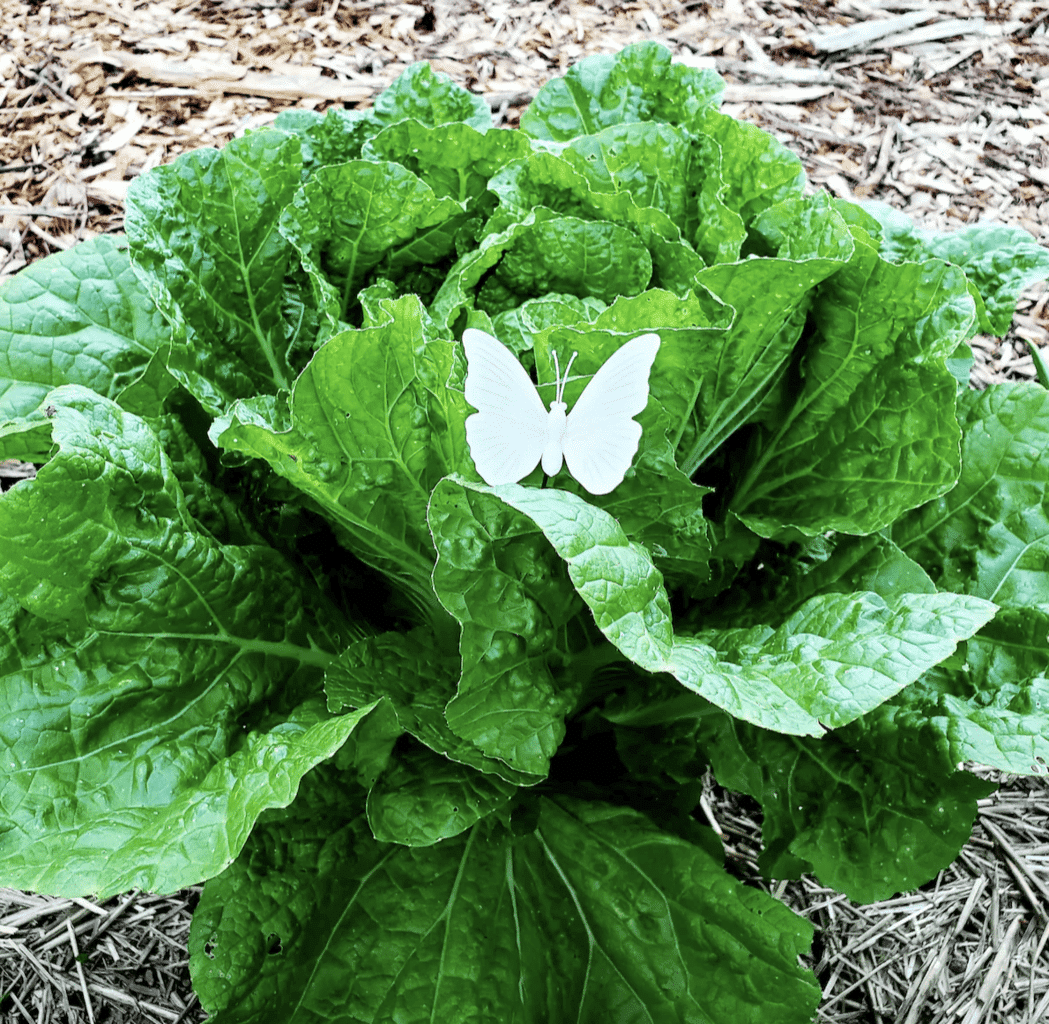
This method has worked and does work. Since Cabbage moths are territorial, they will not lay their larvae where there are pretend or fake moths. You can make them yourself, or you can buy them as well.
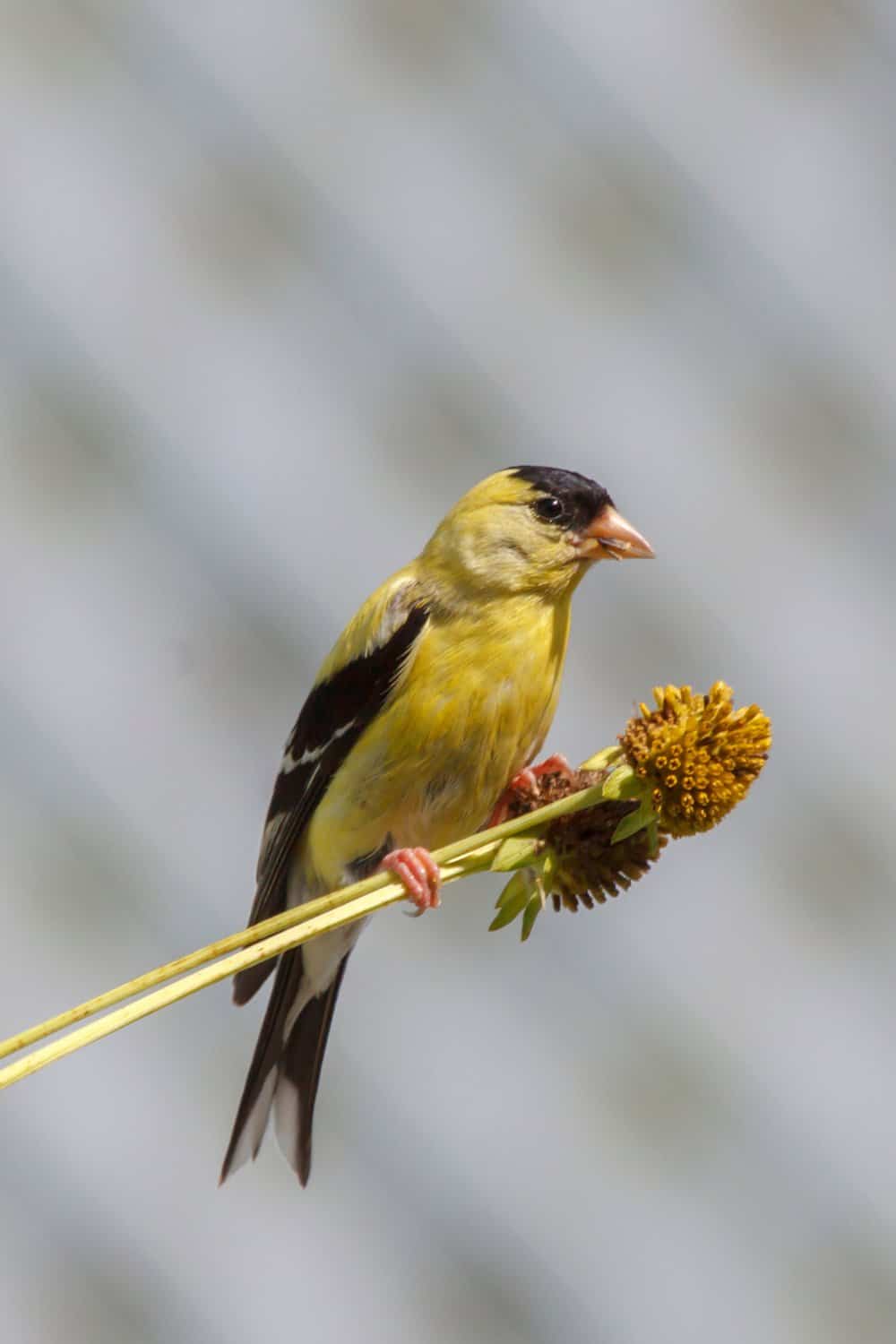
There are lots of great predators for the cabbage worm we can bring in. For instance, the parasitic wasp is a great beneficial insect that can handle the influx of cabbage worms in your garden. You can bring them in by growing cilantro, dill, fennel, daisies, and asters in your garden. You can also make sure to encourage a strong bird population so that robins, bluebirds, and bluejays find their way to the worms in your garden.
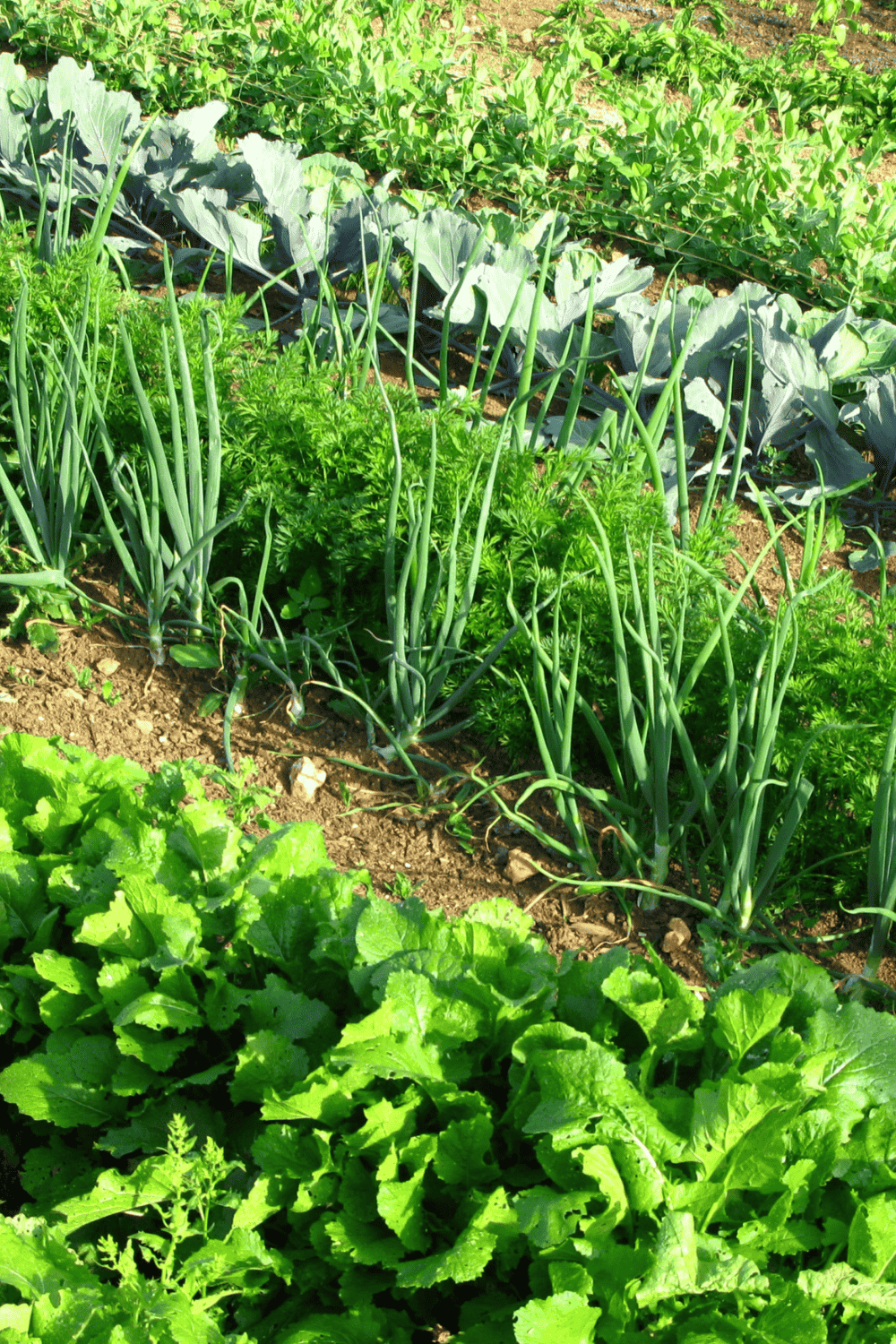
Brassicas are one of the easiest plants to companion plants in your garden. They also lend beautifully to the system and respond very well. Some have less dramatic responses, but brassicas like kale and broccoli do exceptionally well with them. You can find an extensive post about what plants to put with companion plants. You can also take our companion planting class in the community as well if you would like to dig in further.
The main plants you need to focus on to deter cabbage moths are alliums (garlic, onions, shallots, and chives are all options), and then add in borage, marigolds, and a bonus to have celery in there too. Read more about the best companion plants for broccoli right here.
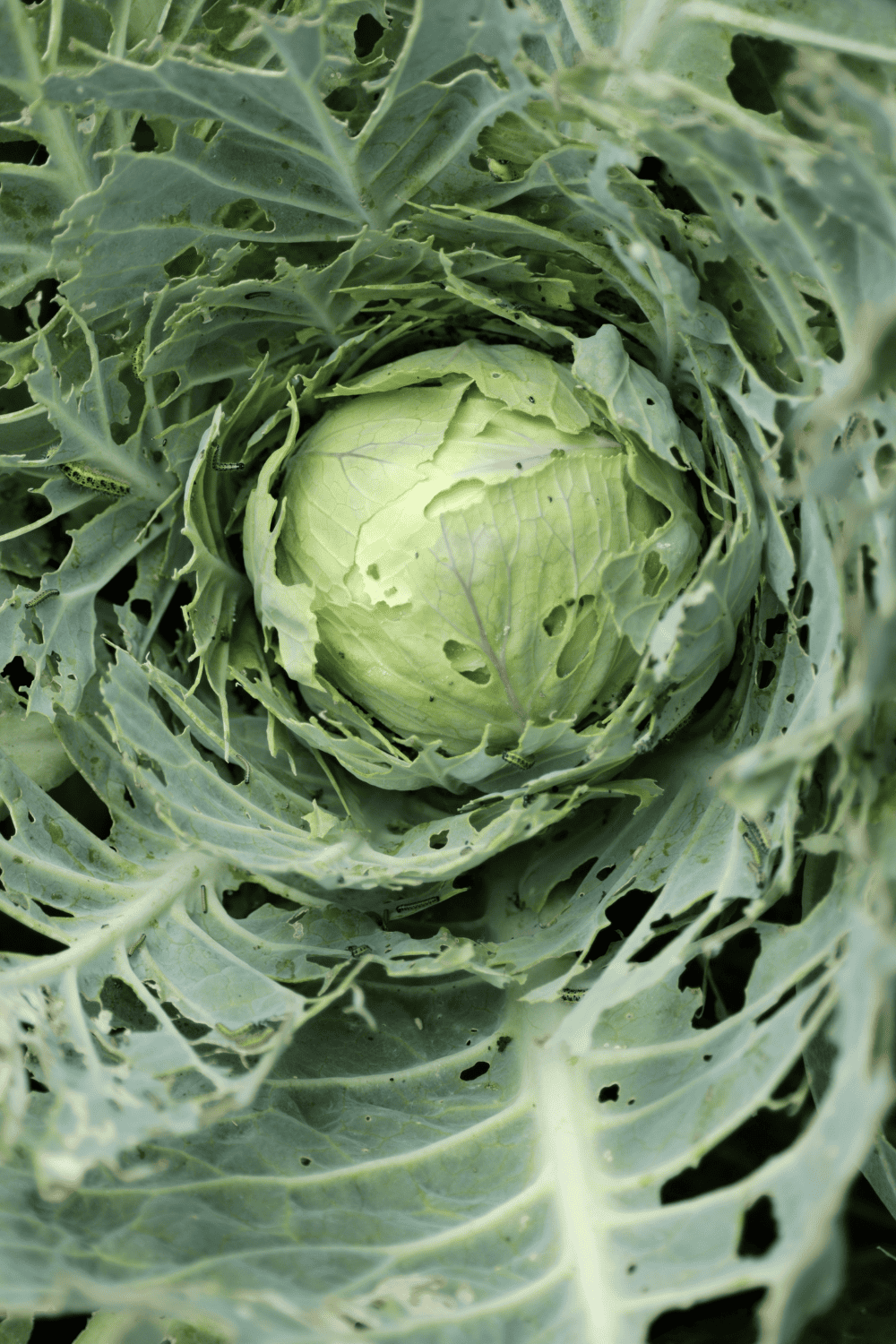
This one may be for you if you don’t mind touching the soft green caterpillars. Hand-removing the caterpillars is always a great way to get rid of them. If you have backyard chickens, they will love a bucket full of them and gobble them right up!
For this to be productive, you must inspect your plants frequently in order to discover them. Use the methods above how to locate them quickly.
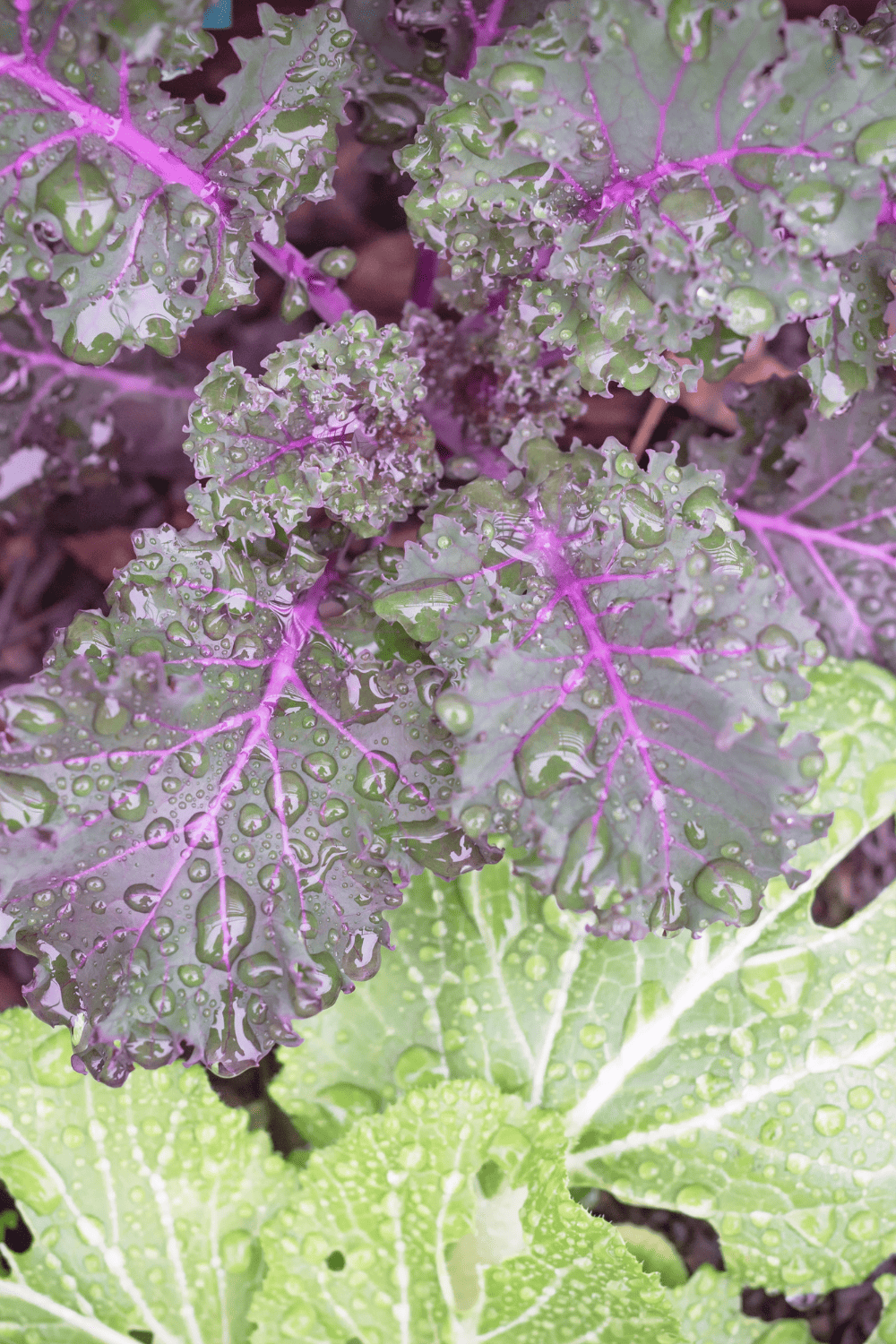
I am not sure about you, but I have found that in the garden, my purple and red-tinted plants get far less insect activity when it comes to destruction. Though bees and pollinators hunt for the purple flowers of many plants, I find that these pants also show less wear and tear than their green counterparts. That said, there have been studies that show that this is true.
One of my favorite varieties to grow in the garden is actually Red Russian Kale. It rarely has cabbage worm issues, and it tastes great as well! It isn’t purple, but it surely has purple and red tints.
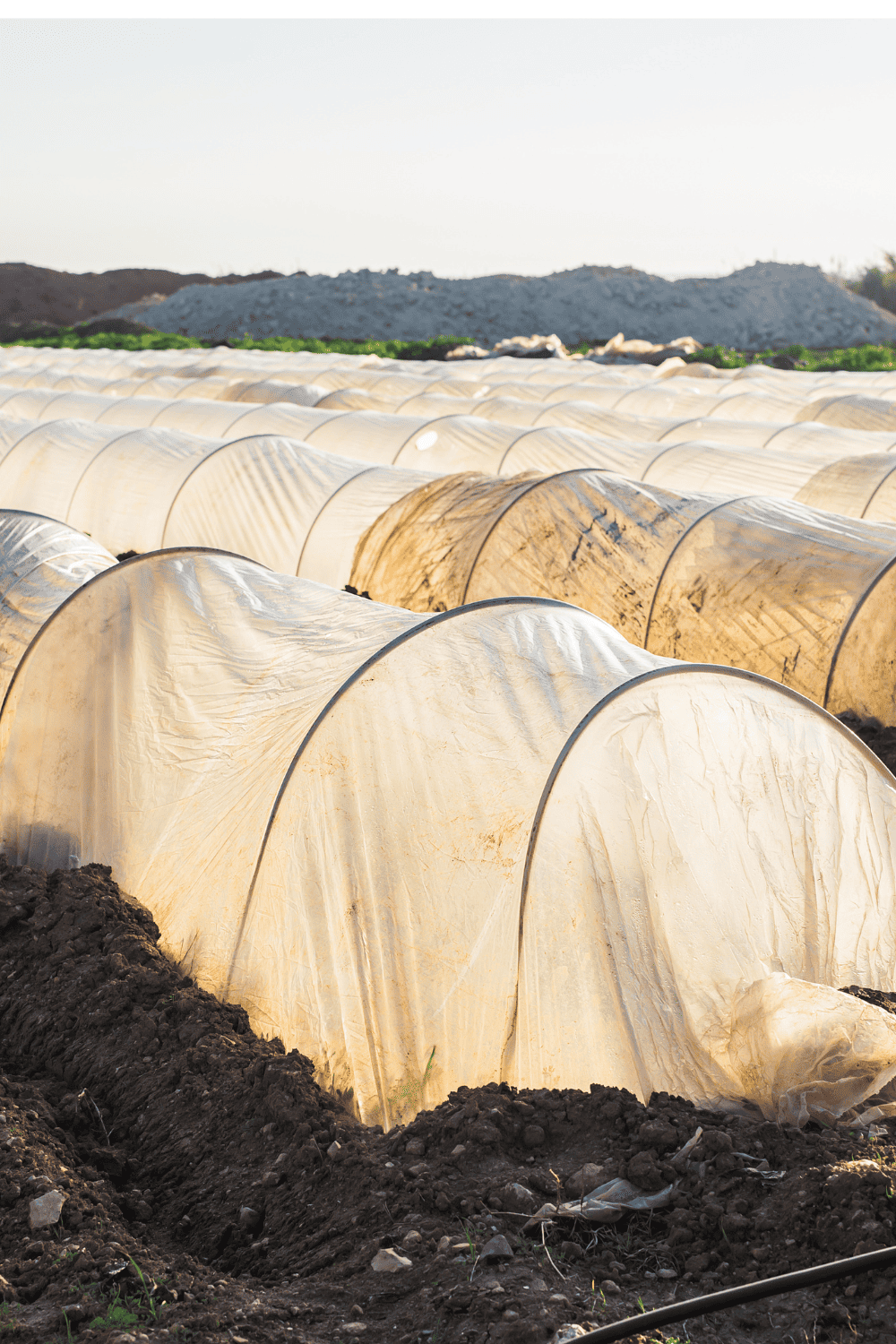
Using a row cover over your brassicas is one of the surest ways to deter cabbage moths from laying eggs on your cabbages and then seeing cabbage worms develop. Why? They cannot get through it. The cover allows light through but protects moths from getting on the plants again. If they cannot get to your cabbages, they cannot get worms. Simple and natural solution.
You can find a floating row cover here if you are wondering what to get.
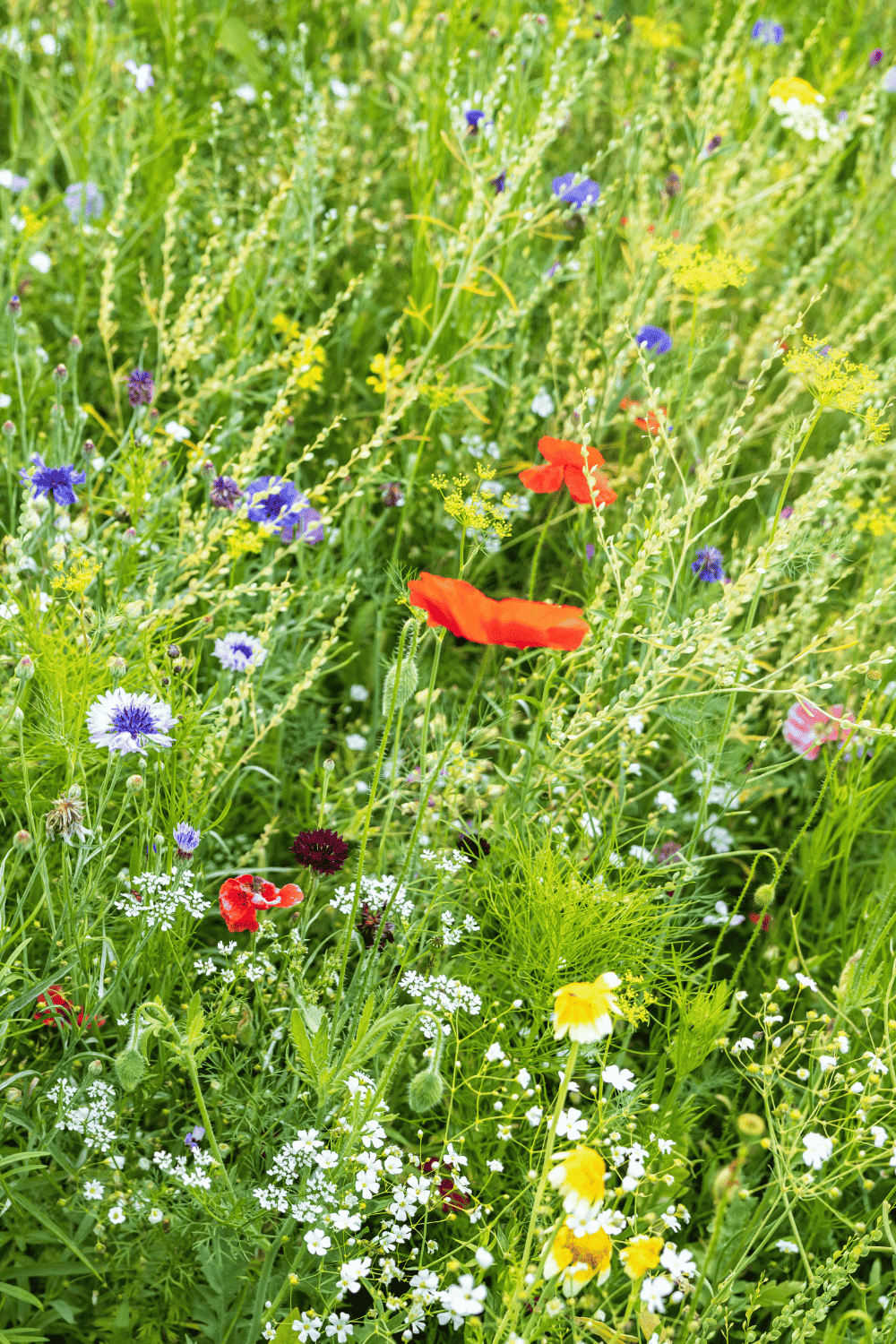
I love a good bit of garden folklore. If there is something that has some, it is for sure the cabbage since it has been a staple crop for so long. I love the ones that the Farmer’s Almanac pulls up and notes. I am interested to try them at some point.

I hope this was helpful in your journey to getting rid of cabbage worms and cabbage moths this year in your garden. Remember, it is normal for some things to get bitten. If we have healthy plants, some chewing isn’t harmful. We want to keep down populations so our plants can thrive.
If you enjoyed this post, you may also like these other ones:
Cabbage worms and cabbage moths can create real issues in your garden, and you may be wondering how to get rid of cabbage worms because of the destruction they cause. It will bring you a lot of relief to know that it is simple and easy to organically get rid of cabbage worms and cabbage moths from your garden.
Cabbage worms and moths are among the pests I hear about the most from other gardeners. These green caterpillars quickly develop and can ravage the leaves of any and all brassicas plants. This would include broccoli, kale, turnips, cabbage, cauliflower, kohlrabi, collards, and Brussels sprouts. A whole head of cabbage can go bad with just a few cabbage moths.
Also, cabbage moths are among the earliest bugs to reveal themselves in the spring. This means that even before frost has passed, your kale may be in danger of being harmed by cabbage moths and worms.
The truth is there is plenty we can do in a low-intervention or natural way to deter cabbage moths from beginning with, and even more so, there is plenty we can do to get rid of cabbage moths in our gardens.
As with any pest, from deer to aphids, you can find a way to organically handle the pest without harm to yourself or other beneficial visitors to your garden. Organic gardening uses naturally derived products to deter pests and encourage plant growth. Though I practice these methods, we go even further in our garden and believe in back-to-nature or low-intervention style gardening. This means we work with nature to deter and handle pests. Building a healthy ecosystem is the number one goal in our garden. So all of these solutions revolve around working with nature and not harming it, even naturally.
In fact, you can read about some of the best companion plants for broccoli, which also work to deter cabbage worms naturally.
First, let’s learn more about cabbage moths and cabbage worms.
A cabbage moth is a small, white moth that is a common pest of cabbage and other brassica vegetables. The adult moth lays its eggs on the underside of leaves, and the larvae (caterpillars) that hatch from these eggs feed on the leaves, causing significant damage. It can appear in early April or whenever the weather consistently reaches above 50 degrees as a high.
A cabbage moth can lay between 200 -2,500 eggs in its lifetime. The eggs will usually hatch within 5-12 days and feed quickly on any sort of cabbage or brassica they can find.
Cabbage worms are the larvae of the cabbage moth. They are green or yellow-green in color, with a few faint yellow stripes. They are about 1 inch long when fully grown. Cabbage worms feed voraciously on cabbage and other brassica vegetables, and they can quickly destroy a crop.
Here are some of the key features that can help you identify cabbage moths and cabbage worms:
You can find them by regularly checking your brassicas for the following:
If you see any of these things. You will want to continue and learn the natural ways to help your plants recover and continue their growth.
If you have discovered that you have cabbage worms in your garden, you will want to take one or more of the following measures. These are the best ways to get rid of cabbage worms naturally from your garden.
Read more below on each of these methods to figure out which ones are right for you to get rid of cabbage worms in your garden naturally.
This method has worked and does work. Since Cabbage moths are territorial, they will not lay their larvae where there are pretend or fake moths. You can make them yourself, or you can buy them as well.
There are lots of great predators for the cabbage worm we can bring in. For instance, the parasitic wasp is a great beneficial insect that can handle the influx of cabbage worms in your garden. You can bring them in by growing cilantro, dill, fennel, daisies, and asters in your garden. You can also make sure to encourage a strong bird population so that robins, bluebirds, and bluejays find their way to the worms in your garden.
Brassicas are one of the easiest plants to companion plants in your garden. They also lend beautifully to the system and respond very well. Some have less dramatic responses, but brassicas like kale and broccoli do exceptionally well with them. You can find an extensive post about what plants to put with companion plants. You can also take our companion planting class in the community as well if you would like to dig in further.
The main plants you need to focus on to deter cabbage moths are alliums (garlic, onions, shallots, and chives are all options), and then add in borage, marigolds, and a bonus to have celery in there too. Read more about the best companion plants for broccoli right here.
This one may be for you if you don’t mind touching the soft green caterpillars. Hand-removing the caterpillars is always a great way to get rid of them. If you have backyard chickens, they will love a bucket full of them and gobble them right up!
For this to be productive, you must inspect your plants frequently in order to discover them. Use the methods above how to locate them quickly.
I am not sure about you, but I have found that in the garden, my purple and red-tinted plants get far less insect activity when it comes to destruction. Though bees and pollinators hunt for the purple flowers of many plants, I find that these pants also show less wear and tear than their green counterparts. That said, there have been studies that show that this is true.
One of my favorite varieties to grow in the garden is actually Red Russian Kale. It rarely has cabbage worm issues, and it tastes great as well! It isn’t purple, but it surely has purple and red tints.
Using a row cover over your brassicas is one of the surest ways to deter cabbage moths from laying eggs on your cabbages and then seeing cabbage worms develop. Why? They cannot get through it. The cover allows light through but protects moths from getting on the plants again. If they cannot get to your cabbages, they cannot get worms. Simple and natural solution.
You can find a floating row cover here if you are wondering what to get.
I love a good bit of garden folklore. If there is something that has some, it is for sure the cabbage since it has been a staple crop for so long. I love the ones that the Farmer’s Almanac pulls up and notes. I am interested to try them at some point.
I hope this was helpful in your journey to getting rid of cabbage worms and cabbage moths this year in your garden. Remember, it is normal for some things to get bitten. If we have healthy plants, some chewing isn’t harmful. We want to keep down populations so our plants can thrive.
If you enjoyed this post, you may also like these other ones:
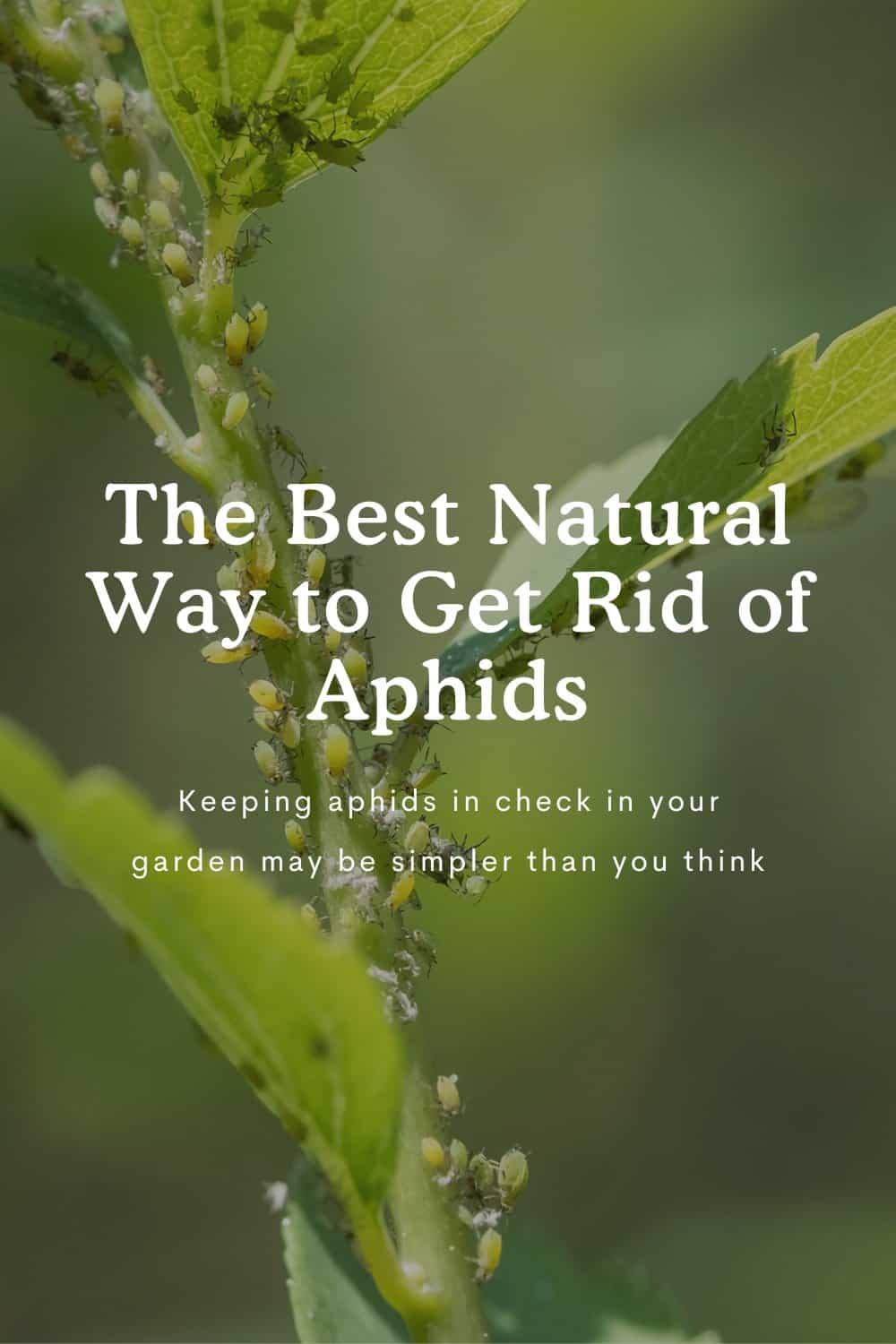
Aphids may be one of the most devastating pests in a garden that can easily go undetected for long periods of time in the garden, but there are natural ways to get rid of aphids. Getting rid of them involves one very simple and smart solution you may not have considered. In this post, I will detail how we keep our aphid population low and in check naturally without any intervention.
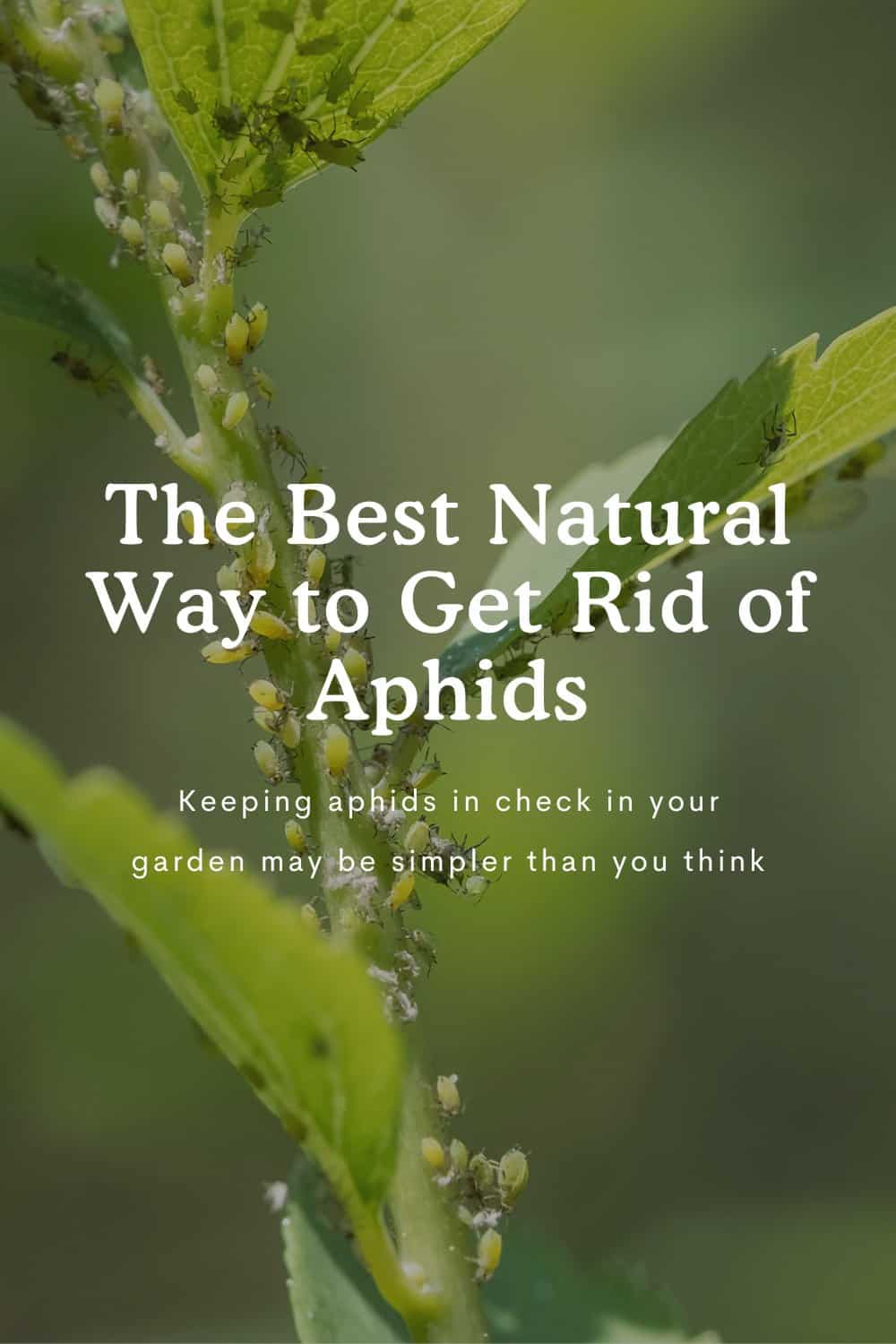
Though aphids can devastate the garden, these small but mighty bugs may also be the easiest to manage with a few simple and smart solutions. Aphids are also known as plant lice, greenflies, or garden lice. They grow in packs, usually managed by ants who move them around and farm them like we do as humans with cows. The ants LOVE their sweet secretions and work together in the garden.
All pests in the garden, including aphids, have a way of controlling them with nature, and today we will discuss how to learn their weakness and cultivate this in the garden.
One of the things we need to understand about aphids is that they are also wonderful bell weathers or indicators that something isn’t going well in the garden. They tend to congregate on plants that are under stress from overheating, lack of water, and more. Healthy plants without stress are of less interest to aphids. Knowing this can help us view them in a new light and begin to understand how to bring balance to the garden to lower their population.
Listen to my podcast all about aphids if you want to learn more
To understand all of this, we will discuss it further in this post.
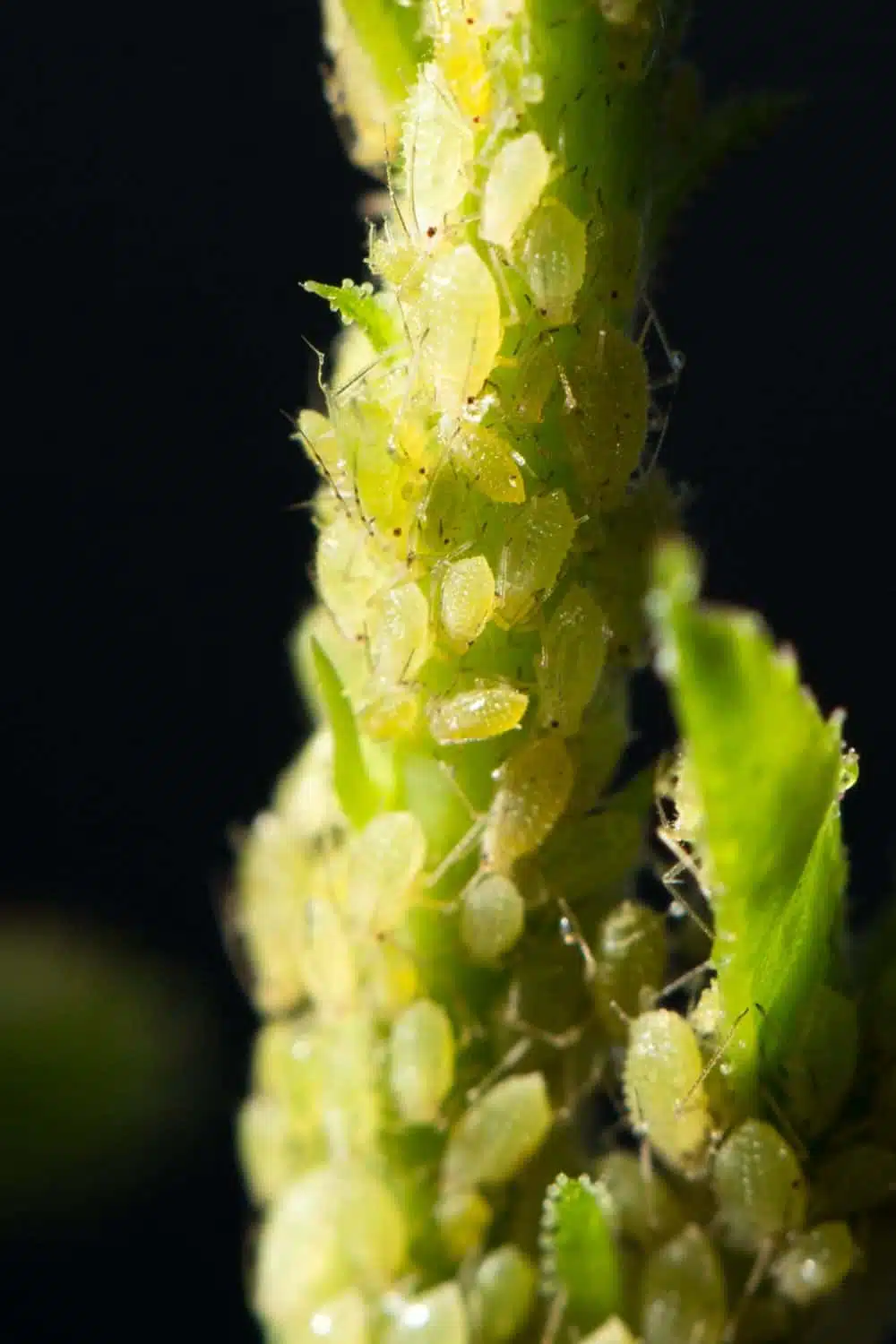
Aphids are small, soft-bodied insects that are sap-sucking pests of plants. They are found worldwide and can be a serious problem for gardeners and farmers. Aphids come in various colors, including green, black, red, yellow, brown, and gray. They are typically about 1/16 to 1/8 inch long.
Aphids feed on the sap of plants, weakening them and making them more susceptible to disease. They can also transmit plant viruses. Aphids reproduce rapidly, and their populations can grow quickly. Aphids can reproduce both sexually and asexually. They typically reproduce asexually, meaning they do not need a mate to produce offspring. This type of reproduction is called parthenogenesis.
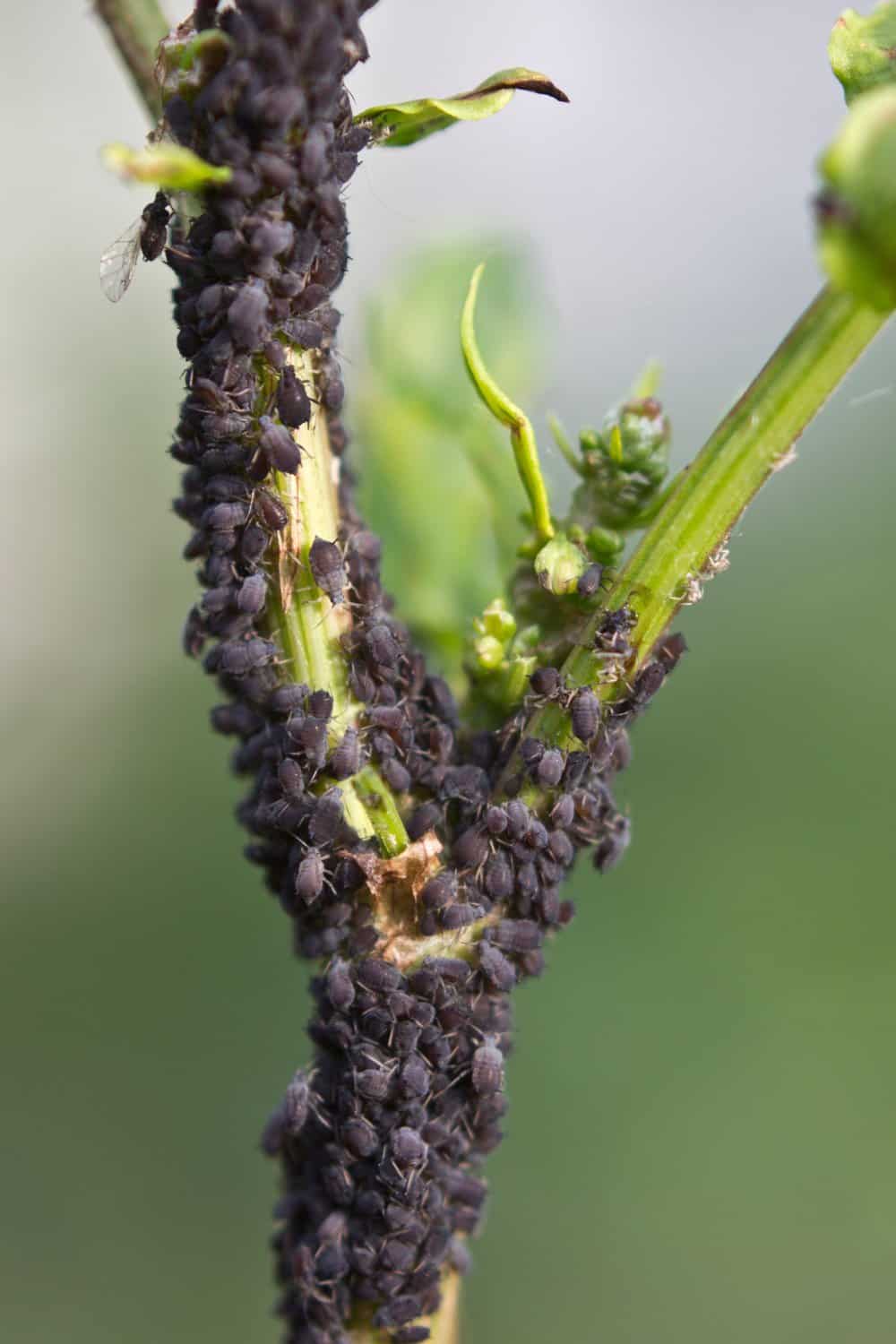
Because aphids can reproduce both asexually and sexually, it seems they overtake your garden so quickly. One female without reproduction can produce over 100 offspring in her lifetime. In the fall, they reproduce sexually, allowing them to store eggs quickly that will overwinter in your garden and open early in the spring.
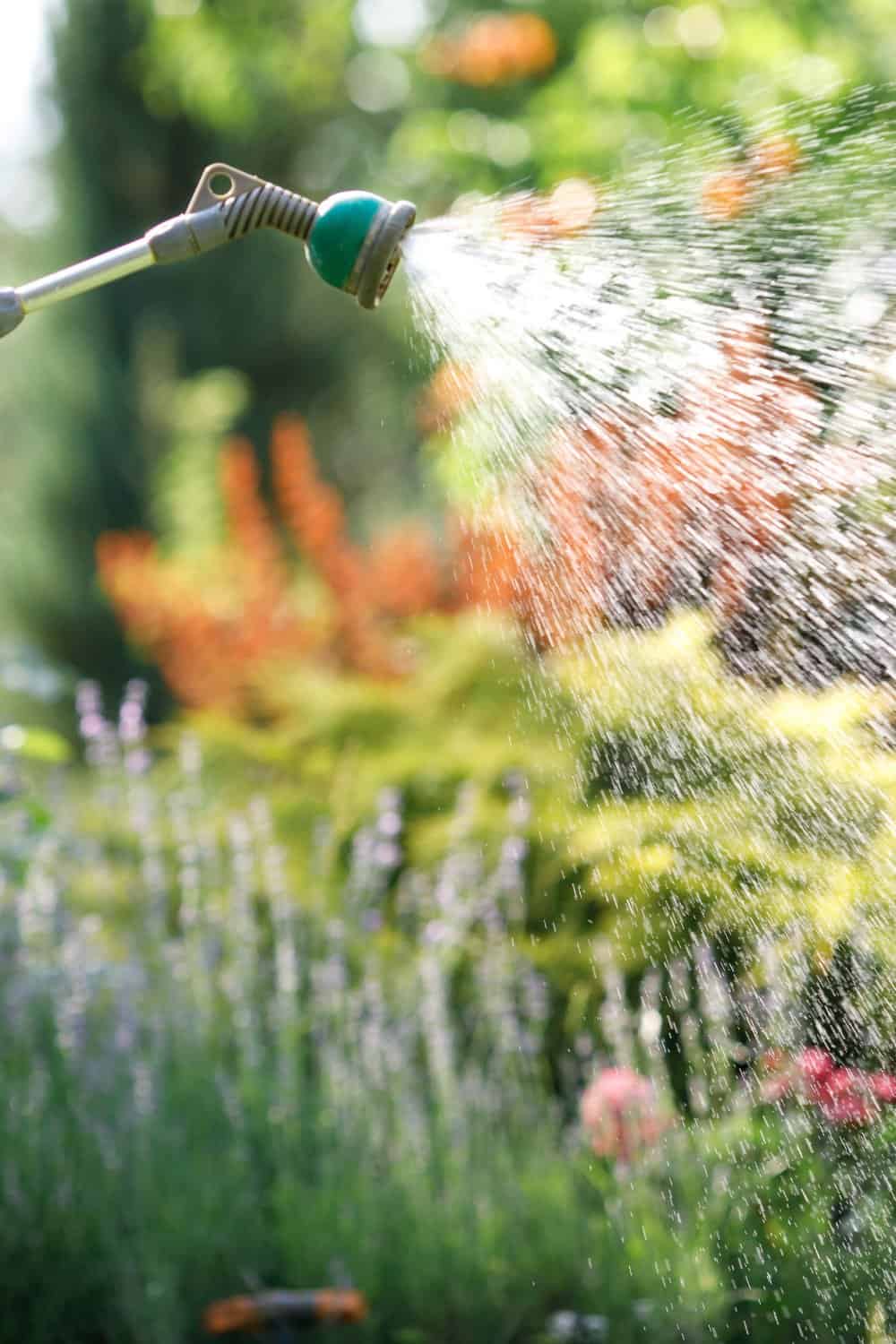
Many ways to deter or eliminate aphids also greatly benefit the greater ecosystem. This means that while you are deterring a rather harmful pest, you are also naturally building a greater ecosystem around you.
There are many natural ways to deter aphids with homemade things. We will start here, but I have controlled our aphid populations enough to never use any of these natural solutions for aphids.
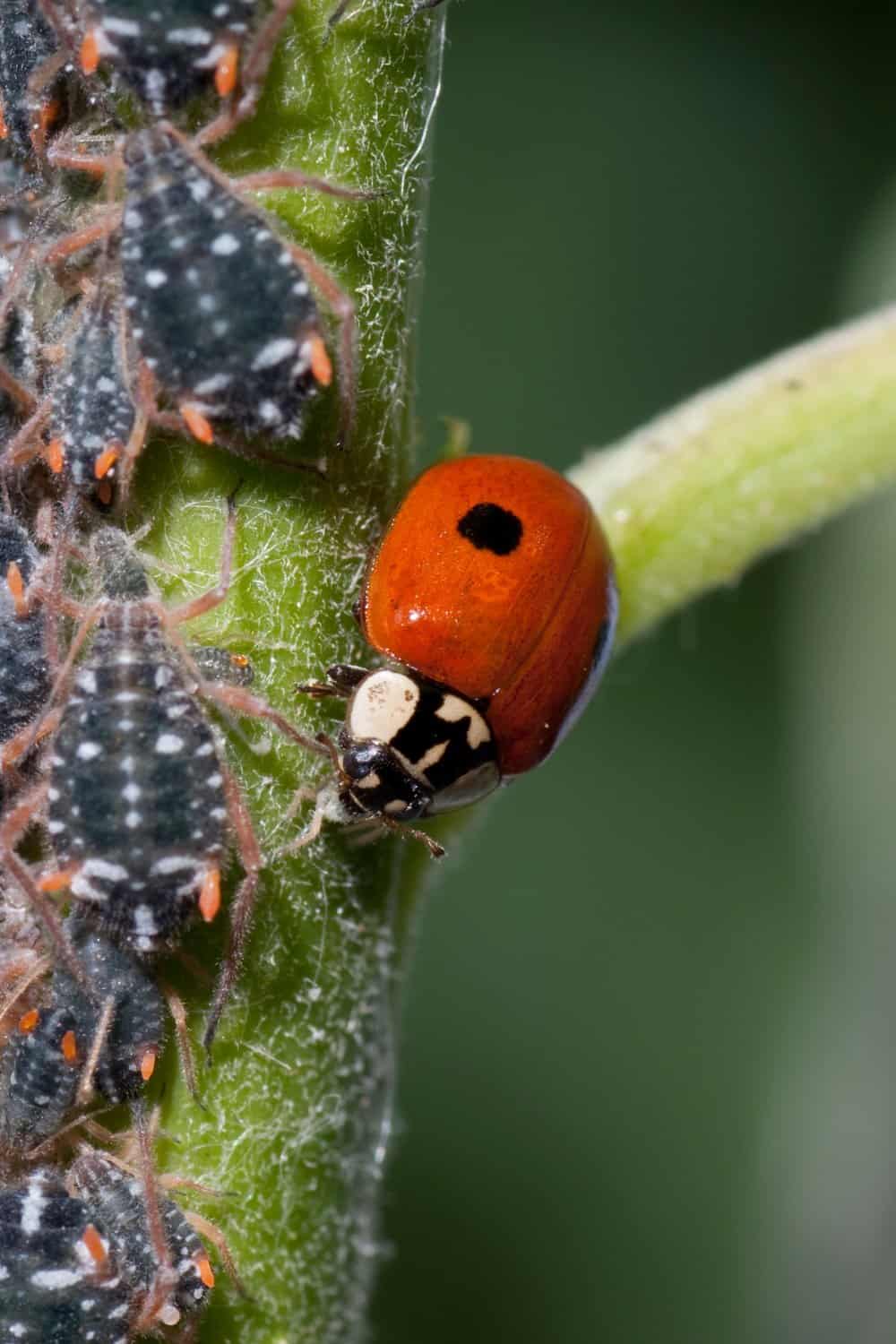
The most important thing is understanding how to use beneficial insects in your garden to control and keep aphid populations in check. The following beneficial animals and bugs will keep your aphid populations in check and healthy and normal. Below you will find the main predators of the aphid and a few tips on how to attract them:
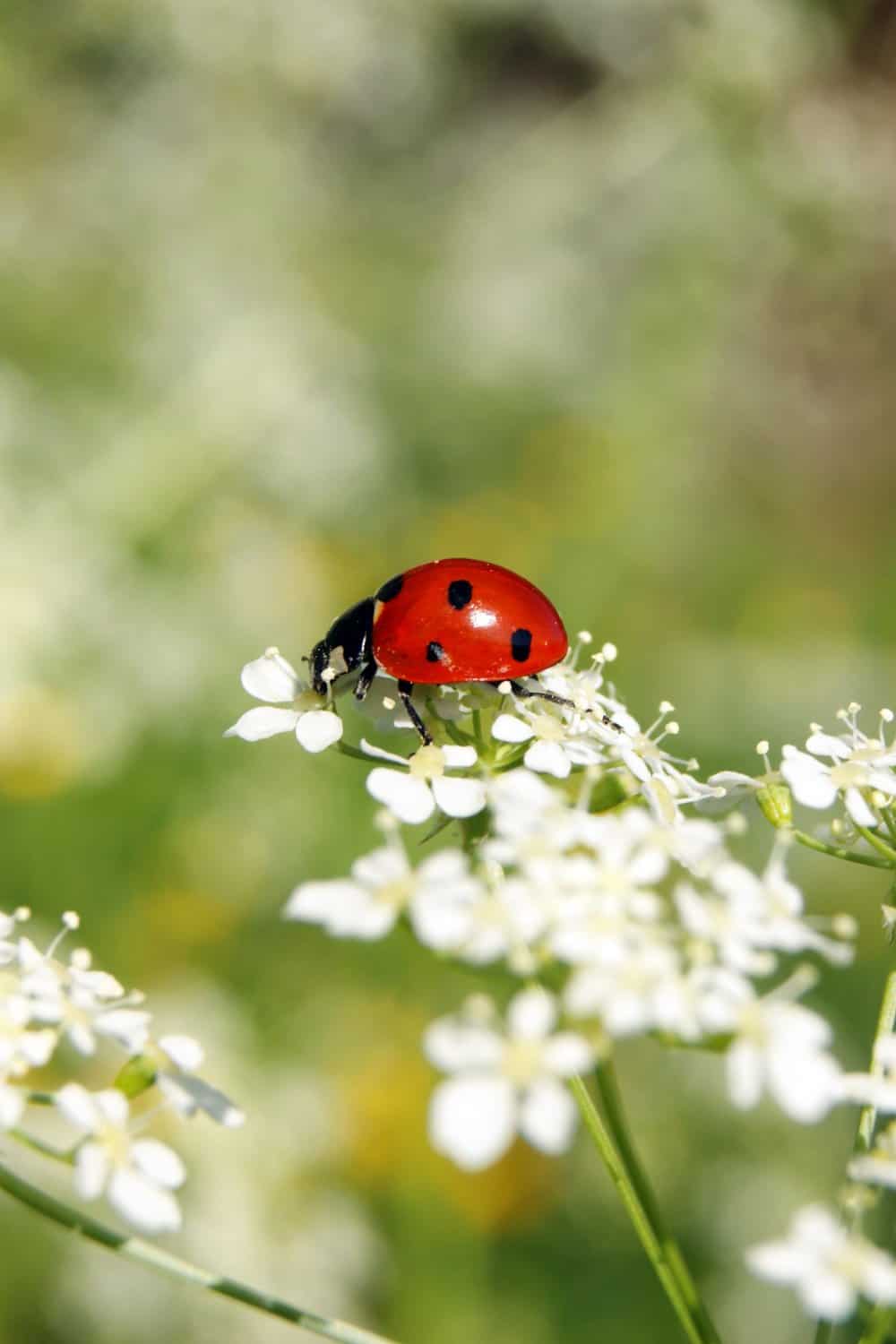
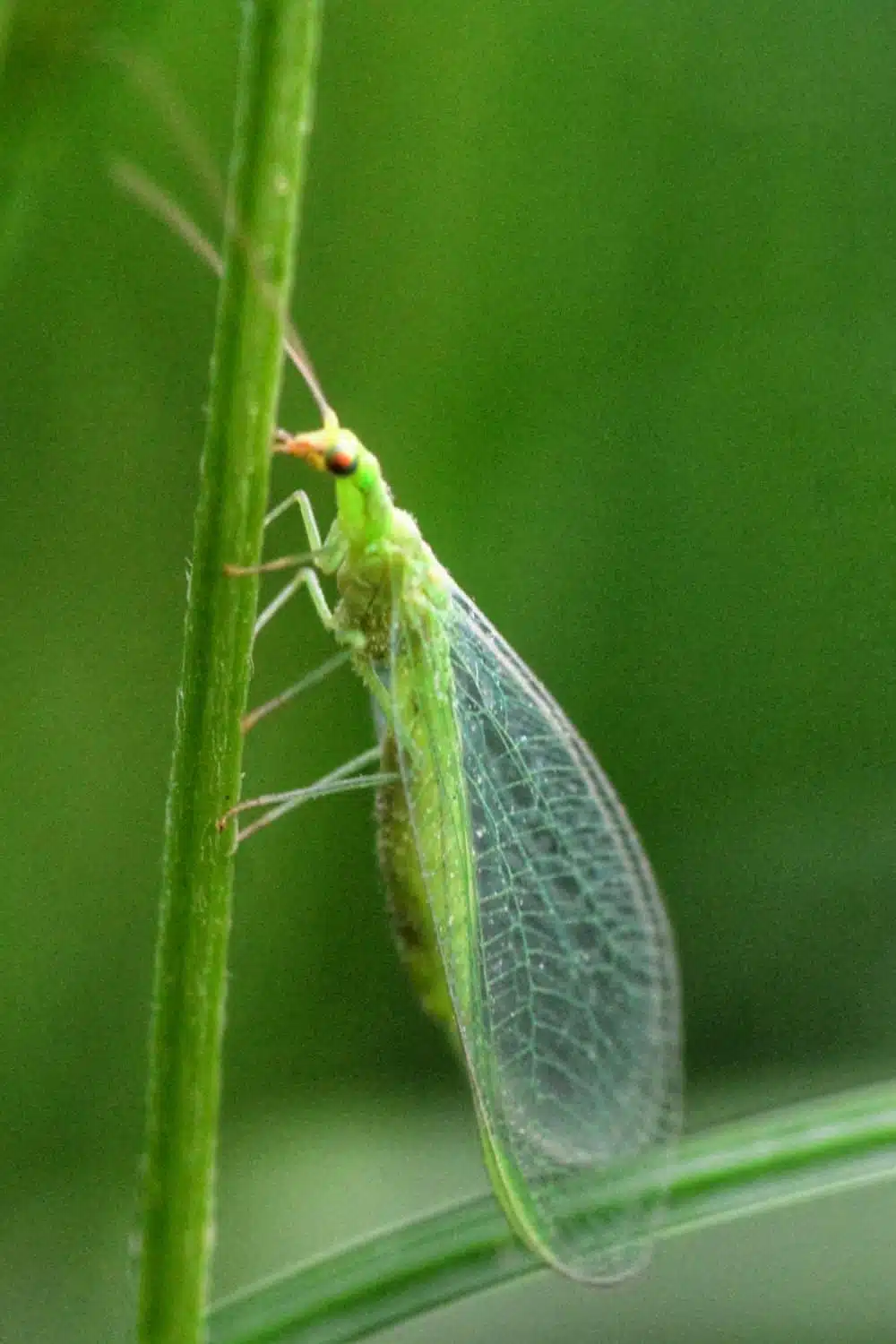
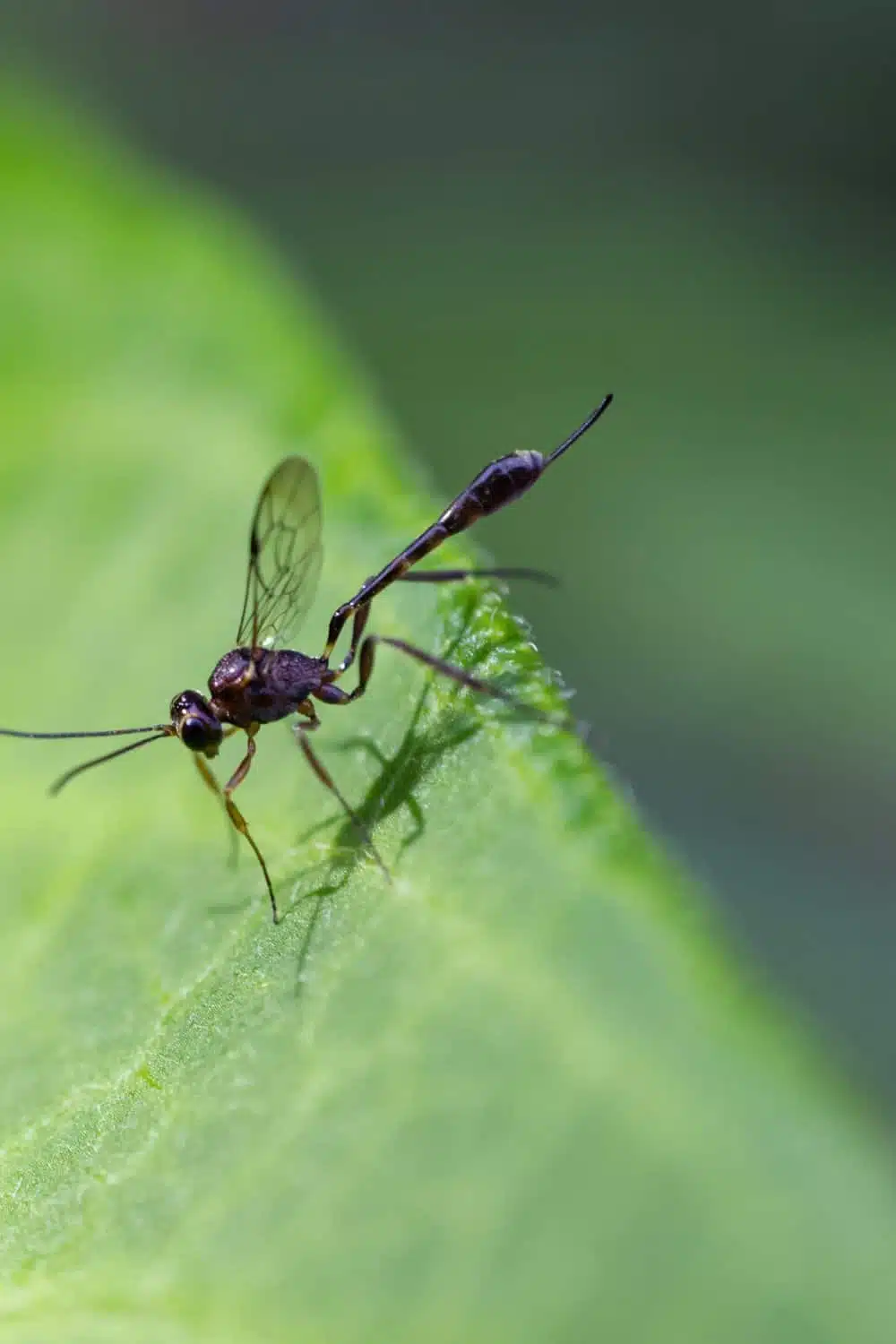
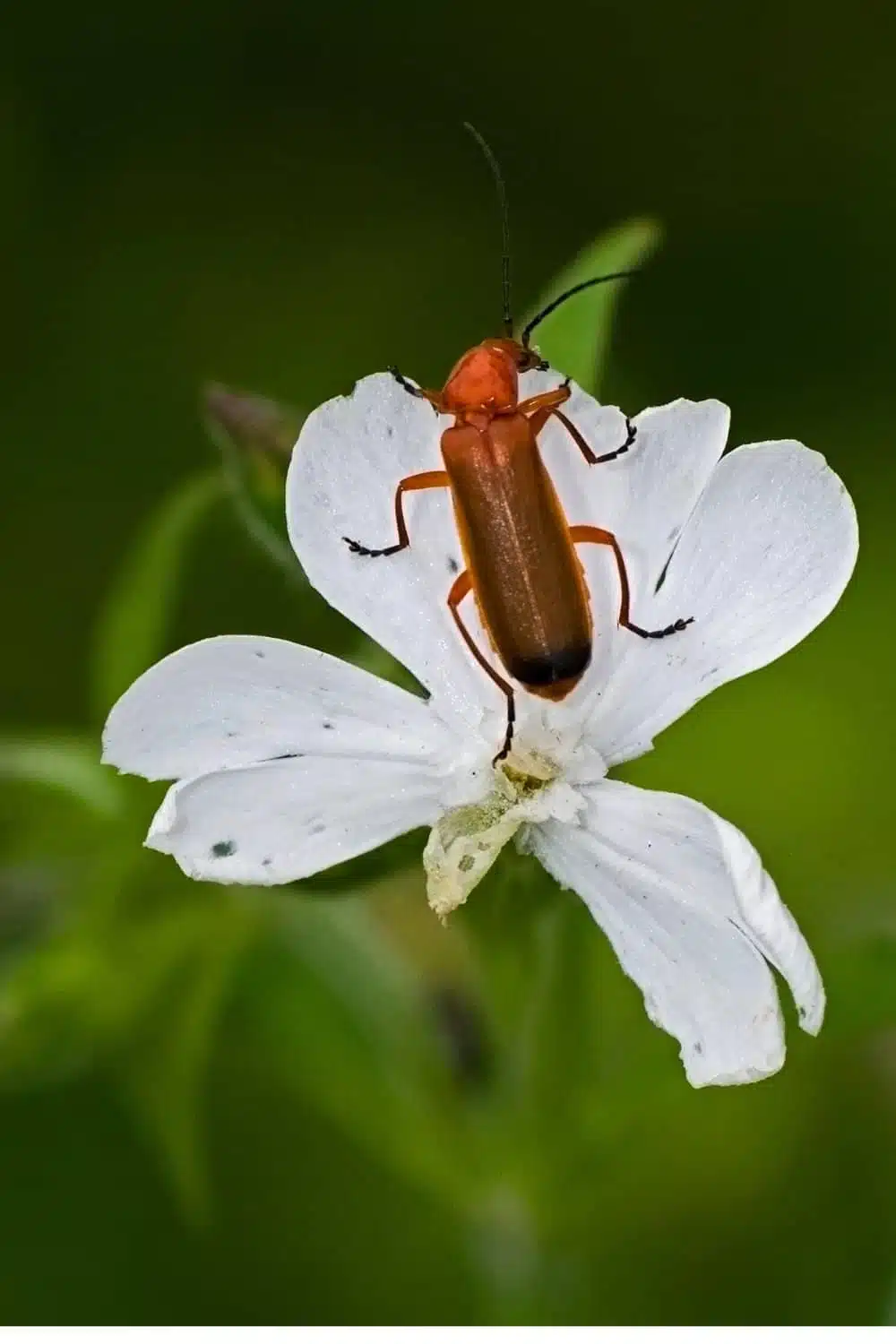
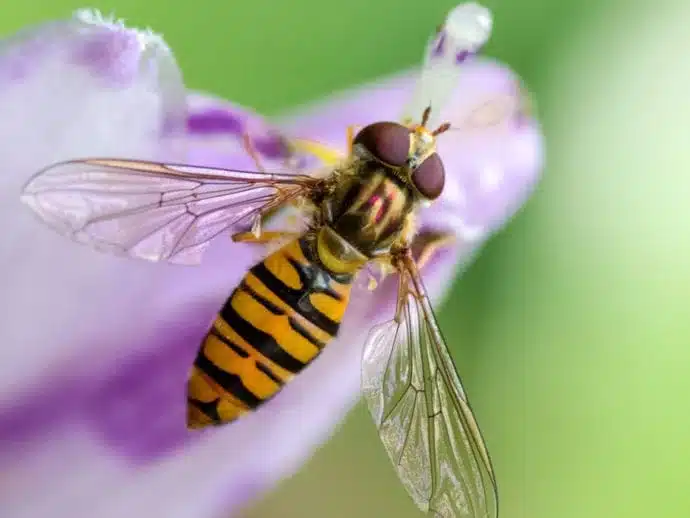
Growing many of the above plants will bring in plenty of predators which naturally feed on aphids so that you can naturally get rid of aphids without sprays or much thought on your part. This will also create a gorgeous and productive garden naturally as well.
The best natural way to eliminate aphids is to build a robust and healthy ecosystem to control the aphid population. By growing a full ecosystem of lots of flowering and perennial herbs, native plants, and perennial flowers, you will find that the aphid population will remain healthy. Aphids are a wonderful food for some of our garden’s most important bugs and birds. A complete food web is how we can grow a great garden without intervention.
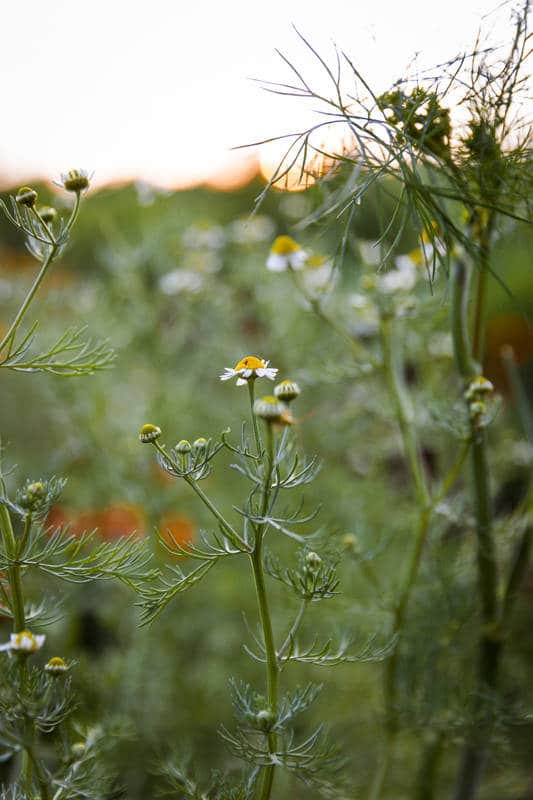
Aphids are a part of almost any garden. This means we must simply find natural solutions to controlling and preventing them through building a more robust and healthy ecosystem, as this will be the best natural way to get rid of aphids in our garden over time.
In the meantime, there are plenty of natural solutions you can make at home to lower their impact on your garden while you build a healthy ecosystem and attract beneficial insects that enjoy eating aphids.
If this blog post was helpful, you may also want to check out these other posts for greater natural gardening ideas:
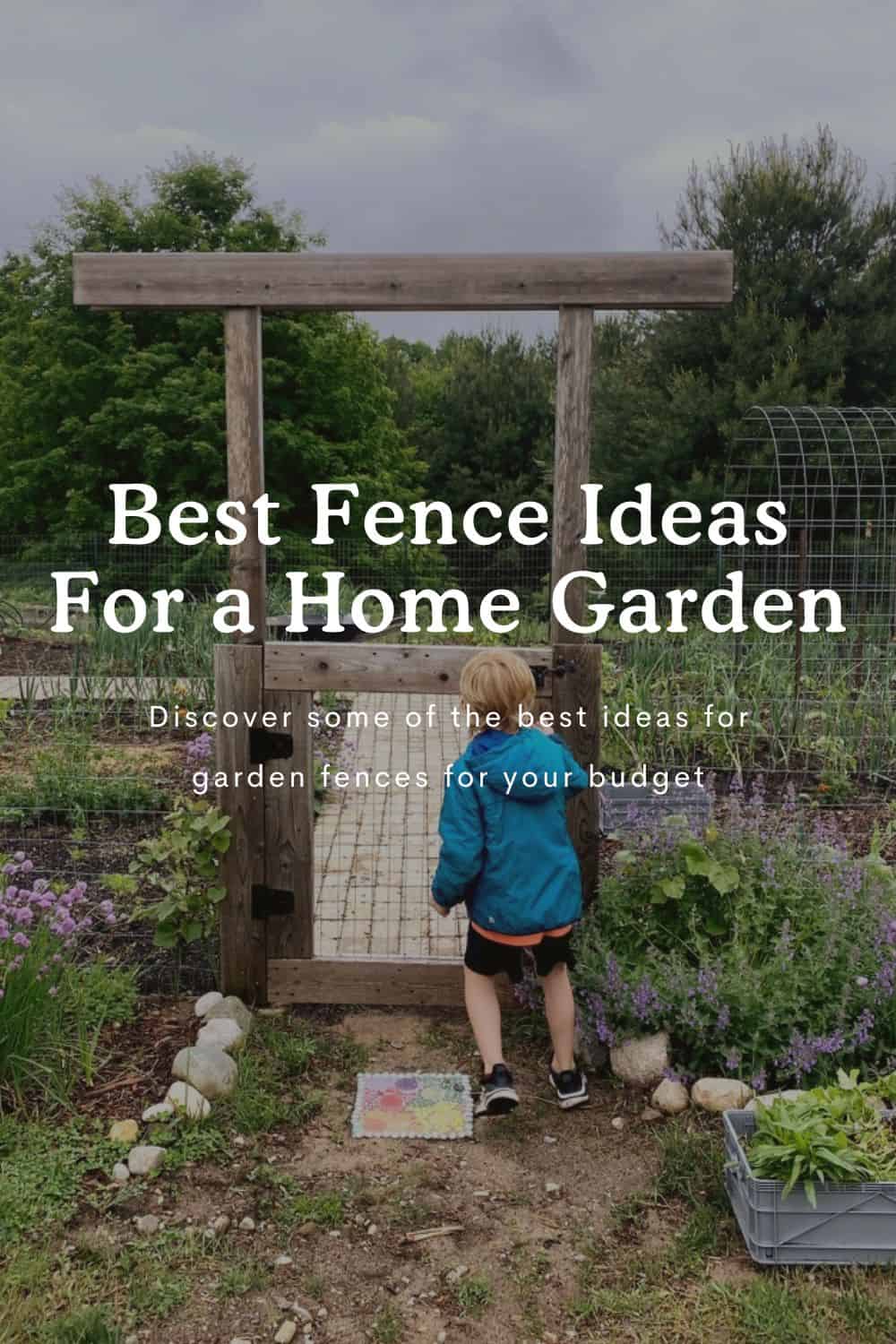
Your garden is somewhere you work hard on, and the last thing you want is to have it decimated by deer. This means you must have a plan to build or construct a garden fence that will keep out deer and other pests from your garden. I would suggest looking at this post on the Top Tricks to Deter Deer From Your Garden, but in this post, you will find some inspiring fence ideas that will naturally integrate into the landscape around you. These fences will be easy to construct and are options for cheap garden fencing.
Building a garden fence is a great way to do a few very beneficial things for your overall garden’s health.
The cheapest garden fence is one that uses found materials like quite a few of the fences below, such as a gathered stick and reclaimed wood fence or a brush fence. If you want to use newer materials, we engineered this DIY Garden Fence to be as simple and inexpensive as possible!
When building a garden fence, you must begin with a few key things. Your type of fence will determine exactly how it is built, but every fence begins with a few key things to the build:
I detail more about how to build a garden fence in this DIY Garden Fence post if you would like to see how we created our garden fence for our vegetable garden in northern Michigan.
Here are my top picks for garden fences:
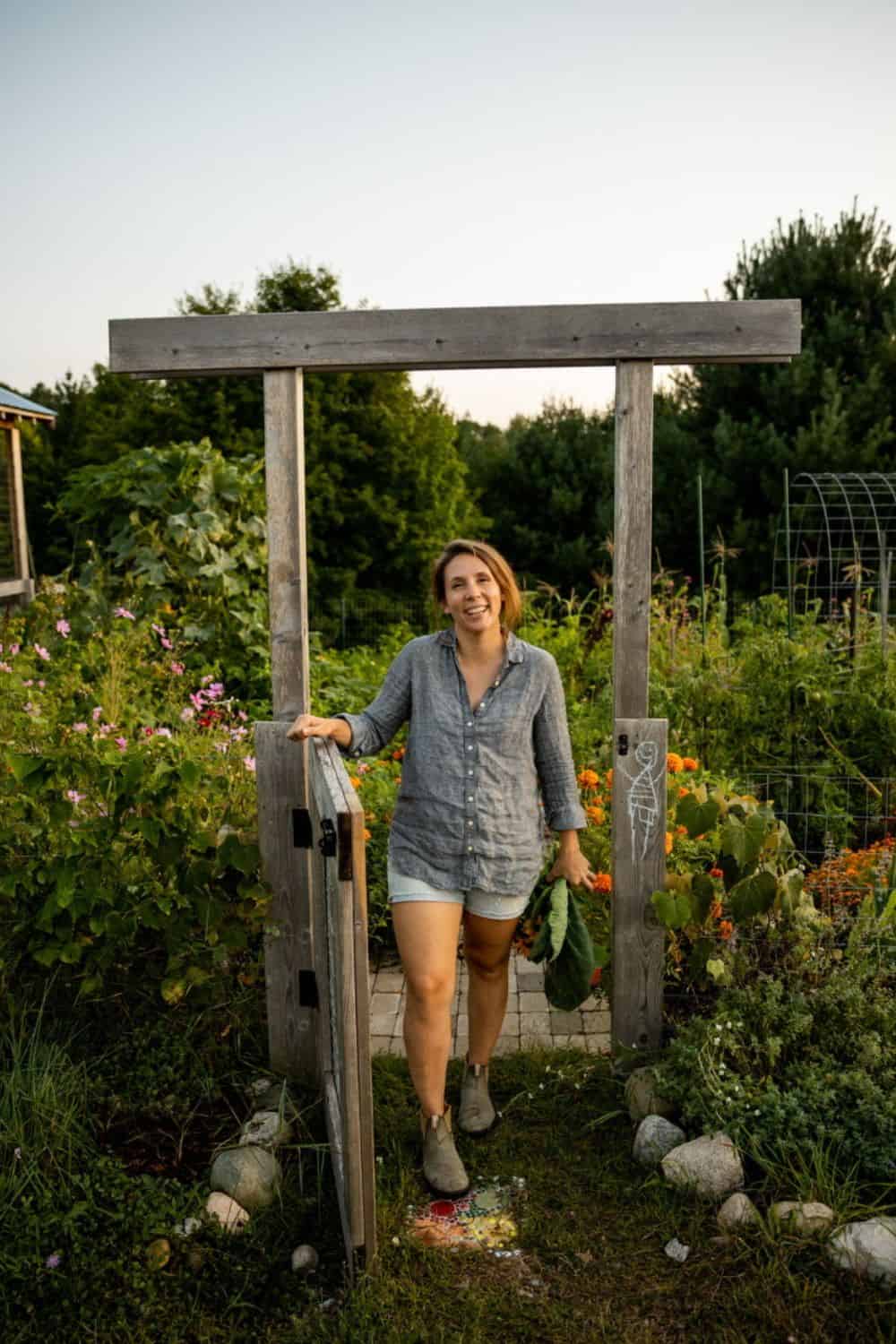
This DIY Garden Fence design is from us here at Fresh Exchange. We swear by this fencing system. It is a great simple, easy way to protect your garden with strong materials, less work, and lower costs than wood alone.
You can get the full DIY here on our blog post about the DIY Garden Fence.
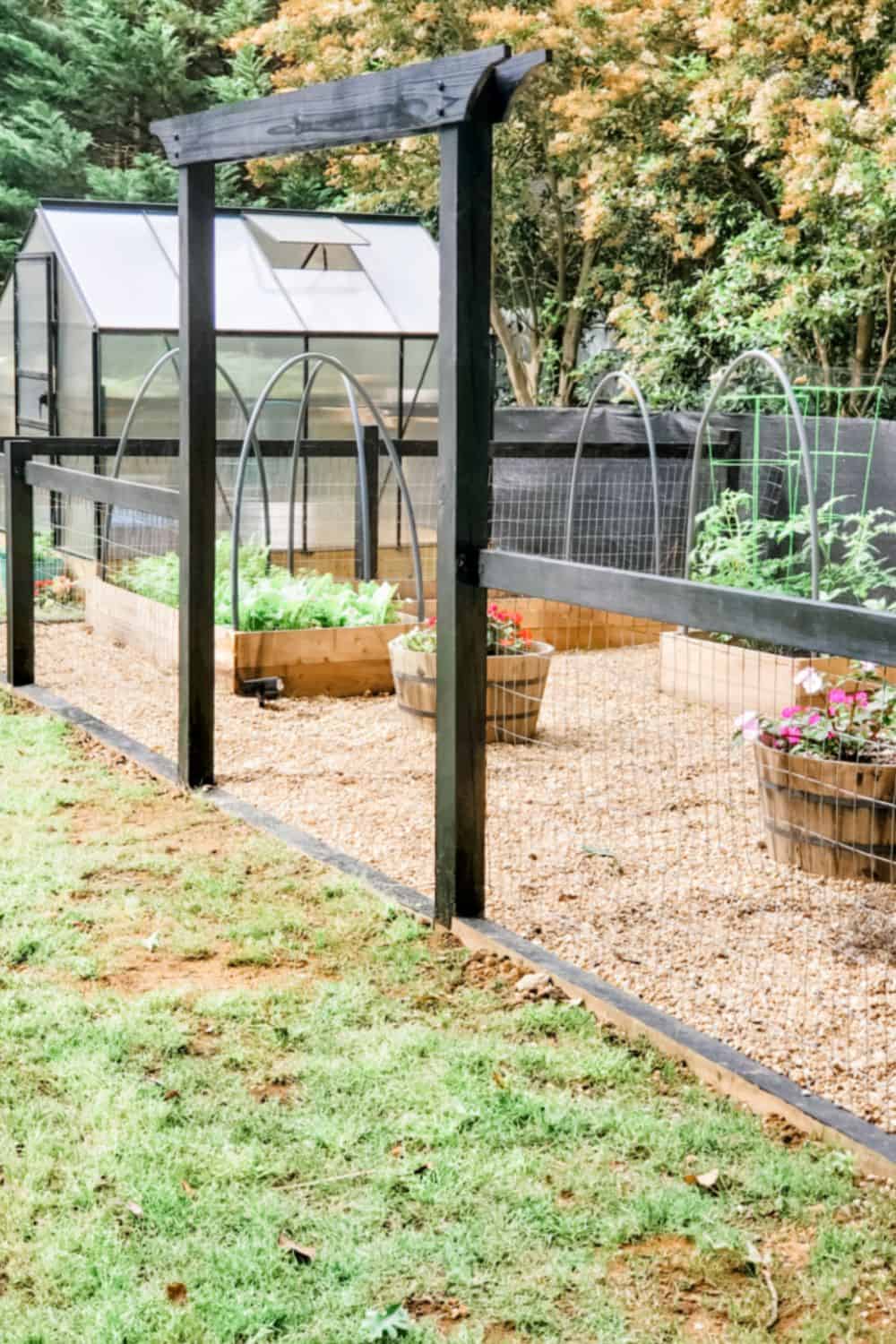
This DIY is a simple garden fence design created by Stacies Spaces. I love adding color over the wood to protect it and add more character here. This is easy to change the gauge of the wire for better pest control. This would also work to deter deer from your garden as well.
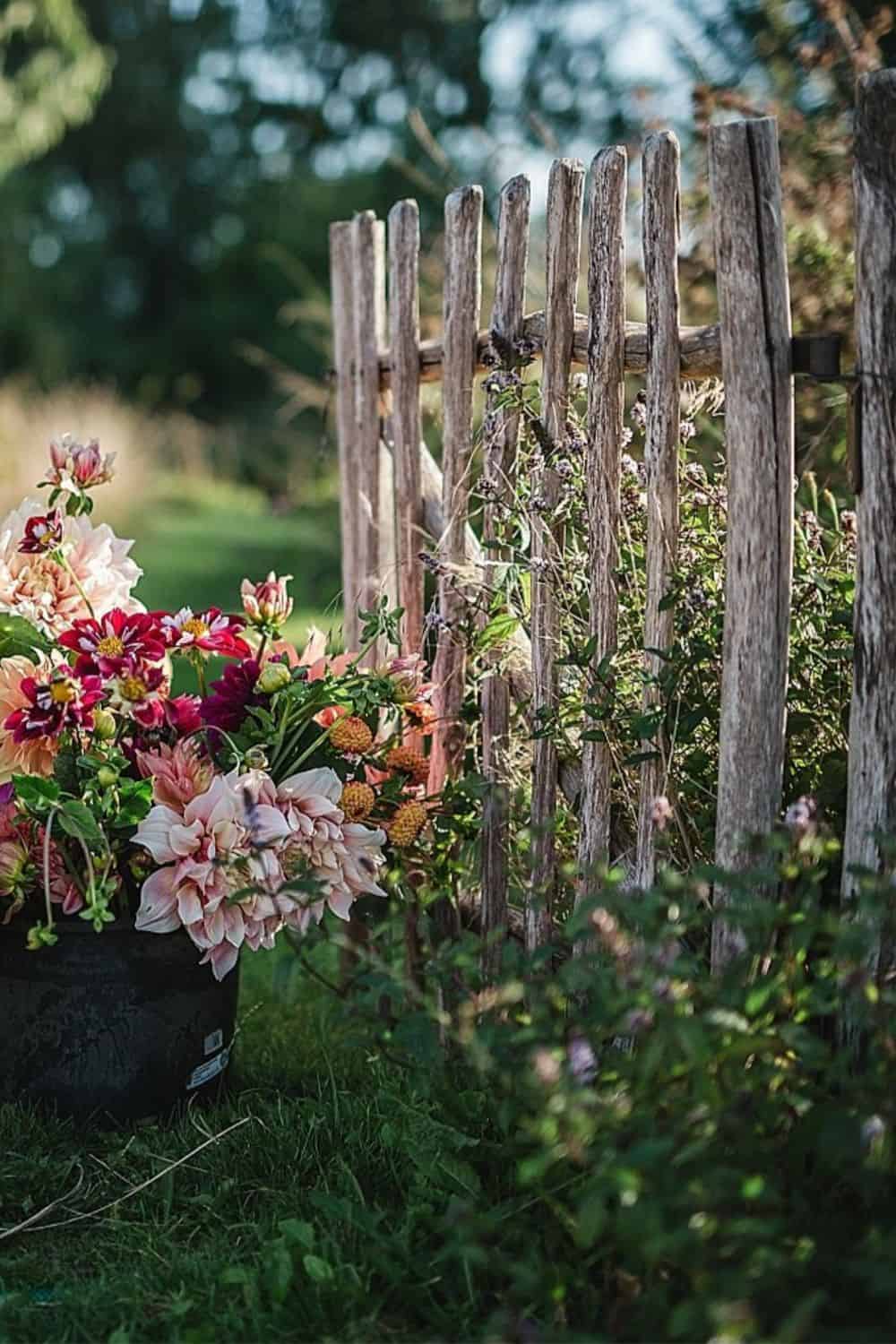
I love a natural fence that uses what is already existing in nature. The simple fence is easy to make by gathering sticks and fallen branches and nailing them into a board. You can make it as tight as you want as well. This allows for pest protection of deer and rabbits but also will offer somewhere for your peas and beans to climb.
Camilla Jørvad captured this fence design.
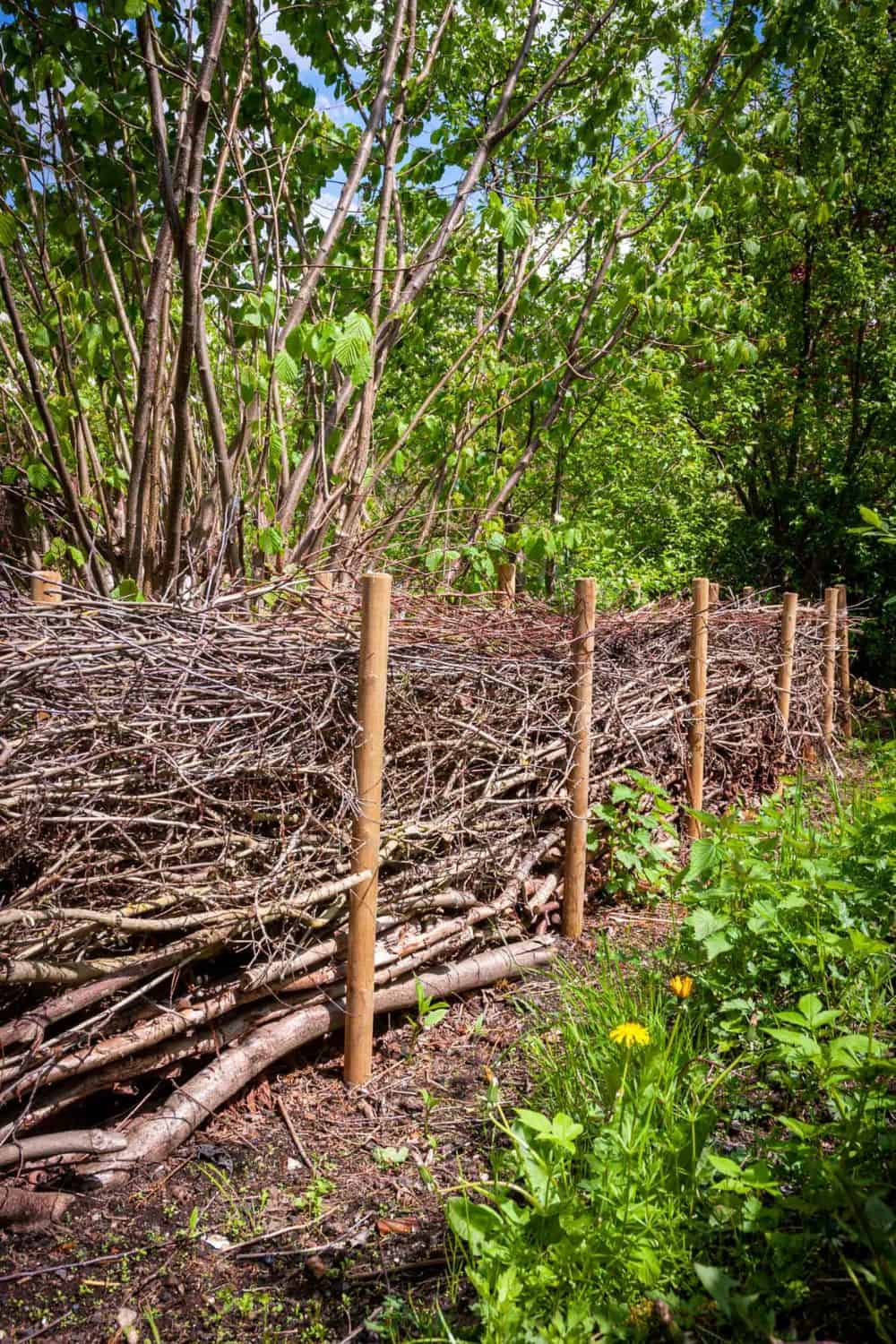
Another great way to make the most of what already exists to keep your fence cheaper is using this simple and natural method of creating a Brush Fence. It is a very great way to keep animals out but to use existing materials and create a natural haven for bugs of all kinds!
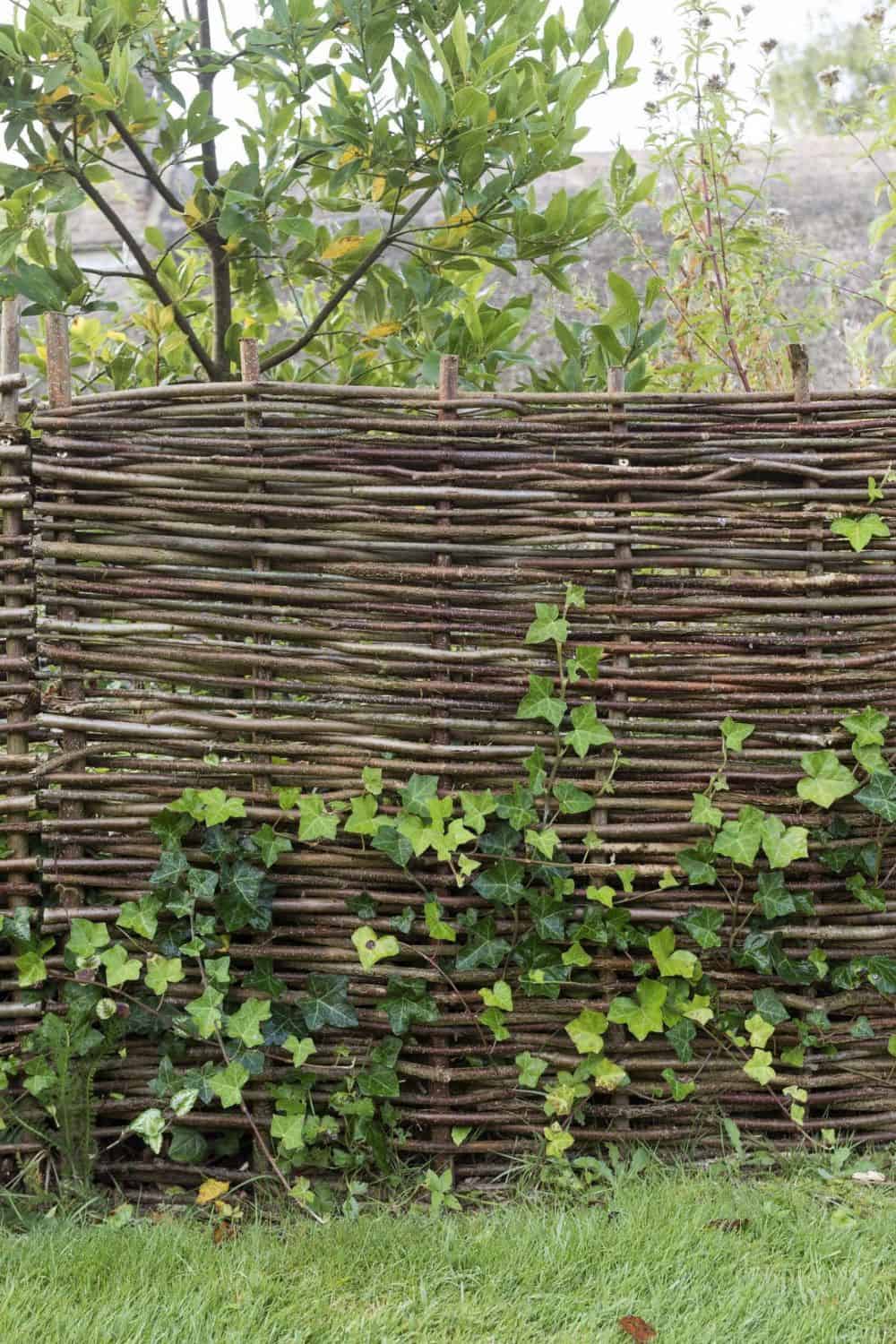
I love this type of fencing because, like the Brush and Gathered stick idea, you can use existing materials. This keeps costs down, but it can still be beautiful and special in a garden. Using these sorts of materials takes some skill, but this post from Gardenista gives some great ideas to get you started on creating a great DIY waddle fence for yourself.
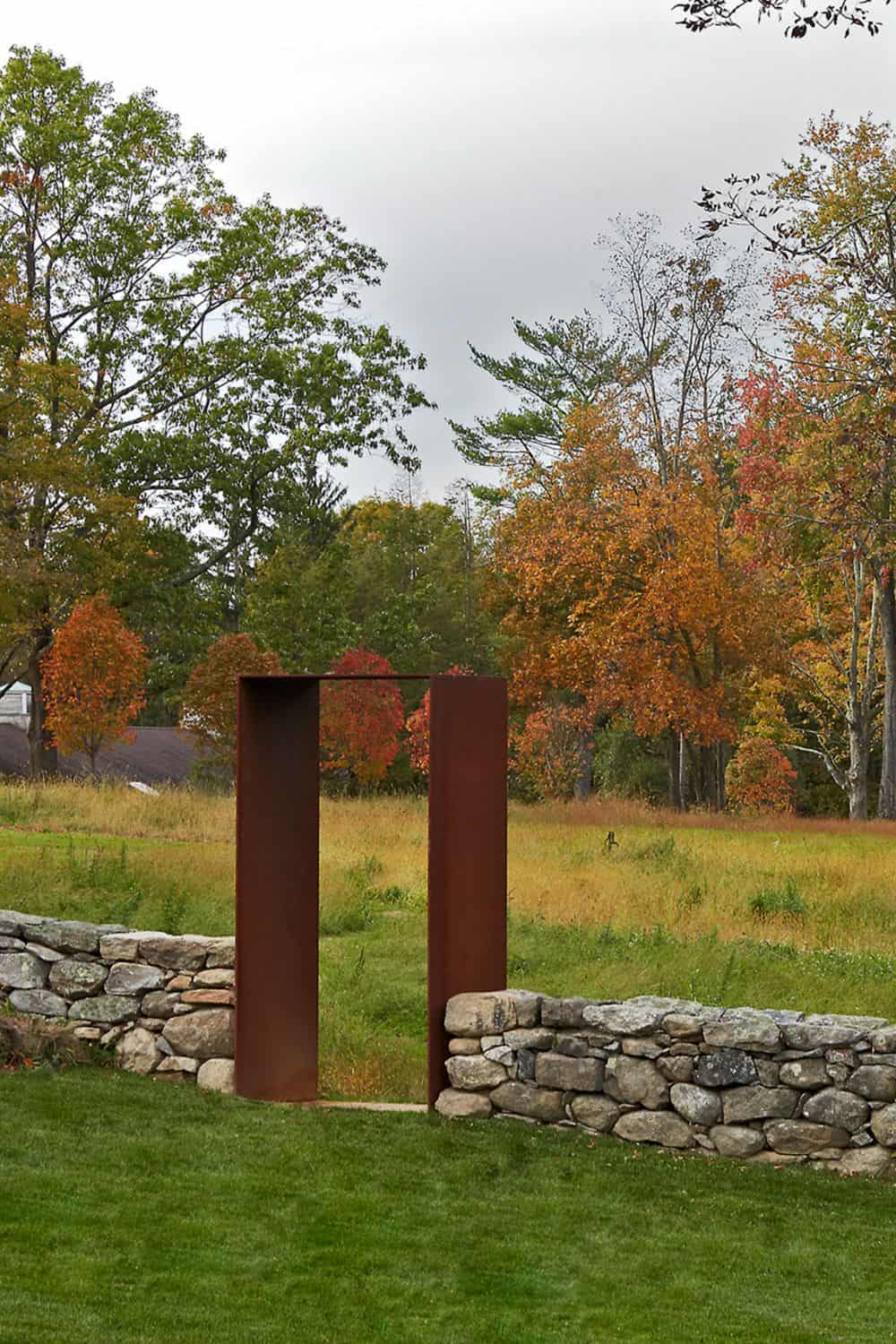
Material mixing can be a really great way to create a garden fence. You can use dry stacked stones with corten steel metal to create spaces and lines that will protect your garden well. Stimson Studio created this fence.
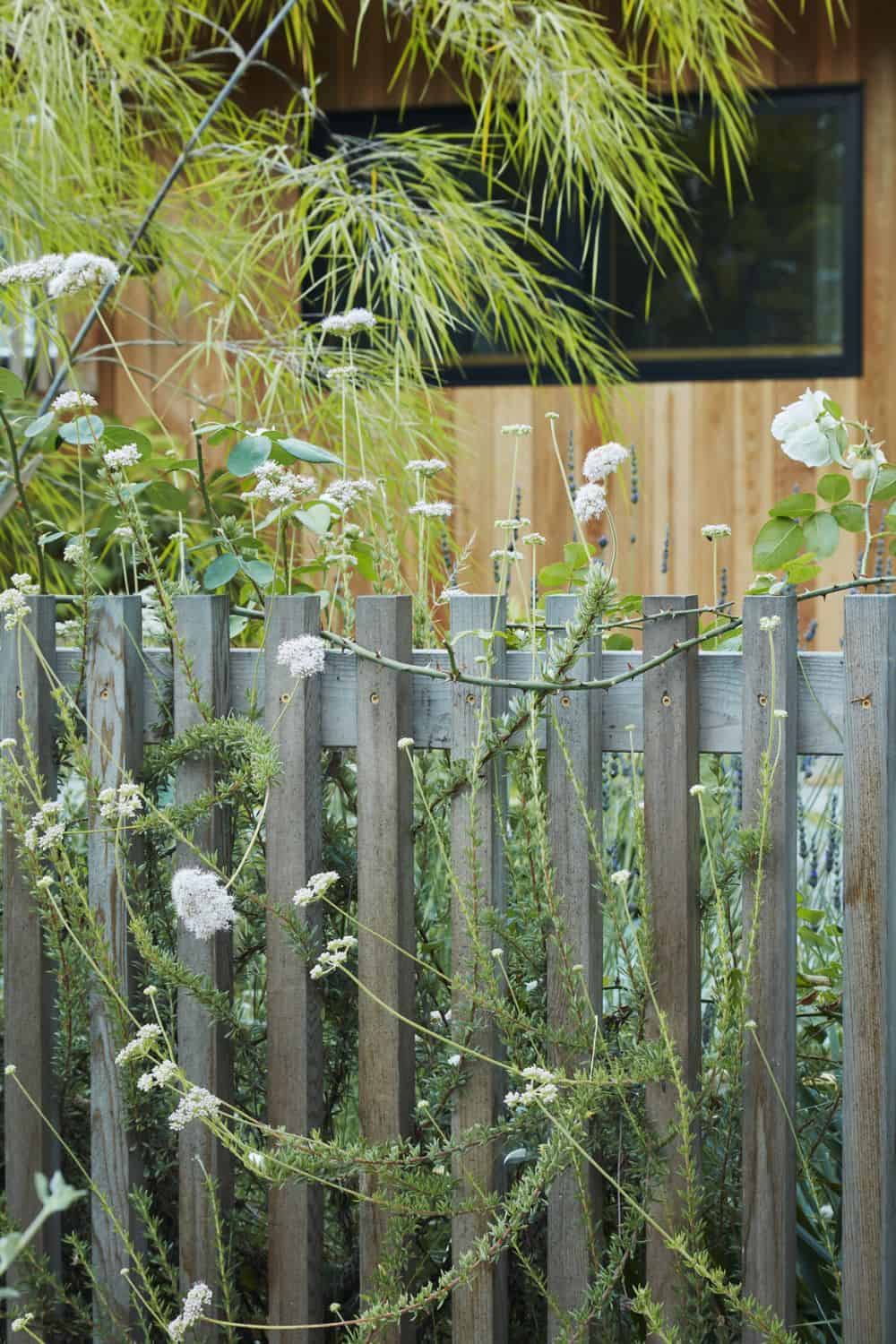
The picket fence life doesn’t always connect with the Cape cod style home. Instead, you can create this sort of fence like Terremoto Studio did. Cutting cedar in the same stripe sizes and heights will lend to a modern-style fence that keeps your garden safe from predators and pests.
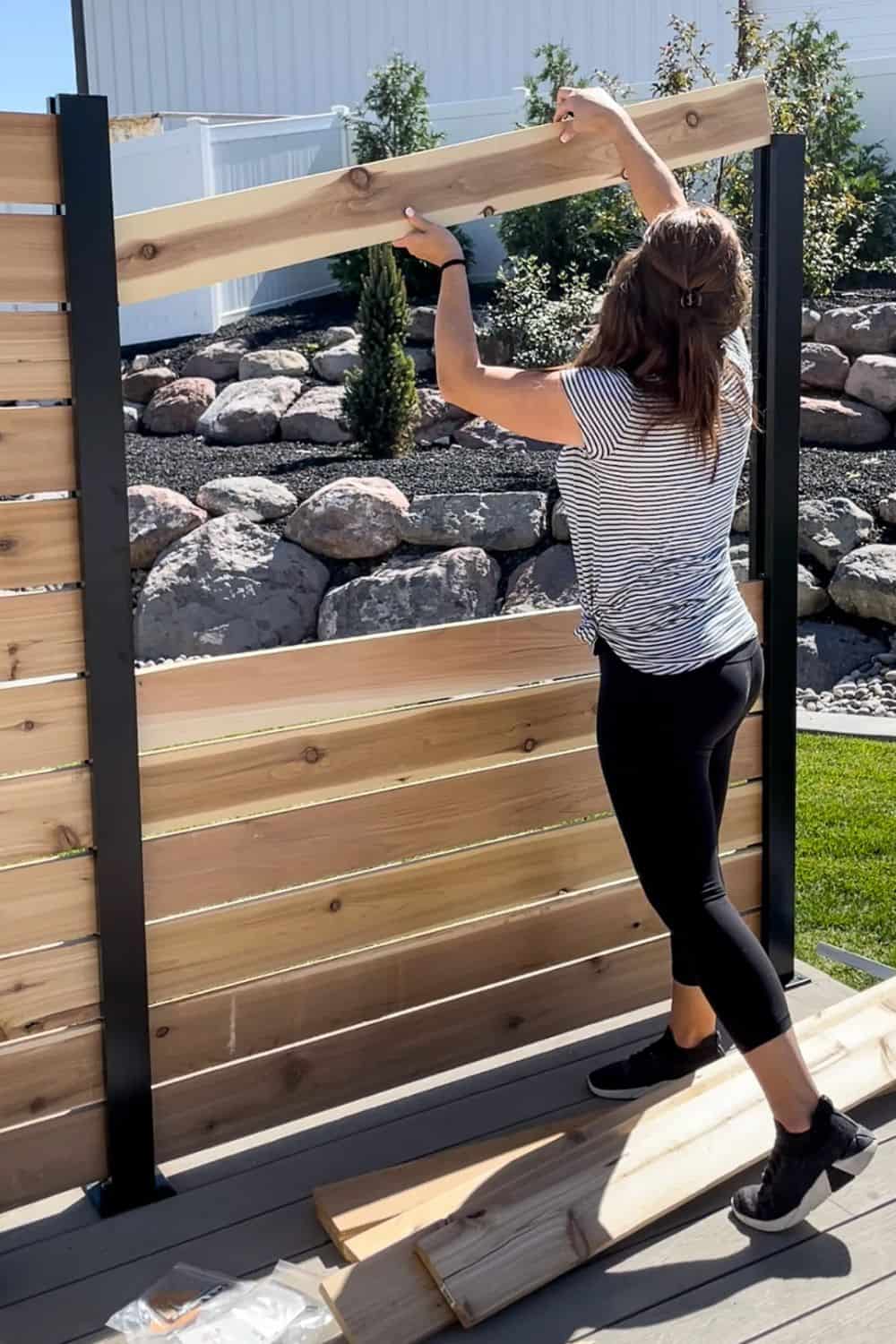
This fence DIYed by Honey Built Home uses a great fence-building system from Lowe’s which makes this modern horizontal fence far easier and straightforward to build yourself.

You can keep out pests, particularly deer, with natural hedge fencing. We keep our kitchen garden deer free with a natural fence around the garden using Viburnum, Hawthorne, and Hazelnut. You can do the same by installing them and using them to keep deer out of your garden too.
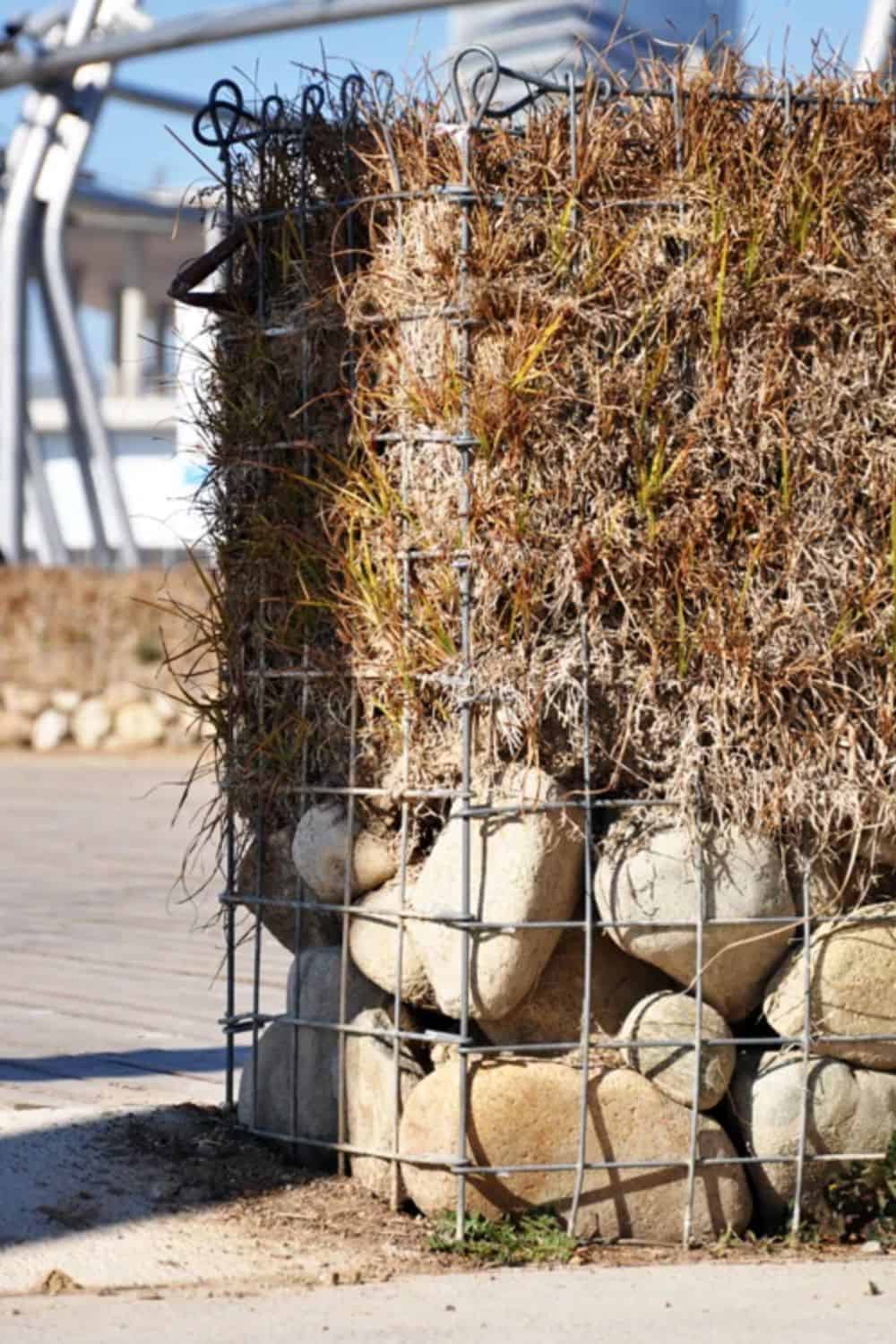
Gabion fencing is utilizing a cage system that will hold natural materials. These can be almost anything from wood to stacked stones and more. Heading to Pinterest or Google and searching this term will present many beautiful and insightful ideas. This one, in particular, I found lovely from Life of an Architect. I think you will love this natural and easy-to-use fencing idea, particularly for modern and post-modern designed spaces.
These fence ideas are all really amazing and give a wide range of ideas for those looking for the best garden fence idea that will fit in almost any budget, while still providing modern and tasteful design. Many of these garden fence ideas are also natural and good for the environment as well.
Posts you may also enjoy:
Keeping deer out of your garden can be quite tricky whether you live in the city or the country. With increasing deer populations, we are seeing more and more issues with deer in urban areas. As a result, our gardens are seeing the damage, but deterring deer naturally is quite easy with the right plants and the right fencing techniques. I gathered up the top ways we have used to keep deer away from living on 15 acres. These tricks are not only easy to implement if you live on land but also for those in smaller settings as well.
As a note, every herd and population of deer is different, and nothing is 100% certain to deter deer, but these ways are quite tried and true in our own garden over the years. Here are the top ways to keep deer out of the garden, whether you are growing veggies, flowers, herbs, or anything in between.
Yes, choosing the right plants to perimeter your garden will be extremely helpful in keeping them away. I have seen it in action, actually with how deer move on the land around us. Here are the top plants I use to keep deer out of the garden:
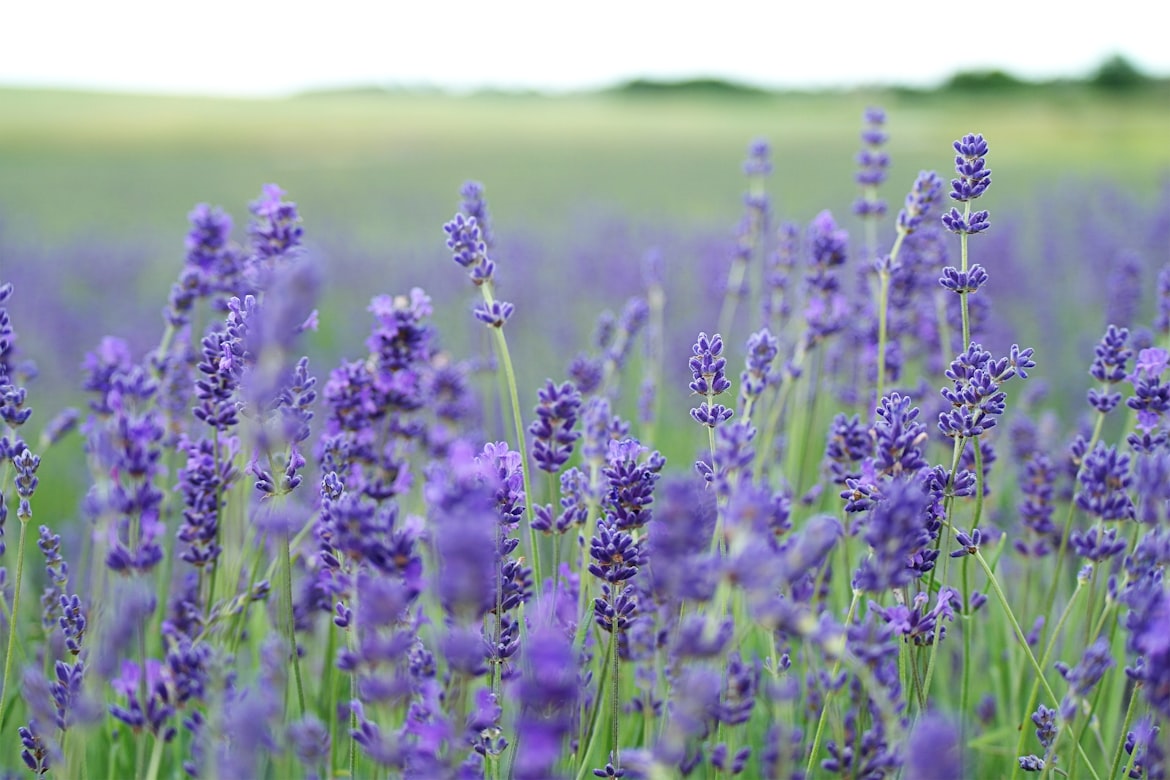
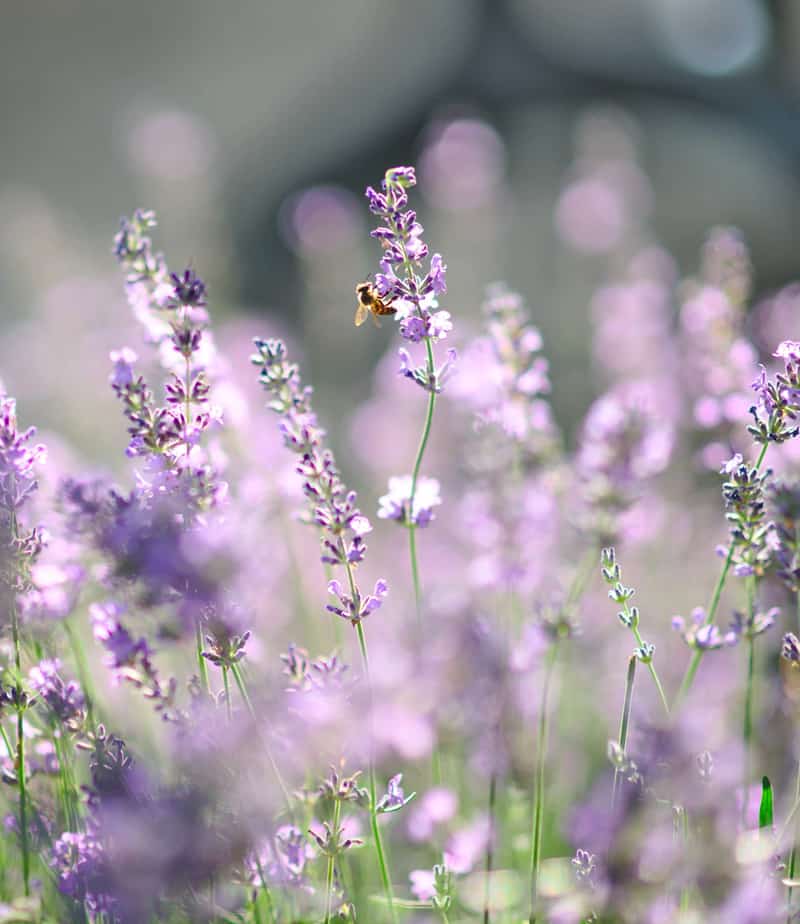
Lavender is one of the best ways to keep deer away from the garden. Placing it around your garden in abundance will keep deer away. The plants not only won’t be eaten, but the deer won’t come near them. No need for them to have their blooms either. They can exist. The more, the better.
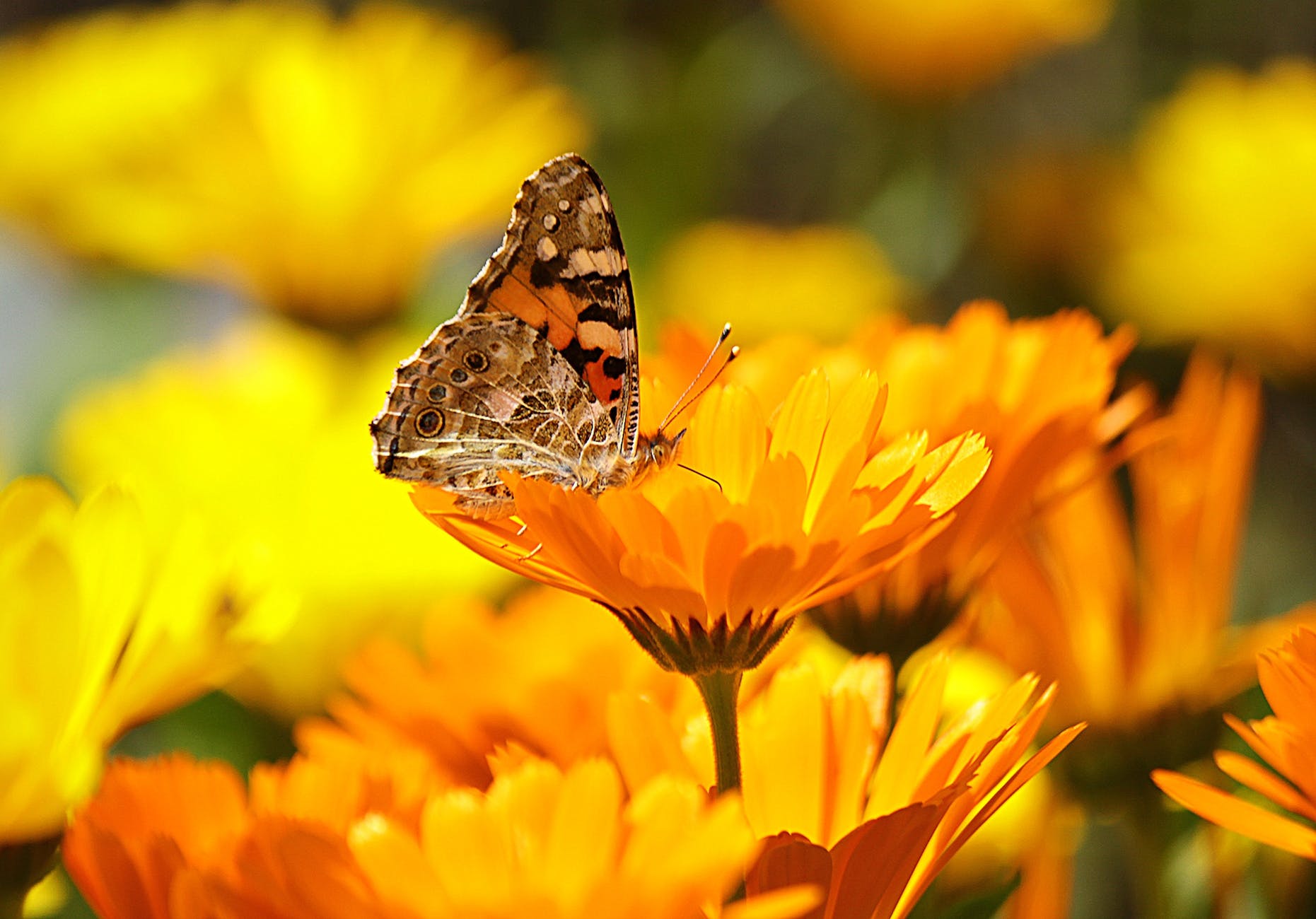
Standard marigolds work, too, but the Giant variety is EXTREMELY fragrant, and deer do not like them. Though they are edible to us as humans, deer, and other pests do not like their scent. They will keep the deer out of the garden without question. I have throughout the whole garden throughout the whole growing season.
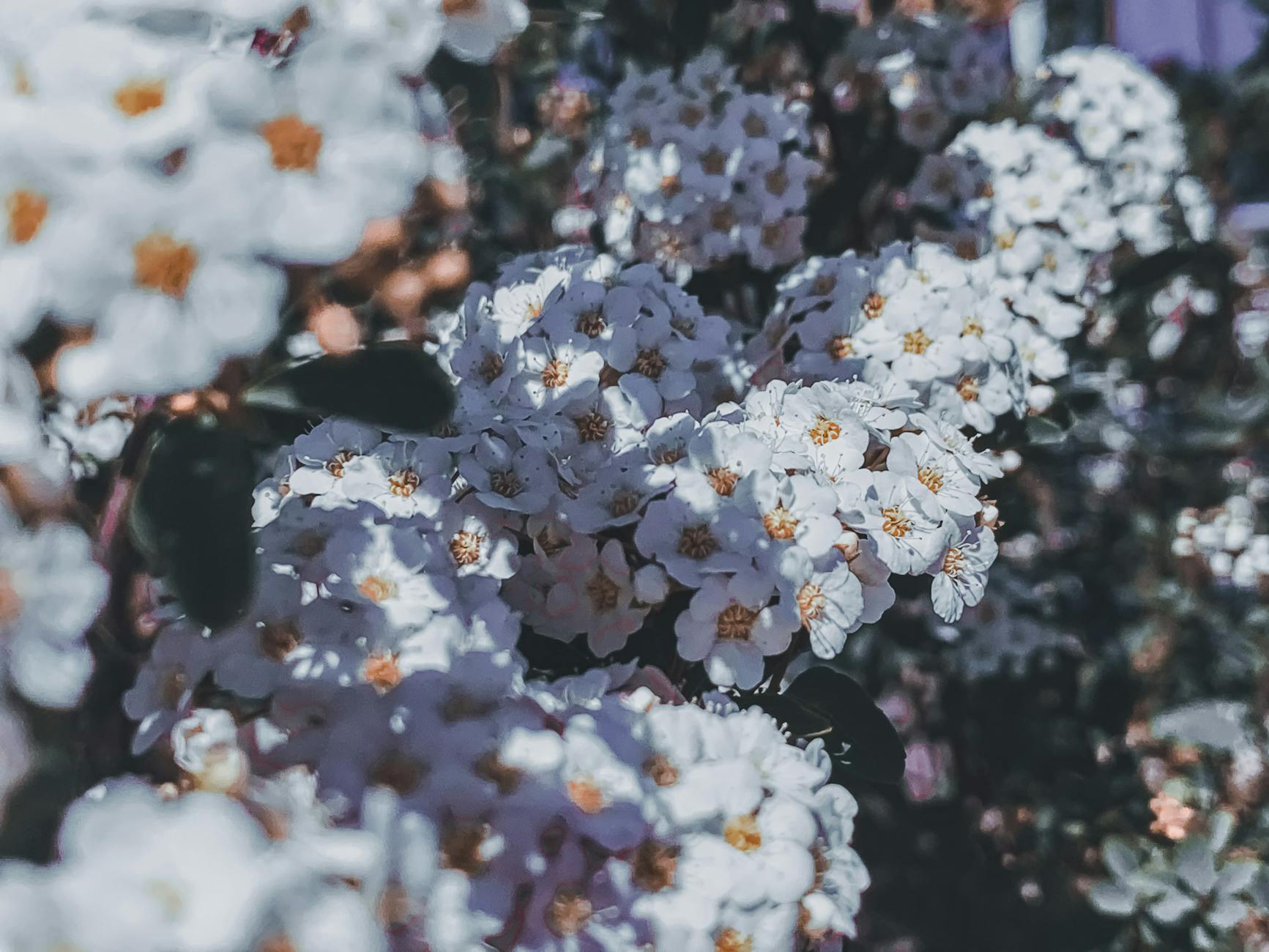
This plant isn’t a favorite of deer because of the flavor and foliage variety, so they stay clear of it, especially when there is a large amount of it.

Strong smelling and repellent. This plant is one of the best to keep away deer. It is low maintenance and loves tons of sun. It also gets HUGE. It takes on a strong scent somewhere between mint and sage as part of the mint family.

Another strong-smelling plant that the deer do not like. It also creates a large height which, as you will read below, makes deer nervous about jumping and assessing how to get over.

Another plant that is close to the Catmint in variety. It has a strong smell as well as beautiful flowers. It is beautiful but one that deer are not interested in. Also, the foliage has a texture they do not like.

Strong smelling and tall, dill holds a ton of resilience against deer in the garden. Planting it around the perimeter of a fence, can keep deer away from sneaking in or placing their heads over the fence to grab a snack.
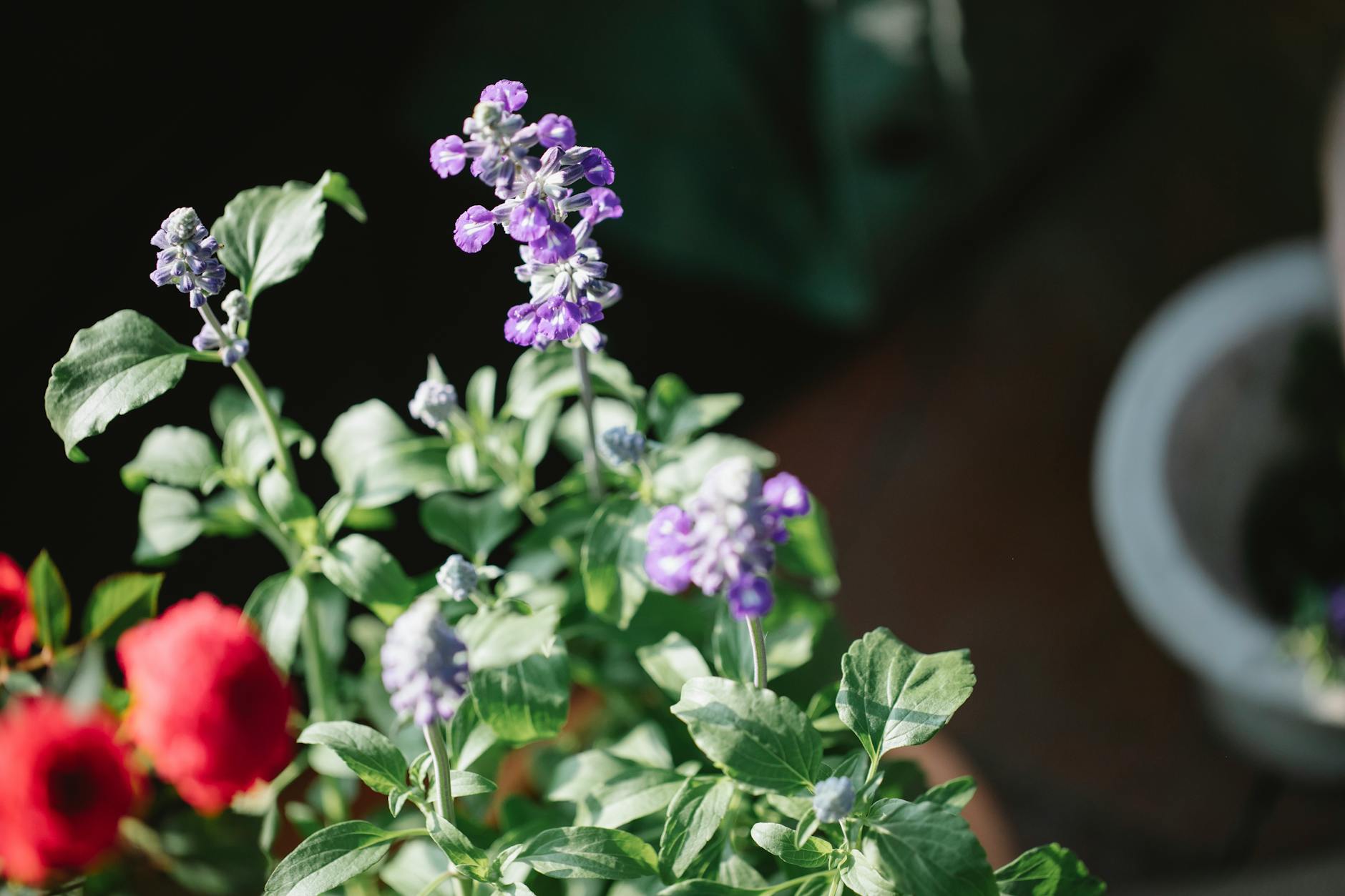
One more that is similar to Catmint in variety. It is beautiful, and the bees and butterflies love it but will keep the deer away.

Deer do not enjoy these and are completely deer resistant. Using them to make deer believe that other items near them are not edible either is a great way to use them in the garden.
These plants are poisonous to deer, so they will avoid them completely in your garden and provide a barrier early in spring to keep deer away from young spring plants.
A garden fence can be a great way to keep deer out of the garden. A fence such as this one that you can easily DIY can be a great option, but there may be a few ways to keep it both more affordable and more proactive at keeping deer out with less work. Here is what I mean:
Having a fence helps keeps deer out of your garden without a doubt, but you may not have to go as high as you think to keep out deer. Deers don’t do well with both height and depth perception. They don’t want to get stuck somewhere they cannot get out of, so if you have things that grow vertically, wires that zig-zag higher up, or you grow a hedge that varies in height, you can spend less on fencing, make a lower fence using cedar, and still keep the deer out as well. I’m a big fan of this beech hedge as it looks amazing when fully grown, and getting them as bare root means they are a lot cheaper too.
Also Read: DIY Garden Fence
Using larger rocks around your garden bed can actually be a deterrent to the deer as well. All you need to do is take larger rocks and place them in a thick band around your bed, and the deer will not go inside the bed. You can also plant things within the rock bed, but make sure they are deer deterrent plants. Deer do not like walking over large rocks to access something, so they simply will not do it.
Deer do not like not knowing what they may encounter, so if they have a hint that there is a string or something they cannot estimate in the way, they will not jump and access an area. Using a fish line or string is all you really need to create this. You can use a zig-zag pattern which will even create that sort of dimension for them.
Deer don’t like the smell of dog urine, so having dogs around will keep the deer away as well. It is at all a sure thing, but we have found it helps a lot.
You can use motion sensor lights or even these lights called Nite Guards to deter the deer from coming close to your garden. Either one creates a startling or predator response for the deer.
If you don’t have a fence, netting can also keep them out. Using bird netting to deter the deer or fleece can have the same effect on the deer.
You can see the fence we have used to keep our garden safe from deer. So far, so good. The plants have kept the deer out, and the varying depths of plants have also acted as protection.
The best way to keep the hungry deer out of your garden is with soap bars. Simply punch some holes in each bar, string them up around trees, and fencing near where you grow to produce–the sweet scent will be too much for even the most determined herbivores!
Deer have an amazing sense of smell, which they use to find food. You can take advantage and repel deer by using smells that are disliked, such as marigolds or lavender; mint will do too! Don’t forget about fox urine – it will be effective for you this winter when hunting season starts again in a few months.
If this article helped you how to keep deer out of the garden, consider checking out these articles below –
Having a thriving vegetable garden requires careful consideration of many factors, including soil, water, sunlight, and nutrients. One of the most important elements of a successful garden is the fertilizer you choose. The right fertilizer can provide the necessary nutrients needed to help plants grow and produce a bountiful harvest. In this blog post, I share the best fertilizers as an expert gardener. We will explore the best fertilizer to use in a vegetable garden and discuss the benefits of each choice.
Choosing the best fertilizer for a vegetable garden can be a daunting task. There are so many options available, it can be hard to know which one is best for your garden. Fortunately, a few types of fertilizer are well-suited to vegetable gardens.
Organic fertilizers like compost, manure, or bone meal are great for vegetable gardens. These are slow-release fertilizers that add beneficial nutrients to the soil and feed the beneficial organisms in the soil. They are also very affordable and easy to find.
Though there are options to use synthetic fertilizers, which are highly concentrated, I suggest for the healthiest soil and environment, only use organic fertilizers as the best fertilizer for your vegetable garden.
Below you will find some great fertilizers to use and a list of the best fertilizers to use in your vegetable garden this year. If you are unsure when to fertilize your garden, I suggest starting with this post.
If you want to dig into fertilizing even more, you can take our courses on fertilizing and soil health.
To begin, here are some different types of naturally occurring fertilizers for feeding your plants the key macronutrients Nitrogen, Phosphorus, and Potassium:
Compost is a great choice for the vegetable garden, as it is an all-natural fertilizer. It is created by breaking down organic matter such as leaves, grass clippings, and kitchen scraps and is rich in nitrogen, phosphorus, and potassium, the essential nutrients for healthy plant growth. Compost also helps to improve the soil structure, increases water retention, and reduces the need for chemical fertilizers.
Compost can be added to the soil before planting or used as a top dressing for existing plants, much like mulch. It is also great for suppressing disease and pest problems and can help to attract beneficial insects to the garden. Compost is a great choice for organic gardeners and is easy to make at home or purchase from a garden center. It helps your plants access important micronutrients they need in the soil and builds the microorganisms that help with root development and overall health, particularly when transplanting.
For the best results, use compost in combination with other natural fertilizers such as manure or fish emulsion. This will ensure that your vegetable garden has all the essential nutrients it needs to thrive. With some planning and the right fertilizer, you can enjoy a healthy and abundant vegetable harvest.
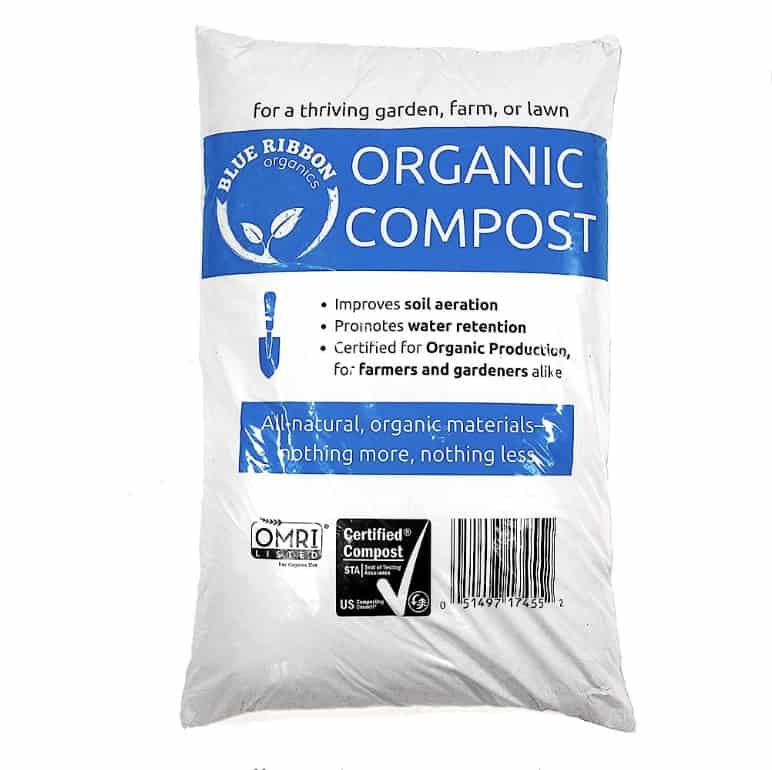
Manure is a great option when looking for the best fertilizer to use in a vegetable garden. Manure is organic matter that is produced when animals break down organic materials in their digestive system. It is especially high in nitrogen, which is one of the most important nutrients for promoting healthy plant growth. Manure is relatively easy to find and usually inexpensive, making it a great choice for those on a budget. It also helps to improve soil structure and water retention, making it a great natural soil amendment.
Using manure as a fertilizer for your vegetable garden is a great way to promote healthy growth. It is a natural source of nutrients that can help to replenish the soil and provide essential nutrients for your plants. It can also help to improve soil structure and water retention, allowing for better drainage and more efficient water use. Plus, it is relatively easy to find and inexpensive, making it an ideal choice for gardeners on a budget.
Manure can be a great addition to any vegetable garden. It is a natural source of nitrogen that can help promote healthy plant growth and replenish the soil. It is also relatively easy to find and inexpensive, making it a great choice for gardeners on a budget. Plus, it helps to improve soil structure and water retention, allowing for better drainage.
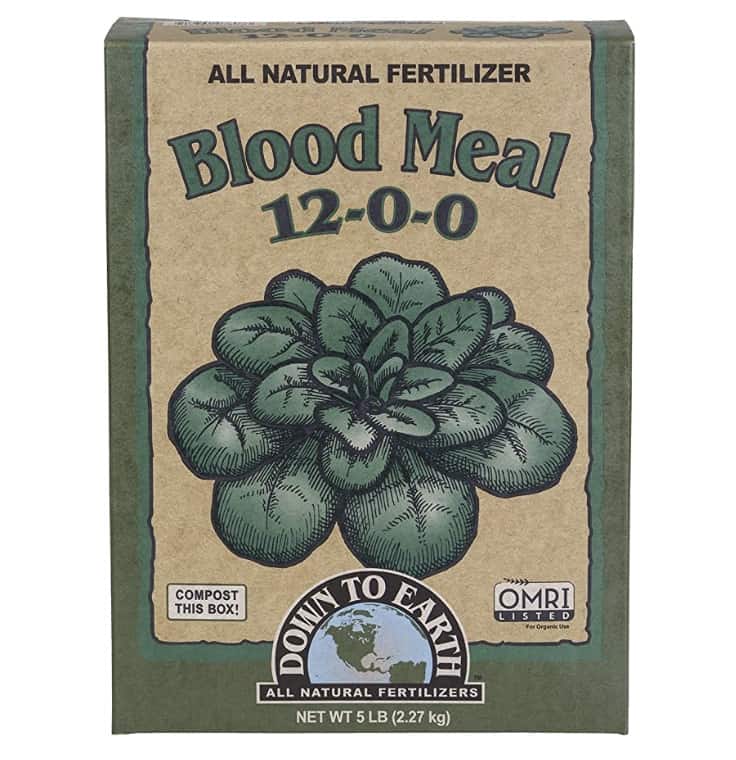
Blood meal is an excellent choice for fertilizing vegetable gardens. It is a natural source of nitrogen that helps vegetables grow quickly and vigorously, resulting in better yields. Blood meal also helps to improve soil structure, encouraging strong root growth and helping to retain water. This makes it ideal for vegetable gardens, as it helps to ensure that the vegetables have all the nutrients they need for optimal growth.
Blood meal is easy to use and can be applied directly to the soil or mixed in with compost or other organic matter. Remember that blood meal is a concentrated nitrogen source, so it should be used in moderation. Too much blood meal can result in an imbalance of nutrients in the soil, leading to stunted growth and poor yields.
Overall, blood meal is an excellent fertilizer for vegetable gardens. It is a natural source of nitrogen that helps vegetables grow quickly and vigorously and helps to improve soil structure. It is easy to use and can be applied directly to the soil or mixed in with compost or other organic matter. Just remember to use it in moderation, as too much can lead to an imbalance of nutrients in the soil.
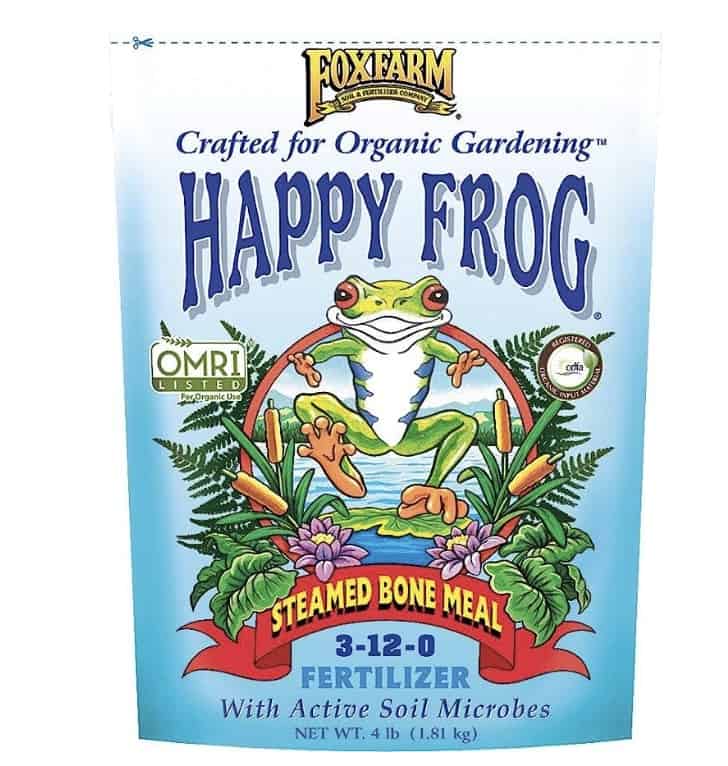
When it comes to growing a healthy vegetable garden, choosing the right fertilizer is essential. Bone meal is one of the best options available for vegetable gardens, as it is a natural fertilizer made from ground animal bones. It is an excellent source of phosphorus, an essential nutrient for healthy plant growth. Bone meal is also slow-release so that it will provide a steady supply of nutrients to your plants over a long period of time. In addition, it helps to improve soil structure, making it an ideal choice for vegetable gardens. Another benefit of using bone meal is that it has a low salt content so that it won’t cause any harm to your vegetables. All in all, bone meal is an excellent fertilizer to use for vegetable gardens.
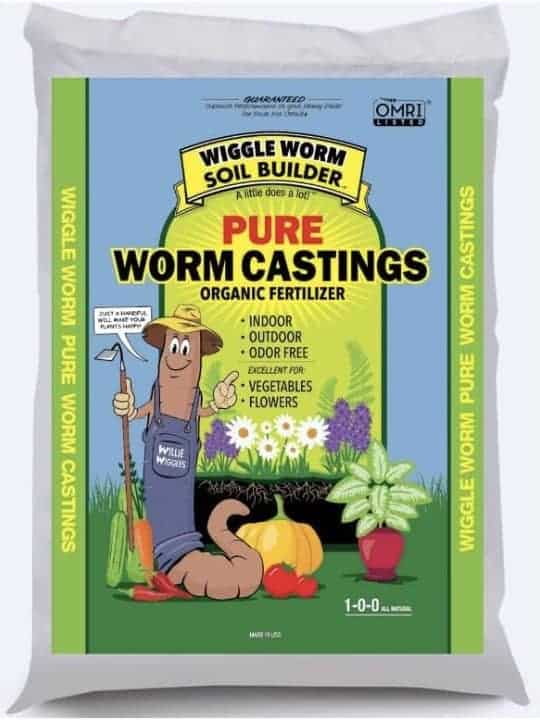
Vegetable gardens can be a great source of food and nutrition. But in order to get the most out of your garden, you need to use the right fertilizer. One of the best options for fertilizing your vegetable garden is worm castings.
Worm castings are made from the excrement of worms, which is packed with essential nutrients like nitrogen, phosphorus, and magnesium. These nutrients are essential for the growth and development of your plants. Worm castings also contain beneficial bacteria and fungi, which help to build up the soil and promote healthy plant growth.
Worm castings are easy to use and can be applied directly to the soil or mixed with compost. They are a slow-release fertilizer, so they won’t burn the plants. They are also an excellent choice for organic gardening and are safe to use around pets and children.
So if you’re looking for the best fertilizer for your vegetable garden, then consider using worm castings. They are an effective and safe way to give your plants the nutrients they need to thrive.
Organic fertilizers are the best option for vegetable gardens because they are natural and will not harm the soil or plants. Compost is an excellent source of organic matter and nutrients and is a great option for fertilizing a vegetable garden. Manure from a farm or a store-bought bag is another excellent option for organic matter and nutrients for a vegetable garden. Blood meal and bone meal are two popular organic fertilizers for vegetable gardens because they provide nitrogen and phosphorus essential for vegetable growth. Fish emulsion is another organic fertilizer that is high in nitrogen and can be used as a liquid fertilizer. If you are looking for a balanced fertilizer such as 10-10-10 is a good option, below, you will see my top choices for all-purpose fertilizing of your vegetable garden.
A few options exist regarding the best fertilizer to use in a vegetable garden. Gardeners Organics Slow Release Vegetable Fertilizer is an excellent choice, as its natural formula contains all the essential nutrients for a healthy vegetable garden. Its slow-release formula ensures that your vegetables get the right amount of nutrients over time. But you will see I provide a few other fertilizers to ensure the micronutrients your plants need to be readily available to them when transplanting, seeding, or growing vegetables in your garden.
No matter what type of fertilizer you use, it is important to read the directions on the package and follow them carefully. Different types of vegetables require different nutrients, so make sure to use the right fertilizer for the job. Additionally, ensure the fertilizer suits your area’s soil type and climate. With the right fertilizer, you can create a healthy and productive vegetable garden that will bring you years.
These three fertilizers are my top picks for slow-release and granular feeding your vegetable garden.
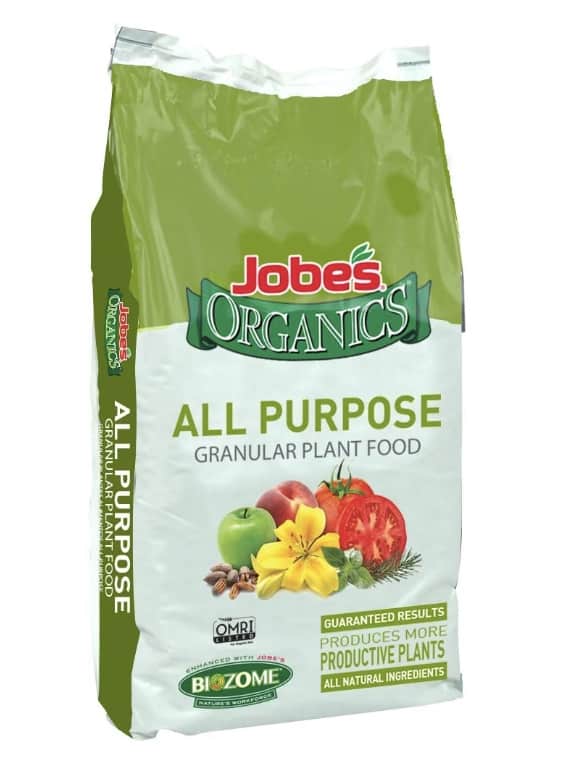
Jobe’s Organic Granular Fertilizer
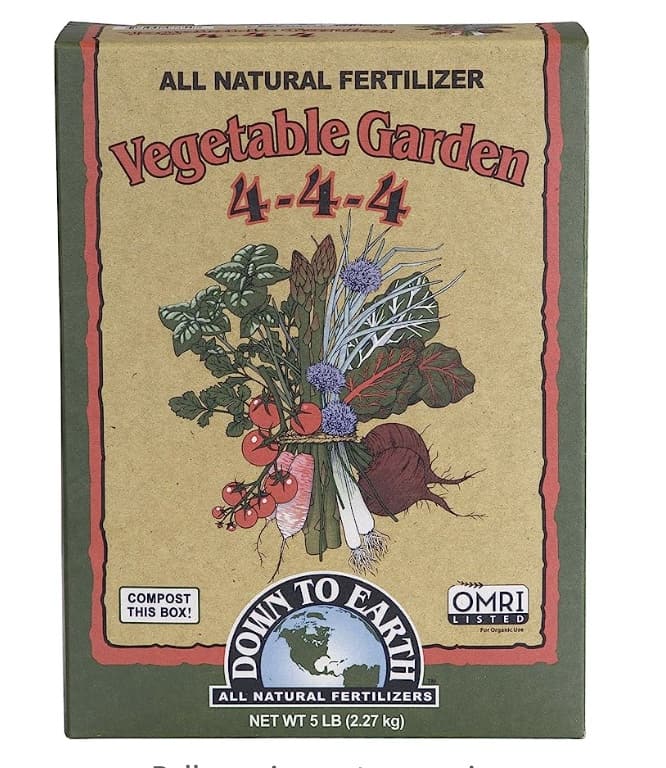
Down to Earth Organic Vegetable Fertilizer
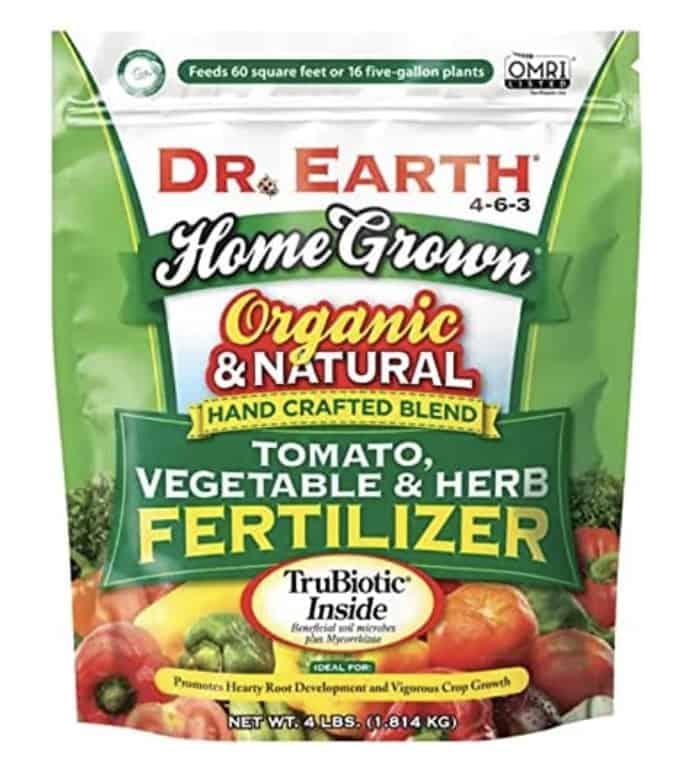
Dr. Earth Vegetable and Tomato Organic Fertilizer
Fertilizing your vegetable garden is essential for healthy and abundant yields. But with so many options, knowing which is best for your garden can be hard. Here are some of the best fertilizers to use in your vegetable garden:
Espoma Organic Vegetable Tone is an all-natural liquid fertilizer formulated to help grow bigger and healthier vegetables. It contains essential nutrients like nitrogen, phosphorus, potassium, and beneficial microbes to help promote healthy root growth.
Dr. Earth Organic 5 Tomato, Vegetable & Herb Fertilizer is a liquid fertilizer made with natural and organic ingredients that provide essential nutrients for growing vegetables, herbs, and tomatoes. It also contains beneficial microbes to help improve soil health.
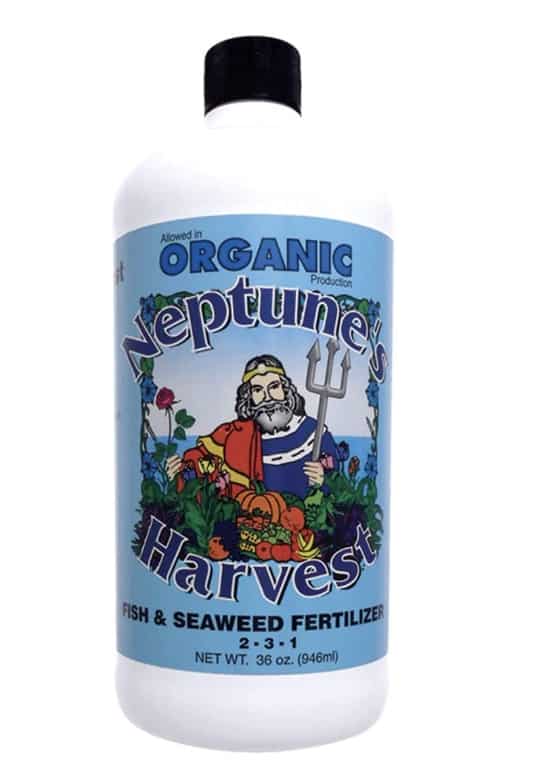
Neptune’s Harvest Fish & Seaweed Fertilizer is a liquid fertilizer made from a blend of fish and seaweed. It provides essential nutrients for your vegetable garden and also contains beneficial microbes to help improve soil.
Here are my top organic liquid fertilizers for your vegetable garden:
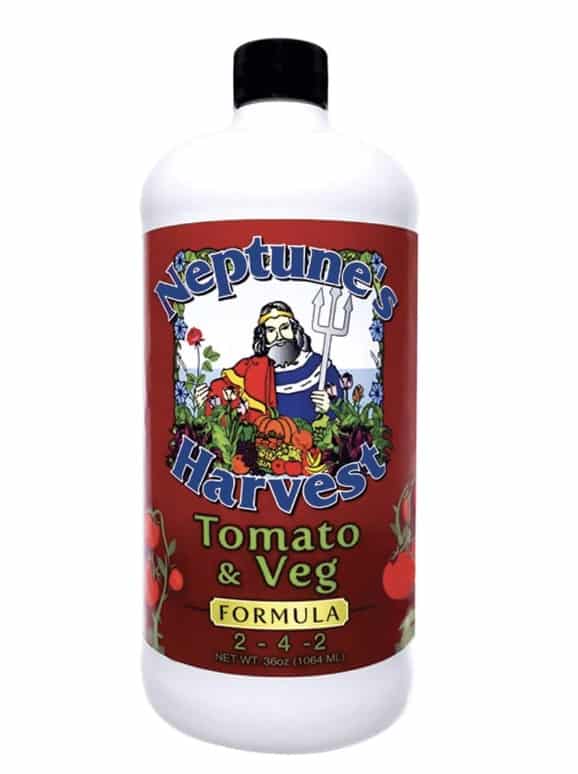
Neptune’s Organic Tomato & Veg Fertilizer
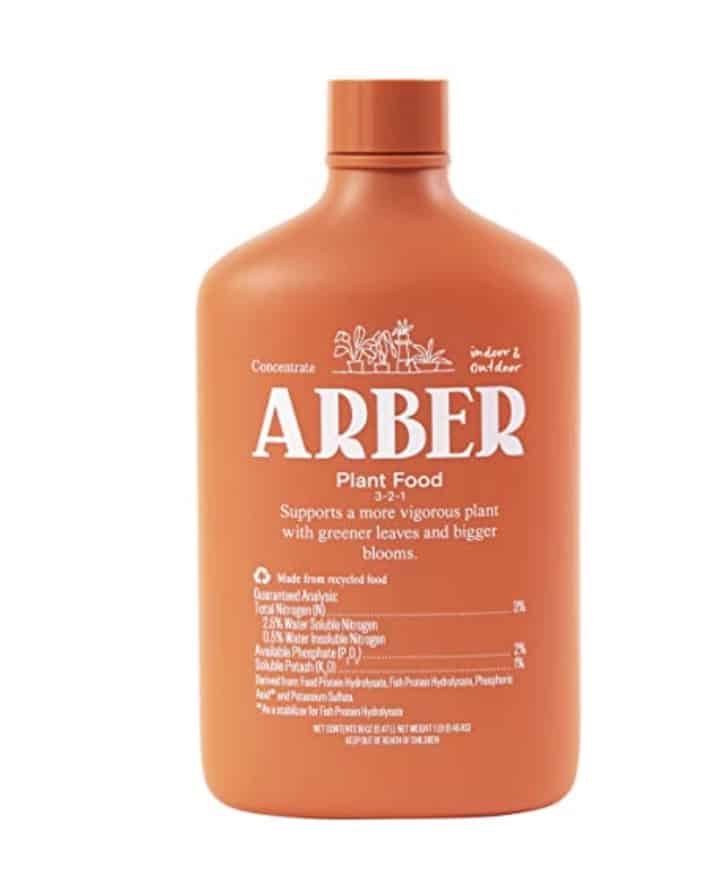
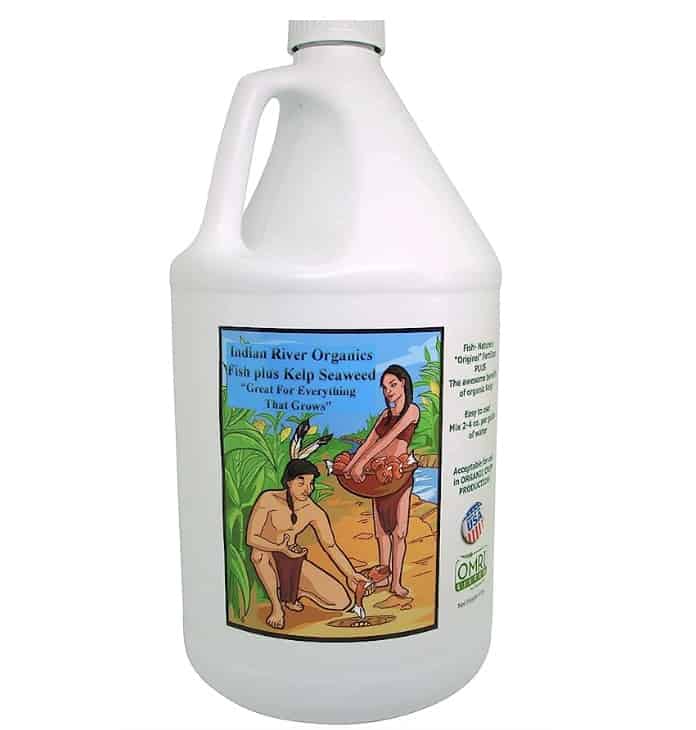
Indian River Fish and Kelp Fertilizer
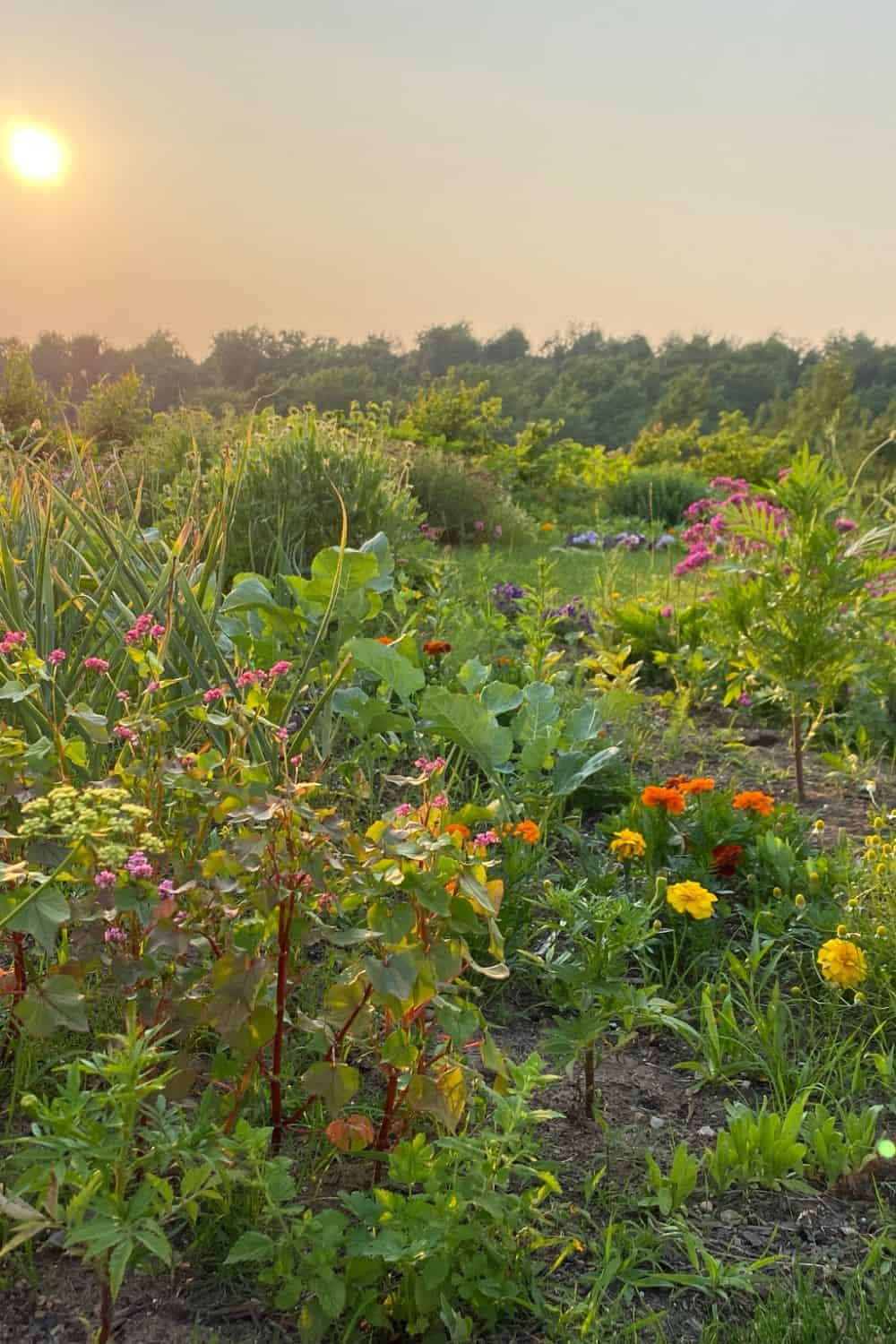
Organic fertilizers are a great choice for vegetable gardens due to their long-term benefits. As the organic matter in the fertilizer breaks down, it releases nutrients into the soil. This helps to improve the fertility of the soil, resulting in healthier plants that are better able to resist disease and pests. Furthermore, organic fertilizers help to improve soil structure, resulting in better water and nutrient retention. This can help to reduce water waste and the need for regular fertilizing. In addition, organic fertilizers help to improve soil fertility without increasing the risk of burning your plants. These are a few of my favorite organic fertilizers for your vegetable garden this year.
Over the years, my top choice is still Neptune’s Organic Fish and Seaweed Fertilizer used as a liquid concentrate.
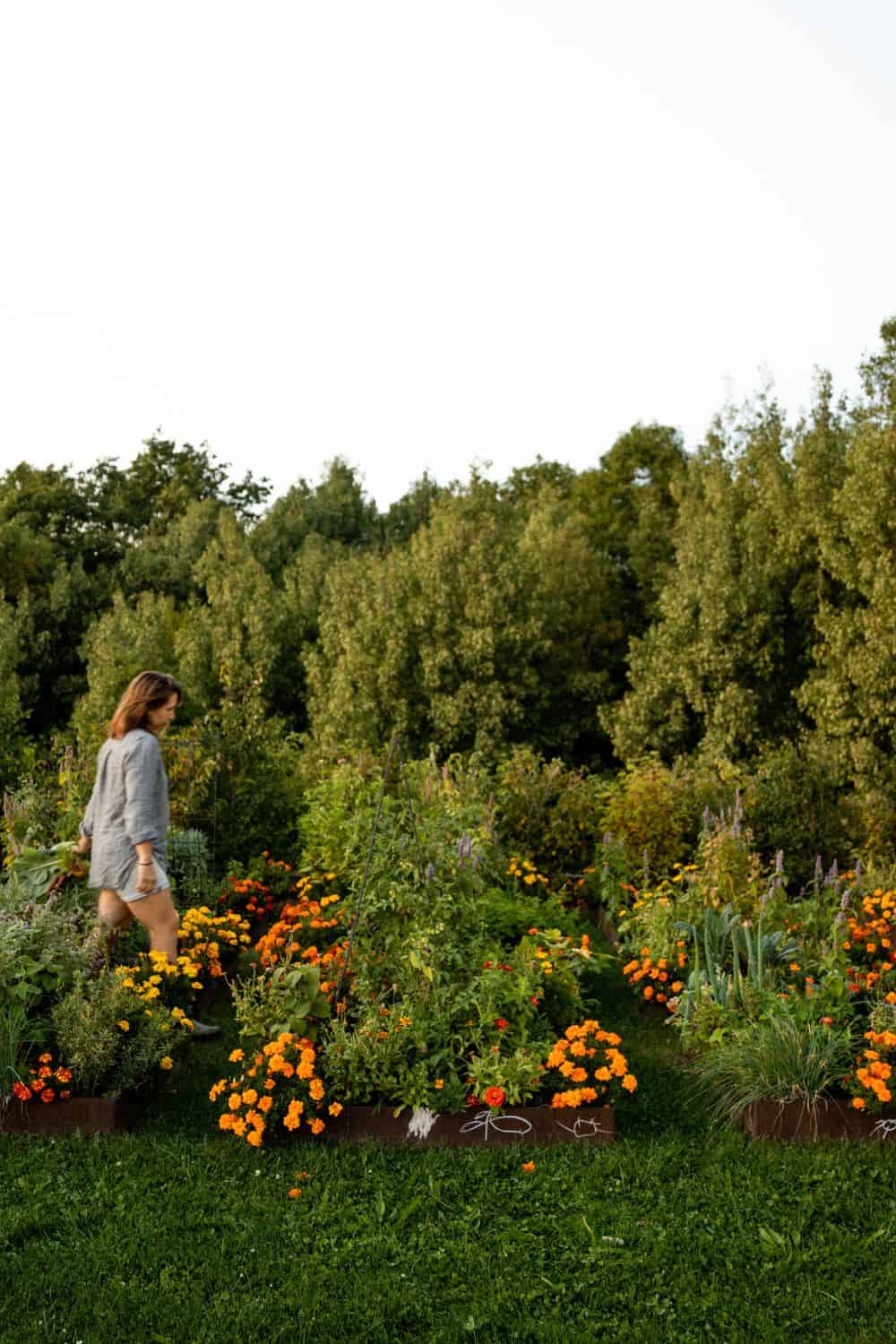
Fertilizers are an essential part of helping a vegetable garden thrive. However, choosing the right fertilizer can be a challenge. The best fertilizer to use in a vegetable garden will depend on the soil type, the crops being grown, and the gardener’s preferences.
Organic fertilizers such as compost, manure, and bone meal are often preferred over chemical fertilizers because they are more natural and provide a range of essential nutrients. Additionally, slow-release or granulated fertilizers can be helpful for providing long-term nutrition to the soil.
When choosing a fertilizer for your vegetable garden, it is important to research the soil type, the plants you are growing, and the recommended fertilizer for the specific plants. Additionally, it is important to always follow the instructions on the fertilizer package for the best results.
Organic fertilizers are a great choice for vegetable gardens, as they are natural and provide a range of essential nutrients to help make sure your veggies get the nutrition they need to be healthy and successful. Additionally, slow-release or granulated fertilizers can be helpful for providing long-term nutrition to the soil. With the right fertilizer, you can have a thriving vegetable garden.
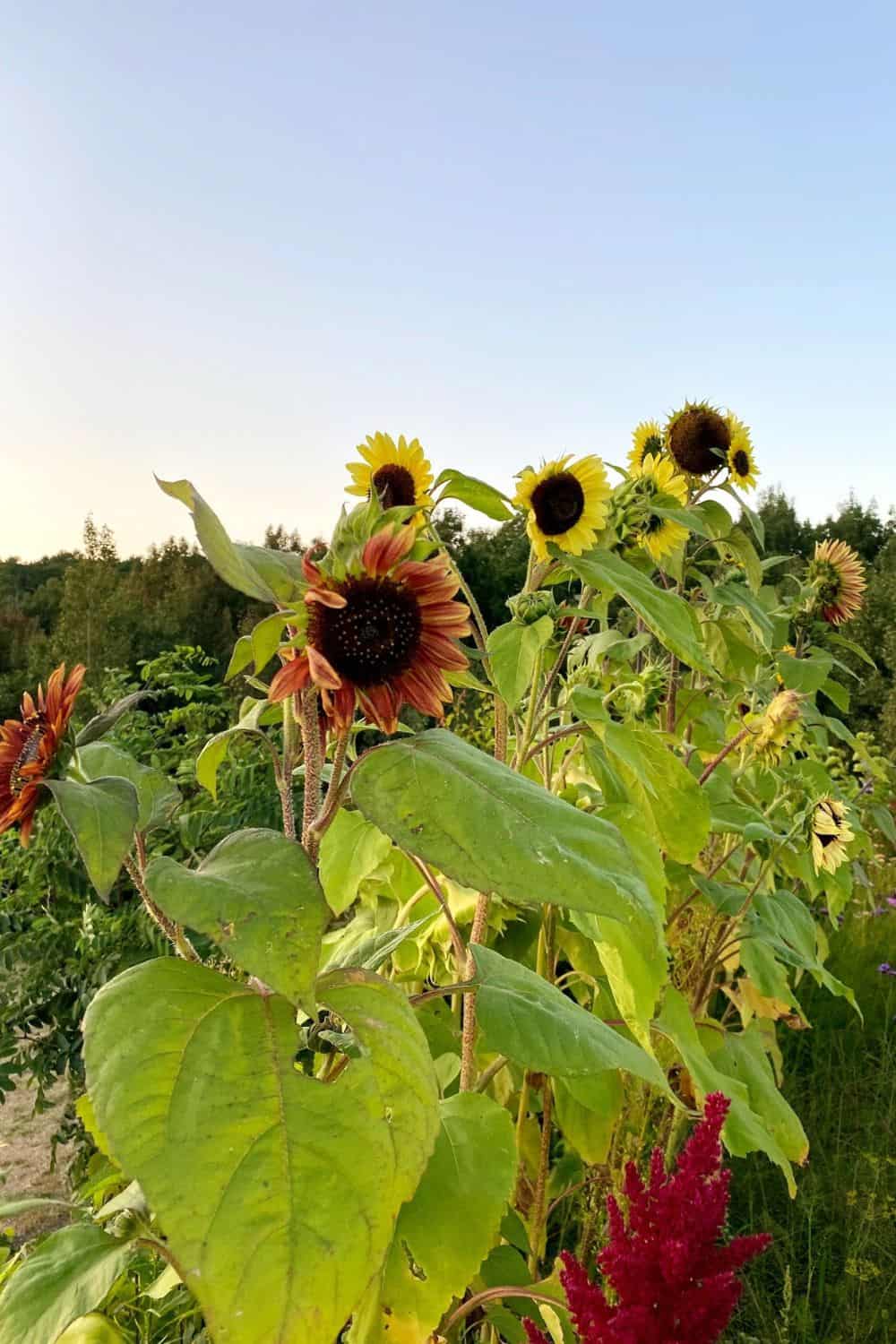
Organic gardening is becoming increasingly popular, and many gardeners seek the best fertilizer in their vegetable gardens. Compost is one of the best options, but the compost’s quality must be considered. Compost is a great source of organic matter and can provide essential nutrients for vegetables. To ensure that your compost is suitable for fertilizing your vegetable garden, it should be well-rotted, dark in color, and have a pleasant, earthy smell. Compost should be added to the soil in small amounts to ensure that it is not too rich or acidic for the vegetables. In addition to compost, you can also supplement your vegetable garden with other organic fertilizers, such as seaweed extract or fish emulsion, for added nutrients. These fertilizers will provide additional vegetable nutrition and help ensure your garden is healthy and productive.
When it comes to fertilizing your vegetable garden, it can be a difficult choice to make. What is the best fertilizer to use? Compost, fish emulsion, manure, and organic fertilizers are all great options for fertilizing your vegetable garden and ensuring healthy growth.
Compost is a natural, organic fertilizer that can be made from kitchen scraps, yard waste, and other organic materials. It is rich in nutrients and beneficial bacteria and fungi, which can help maximize growth in your vegetable garden. Fish emulsion is a natural fertilizer made from fish parts and is a great source of nitrogen, potassium, and phosphorus. It can help to promote strong root growth and increase the nutrient content of your soil. Manure is a great source of organic matter and can help improve your soil’s texture. It’s also full of beneficial bacteria and fungi, which can help your plants to grow and thrive. Organic fertilizers, such as plant-based meal and bone meal, are a great way to add nutrients to your soil. They are slow-release, so they won’t burn your plants and are a great source of essential nutrients.
When choosing the best fertilizer for your vegetable garden, it is important to consider the specific needs of your plants. Different plants require different nutrient levels,
Fertilizers are an essential part of any vegetable garden. Without the right type of fertilizer, your vegetable garden could suffer from nutrient deficiencies and stunted growth. When deciding the best fertilizer for your vegetable garden, consider the size of your garden and the type of fertilizer you plan to use. Generally, a slow-release fertilizer should be applied every two to three months during the growing season, while a liquid fertilizer should be applied weekly. Be sure to read the instructions on the fertilizer package to determine the correct application rate for your garden. This will ensure that you are using the right amount of fertilizer for the size of your garden.
Using the right fertilizer for your vegetable garden will help your plants grow healthy and strong. It can also help your plants resist disease and pests. You can look forward to a healthy and bountiful harvest with the right fertilizer. Always follow the instructions on the fertilizer package to determine the best application rate for your garden. By doing so, you can ensure your vegetable garden gets the nutrients it needs to thrive.
Growing a vegetable garden is a rewarding experience that can provide you with fresh, flavorful produce. Choosing the right fertilizer is important to get the best results from your garden. Here are a few tips for choosing the best fertilizer for your vegetable garden.
First, consider the vegetable varieties you plan to grow. Different vegetables have different fertilizer requirements, so make sure you choose a suitable fertilizer for the plants you are growing.
When selecting a fertilizer for your vegetable garden, look for one that is specifically designed for veggies. It should contain a balanced mix of nitrogen, phosphorous, and potassium. You can also opt for a more sustainable organic fertilizer made from natural materials than synthetic fertilizers.
When shopping for fertilizer, read the label carefully. Make sure to look for information about application rates, nutrient content, and other important details. With the right fertilizer and some careful planning, you can help ensure your vegetable garden is a success.
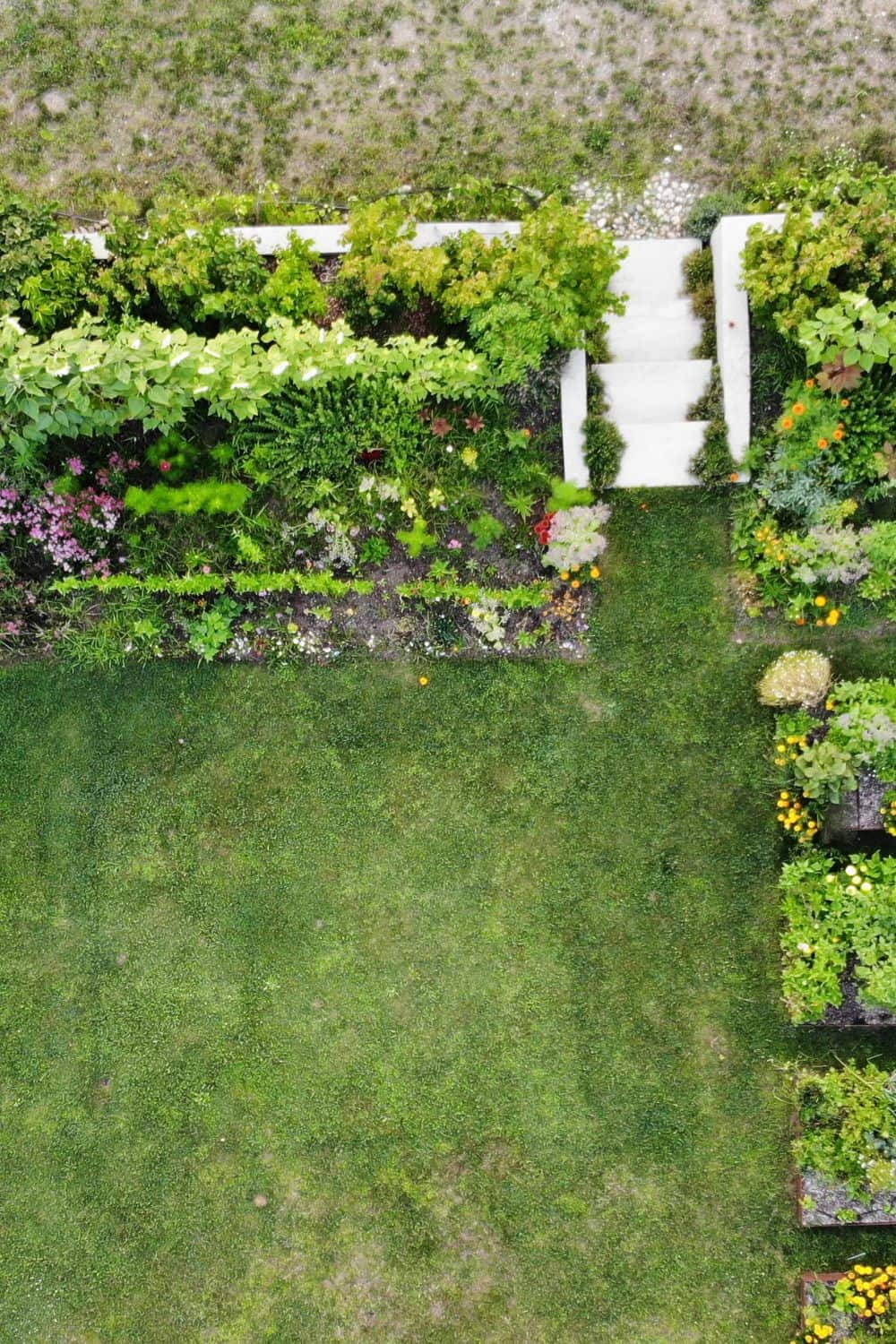
In conclusion, the best fertilizer to use in a vegetable garden will depend on the soil type, climate, and the vegetables being grown. An organic fertilizer will generally be the best choice, as it will not introduce any chemicals or pollutants into the environment. Additionally, it will enrich the soil with essential nutrients that will give your vegetables a healthy, vibrant growth. However, if organic fertilizers are not available, a synthetic fertilizer can be used, but should be used with caution. As always, it is important to do your research and read the directions before applying any fertilizer to your vegetable garden.
If this information was helpful, you can check out the following posts to learn more:
You can also learn more about fertilizing through our course offerings, email newsletter, Instagram, and of course the podcast.
